Persuading Scientists

If you’ve ever worked at a bench, you know the experience well. A sales rep shows up, eager and polished, armed with brochures about their latest reagent or their new and improved version of something you already use. And somewhere in the back of your mind, you’re already running through your mental checklist, where’s the data? Has anyone actually validated this? Do I really need “new and improved” test tubes? I’ve been on the receiving end of that pitch more times than I can count, which is exactly why Persuading Scientists had been sitting on my TBR for a while. I finally picked it up, and I’m glad I did.

What This Book Is Actually About

Persuading Scientists is a guide for marketers and sales professionals working in the life sciences, specifically those trying to reach bench scientists as their customers. The author, Hamid Ghanadan, is a career life science marketer who has spent years helping biotech companies communicate more effectively with the researchers they’re trying to sell to.

Fair warning: the book was published in 2012, so some of the specifics are a little dated. But the core argument holds up. Ghanadan’s premise is that scientists are a fundamentally different kind of buyer, skeptical by training, data-driven by instinct, and deeply resistant to the kind of bold, unsubstantiated claims that might work on other audiences. If you want to sell to scientists, you have to think like one. That reframe is simple, but it’s more useful than it sounds.

What Got Me Thinking

Here’s the honest truth: coming from the bench, a lot of the advice in this book felt familiar, almost obvious. Of course scientists want to see data behind bold claims. Of course a free sample goes a long way. Of course having a knowledgeable representative available to answer questions builds trust faster than any brochure ever could.

But here’s what I didn’t expect, I didn’t have the language for any of it. I knew instinctively what worked and what didn’t when sales reps approached me in the lab, but Ghanadan gave me the framework to actually articulate why. That’s a different kind of useful. He walks through strategies like creating protocols for scientists to use on a company’s website, which simultaneously solves a real problem for researchers and positions the company as a leader in that area of research. It’s a small example, but it captures the book’s bigger point well: good science marketing isn’t about persuasion tricks. It’s about genuine utility.

For anyone working at the intersection of science and communication, whether that’s marketing, outreach, journalism, or advocacy, there’s something worth chewing on here. The same principles that make a biotech sales strategy work are the ones that make science communication land. Lead with evidence. Respect your audience’s intelligence. Make their lives easier, and the trust follows.

Why I Think You Should Read This

This is a 4/5 from me, not the most I’ve ever learned from a single book, but it earns its rating by being exactly what it promises: short, sharp, and to the point. There’s no padding, no unnecessary tangents. Every chapter gets in, makes its point, and gets out. I genuinely appreciate that kind of respect for the reader’s time.

If you’re considering a career in life science sales or marketing, I’d call this a must-read, it’s one of the clearest maps I’ve seen for understanding how scientists think as buyers and decision-makers. And if you’re already working at the bench or in science communication, it’s a worthwhile read for self-awareness alone. There’s something illuminating about seeing the strategies that were used on you, laid out clearly with the logic explained.

My Takeaway

The thing I keep coming back to is how much scientists underestimate their own influence as an audience. Entire marketing strategies are built around how we think, what we trust, and what makes us tune out. Understanding that doesn’t make you cynical, it makes you more intentional. Whether you’re on the receiving end of a pitch, building a science communication campaign, or thinking about how to make your research land with a broader audience, the underlying principle is the same: know your audience deeply, lead with evidence, and earn trust by being genuinely useful. That’s not just good marketing. That’s good communication, full stop.

Come Read Along

Have you read Persuading Scientists, or have a book like this that changed how you think about science and communication? I’d love to hear about it in the comments or over on Instagram.

And that’s a wrap on Science Reads 2024. What a year it has been. If you’re wondering what’s coming in 2025, I have a list, and it’s a good one. We’ll be diving into Challenger, the story of the space shuttle disaster and the institutional failures that caused it; The Kissing Bug, a deeply personal account of a neglected tropical disease; and The Catalyst by David Baker, fresh off his 2024 Nobel Prize in Chemistry. See you in the new year. 📚
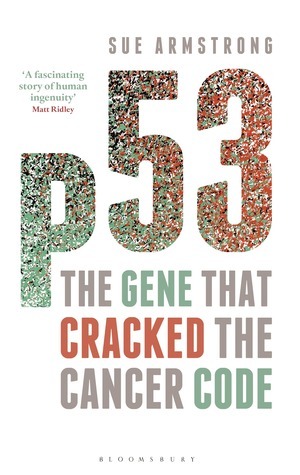
p53

I went into this one with high expectations, and came out with genuinely mixed feelings. Which, honestly, might be the most scientist thing I can say about a book. I didn’t love it unconditionally, I didn’t dismiss it, and I’m still thinking about parts of it weeks later. If you’ve ever wanted to understand the full history of p53, the most studied protein in the world, this book will take you there. Whether the journey feels like a page-turner or a slow graze depends a lot on what you’re looking for.

What This Book Is Actually About

p53: The Gene that Cracked the Cancer Code by Sue Armstrong is exactly what it sounds like, a deep dive into the discovery, study, and evolving understanding of p53, the tumor suppressor gene that has become central to cancer research over the past several decades. Armstrong is a science journalist who has been reporting on p53 for years, and that accumulated knowledge shows. The book functions as a one-stop shop for the history of this protein, covering the major breakthroughs, the setbacks, the key players, and the scientific debates in a way that a review paper simply couldn’t capture with the same accessibility.

For anyone coming to this without a molecular biology background, that accessibility is real and valuable. For those of us coming from the bench, it reads less like a revelation and more like a well-organized deep dive into a story we’ve touched in pieces but never seen assembled in full.

What Got Me Thinking

Despite my mixed feelings on the structure, there were moments in this book that genuinely stopped me mid-chapter.

The emphasis on collaboration was one of them. Some of the biggest breakthroughs in p53 research didn’t come from a single brilliant mind working in isolation, they came from disciplines colliding in unexpected ways, like the intersection of cancer biology and apoptosis research. That’s a reminder worth repeating in science communication: the most important discoveries often happen at the edges where fields meet, not at the center of any one of them.

The role of chance and repetition also hit differently than I expected. The story of how p53 mutants were caught, through sheer persistence, repeated experiments, and a fair amount of luck, is a much more honest portrait of how science actually works than most textbooks ever offer. That’s exactly the kind of narrative science communication needs more of.

And then there’s the slower, more uncomfortable truth: even when the evidence is there, changing a scientific theory takes time. The field resisted certain findings about p53 longer than the data warranted. That tension between evidence and consensus is something every scientist recognizes, and Armstrong captures it well.

Where the book loses me is in its structure. Because Armstrong is first and foremost a journalist, the book reads like a series of well-researched news articles rather than a single cohesive narrative. So many names, so many institutions, so many places, it becomes genuinely difficult to hold the thread. And the ending, which quotes scientist Gerard Evan saying he’s confident his kids will “never, ever have to worry about dying from cancer,” felt a step too far into optimism for a book that otherwise does a good job of honoring scientific complexity.

Why I Think You Should Read This

This is a 4/5 from me, and I mean that thoughtfully, not as a consolation rating. The amount of work it would take to compile this much history on the most studied protein in the world into a single, accessible book is genuinely impressive, and Armstrong deserves enormous credit for it.

Just go in with the right expectations. This isn’t a “couldn’t put it down” kind of read. It’s more of a “graze a chapter a day” book, one you return to, sit with, and let accumulate over time. If you want a comprehensive explanation of p53’s discovery and the scientific debates that shaped our understanding of it, this delivers. If you’re hoping for a single driving narrative that carries you through, you might find yourself a little adrift.

My Takeaway

What I keep returning to is how much of science is actually built on chance, repetition, and the slow, grinding work of changing minds, even in the face of good evidence. We tend to tell science as a story of eureka moments and linear progress. The real story of p53 is messier, more collaborative, and more human than that. And as someone who thinks a lot about how we communicate science to the public, that messiness matters. The more honestly we tell these stories, uncertainty, luck, resistance, and all, the more trust we build with the people we’re trying to reach.

Come Read Along

Have you read this one? I’d love to know how it landed for you, especially if you’re coming from a research background. Drop your thoughts in the comments or find me on Instagram where the conversation never really stops.

November’s Science Read is Persuading Scientists by Hamid Ghanadan, and it’s a very different kind of book. See you there. 📚

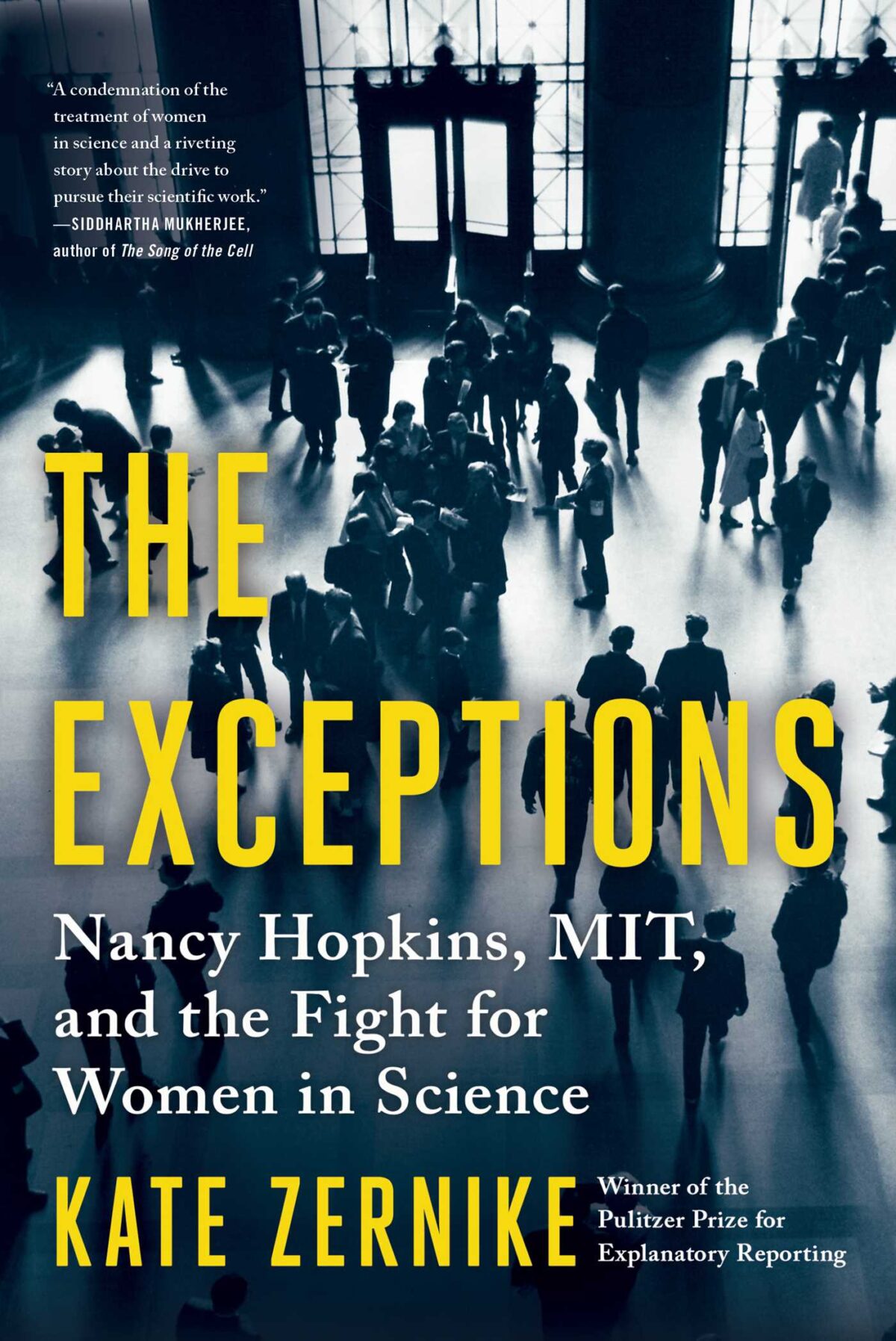
The Exceptions

There are books you read and appreciate. And then there are books that feel like someone reached into an experience you’ve carried quietly for years and put it into words you didn’t know you needed. The Exceptions was the second kind for me. If you’ve ever been in an academic space and felt that low-grade, persistent hum of having to prove you belong there, this one will hit close to home.

What This Book Is Actually About

The Exceptions follows molecular biologist Nancy Hopkins and her years at MIT, tracing how Hopkins eventually led the effort to quantify gender discrimination on campus, and how that work resulted in a landmark report submitted to MIT that sent shockwaves through academia.

The author, Kate Zernike, is an investigative journalist who reconstructs Hopkins’ career with meticulous detail, from the early days of navigating a world that wasn’t built for her, to the slow, painful recognition that what she had been quietly absorbing as “just the way things are” was actually a systemic pattern shared by other women around her. Funding disparities. Stereotypes about women needing to settle down and have babies. The casual, unexamined assumption that women were less naturally suited for science. Hopkins thought it was just her, until a small but fiercely determined group of female faculty came together and found the same thread running through all of their stories.

What Got Me Thinking

What I loved most about this book is the courage it documents, the courage of women who were willing to stand against the status quo and ask for more, out loud, on the record, in an institution that had never been asked to account for itself in this way. That’s not easy anywhere. In academia, where tenured faculty operate with unprecedented freedom and the rules bend conveniently for those already at the top, it’s extraordinary.

There’s a moment the book captures that I keep returning to, the realization that the discrimination Hopkins experienced wasn’t personal bad luck. It was a pattern. And the only reason that pattern became visible was because a community of women trusted each other enough to share what they had each been privately dismissing as their own individual shortcomings. That shift, from isolation to collective recognition, is one of the most powerful things a community can do. It’s something I think about a lot in the context of science communication and advocacy. The stories we keep to ourselves can’t change anything. The ones we share out loud have a chance.

My one honest critique: I wish the book had followed up more substantively on the long-term impact of the report. Because the truth is, and I say this having seen and experienced versions of these dynamics in academia in the 2020s, the story isn’t over. Not even close. The starkness has softened in places, but the underlying message in many academic environments still carries that same eerie familiarity: you need to work twice as hard to prove you belong here. The attitudes the book documents, men having a “better aptitude for science,” the expectation that women will quietly absorb the domestic load while their partners work 80-hour weeks, haven’t disappeared. Some of the people who hold these views are still at the very top of the academic food chain. The book risks leaving the impression that academia is remarkably improved. The reality is more complicated than that.

Why I Think You Should Read This

This is a full 5/5 from me, a glimpse into the world of academia behind the glitz and glamour of Nobel Prizes and landmark discoveries. What Hopkins and her colleagues achieved by documenting and reporting their experiences was genuinely invaluable. They showed that there is another path beyond sweeping it under the rug, that the system can be challenged from within, by people who refuse to accept that the way things are is the way things have to be.

Read this one if you want to understand where we’ve been. And read it with clear eyes about how far there still is to go.

My Takeaway

The thing this book left me sitting with most is the weight of community, what becomes possible when you stop shouldering something alone and find the people who have been carrying the same thing quietly beside you. Hopkins didn’t change MIT by herself. She changed it because a group of women decided that their individual experiences, combined, were data worth taking seriously. That is science. That is advocacy. And in a moment when the conversation about equity in STEM can feel exhausting and circular, this book is a reminder that documented, collective truth has moved institutions before, and it can again.

Come Read Along

This one sparked a lot of thoughts for me, I’d love to know how it lands for you, especially if you’ve navigated academic spaces yourself. Share your thoughts in the comments or come find me on Instagram.

October’s Science Read is p53: The Gene that Cracked the Cancer Code by Sue Armstrong, a very different topic, but just as much to say about how science actually works. See you there. 📚

Playing with Reality

What if the way we play has fundamentally shaped the way we think? Not just as children, but as scientists, policymakers, and societies trying to make sense of an increasingly complex world. That question is what pulled me into Playing with Reality, and it’s the kind of book that starts as an intellectual curiosity and quietly becomes something you’re turning over in your head long after you’ve put it down. Also, fair warning: it may send you straight to your nearest board game shelf. More on that later.

What This Book Is Actually About

Playing with Reality is written by Dr. Kelly Clancy, a neuroscientist and physicist who studies how games have shaped the way humans generate knowledge and reason about the unknown. The book moves through the history of games, and specifically game theory, tracing how the frameworks we build around play have influenced everything from economics and military strategy to medicine and artificial intelligence.

Clancy is a genuinely fascinating guide for this kind of book. She brings both the scientific rigor of a physicist and the curiosity of someone who clearly finds games delightful, and that combination keeps the writing from ever feeling dry. Her central argument is that while games and game theory are powerful tools for modeling and predicting behavior, we’ve started leaning on them in ways that oversimplify reality, and that has real consequences for how we design systems that affect real people’s lives.

What Got Me Thinking

The section I found most unexpected, and most memorable, was Clancy’s use of game theory to explain how cancer is treated. Oncologists are increasingly using dynamic, game-theoretic modeling strategies to target cancer that is constantly evolving and adapting. The idea that a tumor can be approached like an opponent in a game, and that treatment can be designed with that strategic logic in mind, is genuinely fascinating. It’s one of those moments where a framework you thought belonged to economics suddenly illuminates something completely different.

But Clancy is careful not to oversell the model. One of the sharpest observations in the book is the distinction she draws between game theory and reality: in game theory, a player’s preferences can be understood through the choices they make, but in reality, many of the choices we make are driven by necessity, not desire. That gap, between the clean logic of a model and the messy truth of human lives, runs through the whole book. “People aren’t mathematical objects,” she writes, and it lands with the kind of quiet weight that good science writing earns when it’s being genuinely honest.

Her argument that we shouldn’t rely on game theory as heavily as we do, especially for complicated societal questions like universal healthcare, is worth sitting with. Games have clear rules. The real world doesn’t. And when you try to force real-world complexity into a framework built on clean constraints, the model starts serving itself rather than the problem it was built to solve. That’s a lesson that extends well beyond game theory, it applies to any time we mistake the map for the territory.

Why I Think You Should Read This

This is a 4/5 for me, and my only real wish is that Clancy had gone deeper on AI and the way games are being used to train machine intelligence. She does touch on it at the end with a question that genuinely stopped me: is true intelligence the best moves during a chess game, or is it what invents a game like chess? That’s the thread I wanted her to pull harder. The book gestures at the data harvesting from online games, the gamification of technology, the implications for misinformation and mental health, but it doesn’t linger there the way I was hoping it would.

What the book is, a rich, engaging history of games and game theory and their influence on human reasoning, it does beautifully. Go in knowing that’s the focus and you’ll enjoy it thoroughly.

One more thing: I’d highly recommend reading this alongside The Anxious Generation. Together they build a really compelling picture of how games and digital environments are shaping human minds and behavior, and what we might want to do about it.

My Takeaway

The question Clancy keeps circling, whether our models of reality are helping us understand the world or quietly distorting how we see it, is one I haven’t been able to shake. In science communication, we build frameworks and narratives to make complex ideas accessible. But there’s always a risk that the simplification starts doing too much work, that the clean story replaces the complicated truth. Games are powerful precisely because they impose order on uncertainty. The challenge is remembering that the order is the invention, and the uncertainty is the reality. That’s worth keeping close, whatever field you’re working in.

Come Read Along

Has a book ever sent you running to a hobby you hadn’t thought about in years? Because this one had me picking up Wingspan immediately, and I have zero regrets. Drop your thoughts in the comments or come find me on Instagram, I’d love to know if this one sparked anything for you.

Next Science Read is The Exceptions by Kate Zernike, the story of Nancy Hopkins and the women who fought for equity at MIT, and one of the most important science books I’ve read this year. See you there. 📚

An Immense World

If you ever want to feel both humbled and completely electrified by the natural world in the span of a single book, this is the one. I’ll be honest, when I heard Ed Yong had written a book covering the entirety of animal sensory diversity, I was skeptical. That’s an enormous canvas. The kind of scope that usually ends in a book that feels rushed, or shallow, or like it’s trying to do too much. I was wrong. Completely, happily wrong.

What This Book Is Actually About

An Immense World is built around a single, beautiful concept: Umwelt, the idea that every organism experiences the world through its own unique sensory reality. The world as a dog smells it, as a bat hears it, as a mantis shrimp sees it, is not the world as we experience it. Each creature is living inside its own sensory universe, and we have almost no instinctive access to any of them.

Ed Yong, science journalist, Pulitzer Prize winner, and genuinely one of the best science writers alive, takes that concept and unpacks it sense by sense. Pain, light, heat, sound, electric fields, magnetic fields. He walks through the experiments behind each discovery, the researchers who dedicated their careers to understanding how other animals perceive reality, and, crucially, how much we still don’t know. Did you know that so many animals can sense magnetic fields, yet it remains the only sense without a known sensory receptor? That single fact has lived in my head rent-free since I read it.

What Got Me Thinking

Every scientist should read Ed Yong, not just for the science, but to study how he writes it. The way he constructs a narrative around research, makes you feel the discovery alongside the scientists, and never once lets the complexity become a barrier, that’s the gold standard of science communication. Creating a story with the science, not just about it. This book is a masterclass in exactly that.

The footnotes alone are worth the read. Half of my notes on this book came straight from the highlights I made there. My personal favorite, his comparison of the army ant death spiral to the US pandemic response on page 31, had me laughing out loud and then immediately feeling a little too seen. That’s the Yong signature move: sneak a profound observation into a parenthetical and walk away.

I also couldn’t help but let my mind wander while reading the sections on electric fields, magnetic navigation, and the jaw-dropping sensory world of the naked mole rat (that chapter is genuinely a hoot). I’d recently finished Blake Crouch’s sci-fi novel Upgrade, which imagines a future where human senses are biologically enhanced, and the two books kept colliding in the best way. From the giant squid to the naked mole rat, Yong lays out a menu of sensory possibilities that makes Crouch’s premise feel less like fiction and more like an earnest research proposal. If you’re a sci-fi reader, read them back to back. You’ll thank me.

And then there’s the question Yong closes with, one that I think every scientist and science communicator should be sitting with: how is humanity affecting the sensory worlds of other animals? Light pollution disrupting navigation. Noise pollution interfering with communication. Our presence quietly rewriting the sensory landscapes that other species depend on. It’s the kind of question that makes you look at the world differently on the way out than you did on the way in.

Why I Think You Should Read This

This is a full 5/5, no hesitation. Get this for your scientist friends. Get it for your friends who think they don’t like science, because this book will change their minds. Yong has a gift for making you feel the wonder of a discovery without ever dumbing it down, and An Immense World might be the purest expression of that gift I’ve encountered.

If you haven’t read Yong before, I’d actually suggest starting with his first book, I Contain Multitudes, about the microbial world living inside and around us. It will calibrate your appreciation for his voice so that when you get to An Immense World, you can feel exactly how much further he’s taken it.

My Takeaway

What I keep coming back to is the sheer, generous scale of the unknown. Yong doesn’t just show you what we’ve discovered about animal senses, he shows you the edges of what we don’t yet understand, and makes those edges feel like invitations rather than frustrations. That’s rare. In science communication, we often feel pressure to package things neatly, to land on answers. But some of the most powerful things we can do is show people the open questions and make them feel exciting rather than unsettling. Yong does this better than almost anyone. Walking away from this book, I felt smaller in the best possible way, and far more curious about the world humming away just outside the range of my very human senses.

Come Read Along

Has a book ever completely recalibrated how you move through the world? Because this one did that for me. I’d love to know what landed for you, drop your thoughts in the comments or come find me on Instagram.

July’s Science Read is Playing with Reality by Kelly Clancy, a neuroscientist and physicist exploring how games have shaped the way we think and reason. A very different world from animal senses, but just as fascinating. See you there. 📚

The Anxious Generation

I don’t think I’ve recommended a book this urgently to people in my life in a long time. The Anxious Generation is one of those reads that starts as an intellectual exercise and ends as something far more personal, because whether you’re a parent, a researcher, an educator, or just someone who has spent a significant portion of their life on social media, this book is about you. It’s about the world we built, and what it has quietly cost an entire generation.

What This Book Is Actually About

Jonathan Haidt is a social psychologist at NYU, and The Anxious Generation is his carefully constructed argument for why Gen Z became the most anxious, depressed, and mentally fragile generation on record. His central thesis is deceptively simple: we have simultaneously overprotected children in the real world and underprotected them in the virtual one. The result is a generation that grew up with fewer opportunities for independent play, genuine risk, and face-to-face social development, and far too much unsupervised exposure to social media during the years their brains were most malleable.

Haidt structures the book in four parts: the mental health trends in adolescents, where childhood went wrong, the specific harms of a phone-based childhood, and, importantly, how we can actually reverse the damage. Throughout, he uses graphs and data to trace the correlation between rising smartphone use and the dramatic spike in adolescent anxiety and depression, methodically addressing alternative explanations along the way, including the 2008 financial crisis and broader societal instability.

What Got Me Thinking

The four reforms Haidt proposes are worth sitting with, no smartphones before high school, no social media before 16, phone-free schools, and far more unsupervised play and childhood independence. On the surface, they sound simple. In practice, they require a collective shift in how we think about childhood, technology, and responsibility that goes well beyond any individual parent’s choices.

And I want to be honest about the debate here, because I think it matters. Psychologist Candice Odgers wrote a critical review of this book in Nature, raising two significant objections: that Haidt’s evidence is correlational rather than causal, and that other researchers have not been able to consistently replicate the link between social media use and adolescent mental health deterioration. She doesn’t dismiss the need for reform, she concedes our generation needs to seriously rethink how we use social media, but she pushes back on what she calls the “simple” narrative Haidt builds around it.

I think both things can be true. The data Haidt presents is striking and worth taking seriously. And the critique that correlation isn’t causation is a real scientific caution, not a dismissal. What I keep coming back to is that even if the causal chain is more complicated than a straight line from Instagram to anxiety, the underlying conditions Haidt describes, a childhood increasingly lived through screens, a loss of unstructured independence, a social environment built around performance and metrics, are real. I’ve seen it. I’ve felt versions of it in myself. And I’ve also experienced the genuine good that social media can hold. The answer isn’t to pretend the benefits don’t exist. It’s to be honest that the current model isn’t working, and that adolescents are where the stakes are highest.

This also isn’t just on parents. That framing lets too many people off the hook. Governments and tech companies have to be held accountable. It is not new information that social media is “free” because we are the product, that the entire architecture is built around capturing attention, optimizing engagement, and converting our behavior into marketing data. And the rest of us, the people actually using these platforms, posting, scrolling, performing, have a role too. What image are we projecting? What norms are we reinforcing for the people watching?

Why I Think You Should Read This

A full 5/5, and I mean it when I say I think everyone should read this book, not just parents or educators. If you use social media, if you work in tech, if you care about public health, mental health, or the shape of the next generation, this is required reading. Haidt writes with urgency but not alarmism, and even where his argument invites pushback, that pushback is worth having. Read it alongside Odgers’ Nature review for a complete picture. Read it alongside Playing with Reality by Kelly Clancy for a deeper lens on how games and digital environments are reshaping human minds. These books are in conversation with each other in ways that feel increasingly important.

My Takeaway

What I can’t stop thinking about is the phrase “underprotection in the virtual world.” We spent so much energy warning children about strangers and traffic and the dangers of the physical world, and then handed them a device with unrestricted access to an environment specifically engineered to be as psychologically compelling as possible. No guardrails. No supervision. No developmental scaffolding. And we’re surprised by what happened. Science communication has a role to play here too, in translating this research clearly, in holding the complexity without losing the urgency, and in making sure the public conversation about social media and mental health is driven by evidence rather than panic or denial. We’re all part of this system. The question is whether we’re willing to be part of changing it.

Come Read Along

This one sparked more conversations in my personal life than almost any book I’ve read this year, I’d love to know how it lands for you. Are you persuaded by Haidt’s argument? Skeptical? Somewhere in the middle? Drop your thoughts in the comments or find me on Instagram where this kind of conversation is always welcome.

June’s Science Read is An Immense World by Ed Yong, a completely different world from adolescent mental health, but equally hard to put down. See you there. 📚

Secrets of the Octopus

I need you to stop whatever you’re doing and consider the octopus for a moment. Three hearts. Blue blood. The ability to taste with every inch of their skin. The ability to squeeze their entire body through an opening the size of their own eyeball. If someone handed you this creature in a science fiction novel, you’d think the author was having a little too much fun. But octopuses are real, they’ve been on this planet for at least 328 million years, and it turns out we know remarkably little about them. Secrets of the Octopus fixed that for me, and it will fix it for you too.

What This Book Is Actually About

Secrets of the Octopus is a collaboration between naturalist Sy Montgomery and National Geographic, and it shows in the best possible way. This isn’t a dry scientific survey, it’s a genuine, wide-eyed celebration of one of the most alien creatures sharing our planet, written by someone who finds them as extraordinary as they actually are.

Montgomery takes readers through what scientists currently know about octopus intelligence, behavior, and biology, and more importantly, how much remains unknown. The research she covers spans everything from problem-solving and tool use to consciousness, personality, and social behavior. She frames this growing body of research as a kind of Copernican revolution, just as humans once had to reckon with the fact that Earth is not the center of the universe, we are now slowly coming to understand that humans are not the only intelligent species on this planet. That reframe doesn’t get old, no matter how many times science has to remind us of it.

What Got Me Thinking

Where do I even start. The facts in this book live in my head permanently now, and I want to pass that along.

The plural of octopus is octopuses, not octopi, because the word comes from Greek, not Latin. I’ve been correcting people about this ever since. Octopuses, squid, and cuttlefish can edit their own RNA, essentially manipulating their own genome in real time, a discovery made in 2017 that still feels like it should have made bigger headlines than it did. The last common ancestor between humans and octopuses was a flatworm, roughly 750 million years ago, and yet octopus brains are capable of advanced functions and problem solving comparable to chimpanzees. Two wildly different evolutionary paths arriving at similar cognitive destinations. That alone should stop you in your tracks.

And then there’s this: octopuses can change their appearance within one-fifth of a second, measured up to 177 times an hour, shifting specifically in response to the prey or predator in front of them. The precision of that is staggering.

But what I found most compelling, and most relevant to anyone who thinks about how we study intelligence and consciousness, is how difficult octopuses are to study. They don’t play along. They’re escape artists with distinct personalities and social behaviors that our standard scientific frameworks weren’t built to capture. That’s a genuinely important scientific problem: what happens when the subject of your research refuses to be a subject? It raises real questions about how we design experiments, what we’re actually measuring when we measure intelligence, and how much of what we call “unknown” is really just a limitation of our own methods.

Why I Think You Should Read This

A full 5/5, great for all ages, genuinely accessible to anyone, and paired with some of the most stunning photography I’ve seen in a science book in years. I ended up buying a physical copy specifically because the pictures are worth having on a shelf.

This is the kind of science communication that reminds you why science is exciting in the first place, not because it has all the answers, but because the questions are so much bigger and stranger than we imagined. If you loved An Immense World by Ed Yong for the way it opened up animal sensory experience, this book is a perfect companion. Both are fundamentally about the same thing: the humbling, wonderful reality that other creatures are experiencing a world we can barely begin to imagine.

My Takeaway

The thing I keep sitting with is how much of what we call “unknown” is actually a failure of imagination, or of method. Octopuses have been here for 328 million years. They are sophisticated, conscious, and behaviorally complex in ways we are only beginning to document. And yet so much of what they are remains outside our ability to measure, because we built our tools around studying minds that work like ours. That’s not just a biology problem. It’s a science communication problem, and a philosophy of science problem. The frameworks we use to ask questions shape the answers we’re capable of finding. Expanding those frameworks, being willing to say that intelligence, consciousness, and experience might look radically different from what we expect, feels like one of the most important things science can do right now.

Come Read Along

Are you an octopus person? Because after this book, I fully am. I’d love to hear what surprised you most, drop it in the comments or find me on Instagram.

May’s Science Read is The Anxious Generation by Jonathan Haidt, a complete tonal shift from the ocean floor, but every bit as thought-provoking. See you there. 📚

The Beginning of Infinity

Okay. I have a confession to make. This is my first ever DNF, Did Not Finish, in the history of Science Reads. I know, I know. I tried. I really did. I read the first two chapters, hit a wall, reached out for guidance on which chapters were worth pushing through, read those, and still found myself staring at the pages wondering how I got here. So let’s talk about it, because I think there’s something worth saying even when a book doesn’t land for you.

What This Book Is Actually About

The Beginning of Infinity is written by David Deutsch, a physicist who pioneered the field of quantum computation, he formulated one of the foundational descriptions of the quantum Turing machine and specified an algorithm designed to run on a quantum computer. That is an extraordinary scientific résumé, and going in, I expected this to be a science book in the way I understand science books.

It is not, really. It is a philosophy book. The science woven through it touches on space, multiple dimensions, and how we perceive and explain reality, and Deutsch’s central argument is that human knowledge and understanding have no fundamental limits, that we are at the beginning of an infinite capacity for explanation and growth. It’s a sweeping, ambitious premise. The execution, though, is heavily philosophical, long stretches of Deutsch offering his own opinions and frameworks rather than grounding arguments in concrete, observable evidence. For some readers, that’s exactly what makes it compelling. For me, it’s where I kept losing the thread.

What Got Me Thinking

Here’s something I genuinely learned about myself from this book: I have a very hard time engaging with science I can’t physically see, touch, or connect to something tangible. Cells? Absolutely. Fungi, vaccines, technology, animal behavior, sign me up. But space, multi-dimensions, and abstract theories of reality? My brain resists in a way I hadn’t fully recognized before. That’s not a criticism of the subject, it’s just honest self-awareness, and I think it’s worth naming because it shaped everything about how I experienced this book.

The chapters I did read, The Reach of Explanation, Optimism, A Dream of Socrates, Choices, Why Are Flowers Beautiful, The Evolution of Creativity, gave me enough to work with. And there were moments. Deutsch’s argument that our understanding of the future is fundamentally limited by the boundaries of our current knowledge, and that those boundaries will keep shifting as we learn more, is a genuinely interesting idea, and one I agreed with. It’s the kind of optimism about human inquiry that resonates with me.

But then there’s an entire chapter structured as a dialogue between Socrates and Hermes. And a chapter making the case for the objective truth of beauty. And somewhere in there I kept losing him, not because the ideas are bad, but because the philosophical mode of argument, opinion layered on opinion without the grounding of data or observable evidence, is simply not how my brain wants to receive ideas. I need the anchor. Without it, I drift.

Why I Think You Should Read This

One star from me, and I want to be clear that this is entirely a reader-book mismatch, not a verdict on Deutsch’s intellect or ambition. If philosophy is your natural register, if you find multi-dimensional thinking and abstract frameworks about knowledge and reality genuinely exciting, I think you’ll love this. It is clearly a book that means a great deal to the people it resonates with.

But if you’re coming to Science Reads expecting the kind of book that grounds big ideas in tangible, visible science, the kind that makes you feel like you’re discovering something you can hold, this one may frustrate you the way it frustrated me. Go in knowing what it is: a philosophy book first, a science book second.

My Takeaway

Honestly? The most valuable thing this book gave me was clarity about how I learn. Knowing what doesn’t work for you is just as useful as knowing what does, maybe more so. As a science communicator, I think about this a lot: the way an idea is framed, the mode it arrives in, the sensory and cognitive hooks it offers, all of that determines whether it lands. Deutsch has genuinely important ideas in this book. But ideas still need to meet their audience where they are. That’s not the reader’s failure. It’s the contract of communication. And this month, for me, that contract didn’t quite hold up its end.

Onto the next one, and hopefully a much better match.

Come Read Along

Have you read The Beginning of Infinity? I genuinely want to hear from you if you loved it, I’m curious what clicked for you that didn’t click for me. Drop it in the comments or find me on Instagram. No judgment, only book talk.

April’s Science Read is Secrets of the Octopus by Sy Montgomery, and I promise, we are back to biology and I am back to being fully obsessed. See you there. 📚

Entangled Life

I am going to need you to do something before you read another word of this post. Go google Merlin Sheldrake. Right now. I’ll wait. Because the mental image of this man, who gives off full Harry Potter botanist energy in the most wonderful way imaginable, reading alongside his descriptions of crawling through forests and communing with fungi made this book an experience I was entirely unprepared for. I came in curious. I came out ready to become an amateur mycologist. I also came out wanting to rate this book a 6 out of 5, which tells you everything you need to know.

What This Book Is Actually About

Entangled Life is Merlin Sheldrake’s love letter to fungi, and love letter is genuinely the right phrase, because this book does not read like a scientific survey. It reads like someone who has spent their entire life obsessed with one of the most overlooked kingdoms of life on Earth finally getting to tell you everything, and barely being able to contain themselves while doing it.

Sheldrake is a biologist and researcher who has spent years studying mycorrhizal networks, the fungal webs that connect plants underground and shuttle nutrients, signals, and information between them. In Entangled Life, he moves through the full sweep of the fungal world: how fungi sense and respond to their environment, how they interact with plants, bacteria, and animals, how they have shaped ecosystems for hundreds of millions of years, and how radically they challenge our ideas about individuality, intelligence, and life itself. He also drops in Aldous Huxley’s Brave New World in the introduction, which meant I was fully on board before the first chapter even started.

What Got Me Thinking

Where do I begin. This book is full of the kind of facts that rewire something in your brain permanently. We carry more microbial cells than our “own” cells. There are more bacteria in the human gut than there are stars in the Milky Way. Fungi can edit and respond to their environment in ways that blur the line between behavior and biology. Octopuses feel alien, fungi feel like a different definition of life entirely.

But what got me thinking most deeply wasn’t any single discovery. It was the overarching theme Sheldrake returns to throughout the book: interconnectedness. Fungi don’t just branch outward, they merge, absorb, and fuse through processes like endosymbiosis. They act as ecosystem sensors, shape-shifting in response to change and facilitating communication between organisms that would otherwise have no way to reach each other. The question Sheldrake keeps circling, where does the individual end and the fungal network begin?, is one of the most genuinely destabilizing scientific questions I’ve encountered in a long time. It makes you look at a forest floor differently. It makes you look at yourself differently.

He also covers space mycology, fungi being used to break down oil spills and trash, the social and cultural history of yeast, and the strange, outsized power of truffles, and somehow all of it coheres into a single argument about the limits of how we’ve been trained to think about life. The most arresting passage in the book captures it perfectly: “Science isn’t an exercise in cold-blooded rationality. Scientists are, and have always been, emotional, creative, intuitive, whole human beings, asking questions about a world that was never made to be catalogued and systematized.” As a scientist and science communicator, I felt that in my chest.

Why I Think You Should Read This

Six out of five. That’s my rating and I’m standing by it. I have genuinely never read a book where the author’s love for their subject comes through with such authentic, almost child-like wonder, and I mean that as the highest possible compliment. Sheldrake doesn’t perform enthusiasm. He has it, completely and without apology, and it is contagious in the best possible way.

Read this if you love biology. Read it if you think you don’t. Read it if you’ve ever felt that science is cold or clinical or disconnected from the things that make life feel alive. This book is the antidote to all of that. And when you’re done, I promise you will want to go outside and look at every patch of moss, every rotting log, and every mushroom with entirely new eyes.

My Takeaway

The thing I’m still sitting with, weeks later, is Sheldrake’s portrait of science as an act of imagination. The idea that understanding fungi required researchers to imagine what they might be doing, to bring creativity and intuition into the lab alongside the data, challenges the clean separation we often draw between scientific rigor and human wonder. In science communication, I spend a lot of time thinking about how to make research feel alive for people who didn’t grow up in a lab. Sheldrake’s answer is simple and radical at the same time: let the wonder be visible. Don’t sand it down. The awe is the point, and it’s also, it turns out, part of how the best science gets done.

Come Read Along

Are you already a fungi person, or did this book make you one? I want to hear everything, drop your thoughts in the comments or come find me on Instagram. And if you end up going mushroom hunting after this, please tell me about it immediately.

March’s Science Read is The Beginning of Infinity by David Deutsch, a very different kind of book, and I’ll be honest with you about exactly how it went. See you there. 📚

Breaking Through

The comment I heard most during our Instagram Live discussion of this book was “an inspiring story.” And it is, genuinely, profoundly inspiring. But I want to be careful with that word, because I think “inspiring” can sometimes function as a way of smoothing over what Katalin Karikó’s story actually is: a decades-long account of a brilliant scientist being systematically underestimated, underfunded, demoted, and dismissed, and choosing, again and again, to keep going anyway. The inspiration is real. So is the injustice. And I think this book asks us to hold both at the same time.

What This Book Is Actually About

Katalin Karikó is one of the inventors of mRNA vaccine technology. She worked with BioNTech and Pfizer to develop the COVID-19 vaccine and was awarded the Nobel Prize in Physiology or Medicine in 2023, recognition that, for most of her career, would have seemed almost impossible to predict from the outside.

Breaking Through is her autobiography, and it traces her life from growing up in Hungary through decades of research in the United States that were marked far more by rejection and adversity than by recognition. A language teacher in high school who threatened to blacklist her from university. A government during her PhD that pressured her to spy on fellow researchers. Returning to work immediately after giving birth. A postdoc lab in the US that threatened deportation if she tried to move labs. Constant dismissal of her work on mRNA as a dead end, followed by demotion. Through all of it, she kept going. And as she writes it, with characteristic directness and zero self-pity, the question that hangs over every page is unavoidable: imagine where the world would be if she hadn’t.

What Got Me Thinking

This book is full of lines that I kept stopping to sit with, the kind that feel like they were written for a specific reader at a specific moment. “Sometimes bullshit men are lauded as heroes.” She writes it plainly, without elaboration, and it lands exactly as hard as it should.

But the insight I keep returning to most is her argument about how we measure scientific prestige. Karikó is direct: you are not a better scientist because you publish more or publish first. The best science takes time. And yet academia has spent decades conflating quantity of publications and citations with quality of work, creating a system that rewards speed and visibility over depth and rigor. She makes the case that we need clearer, better markers of what actually constitutes good science. As someone navigating academic spaces, I felt that argument somewhere very specific.

She also writes about science as cumulative, that when we celebrate the person who found the last piece of the puzzle, we are really celebrating everyone whose trustworthy, careful, often unrecognized work made that final piece possible. Karikó didn’t emerge from a vacuum. And neither does any discovery that changes the world.

The question she poses that I haven’t been able to shake: how do we find the people who are out there right now, today, doing important work that isn’t being recognized or supported? We can celebrate Karikó now. But she cannot be the only person in 1985 who made a breakthrough discovery that the system failed to see. How many others were lost? How many are being lost right now? That’s not a rhetorical question. It’s a structural one, and it deserves a structural answer.

And then there’s this: if we want women in science, we need an affordable, quality system of childcare. She doesn’t dress it up. She states it as plainly as any scientific finding, because it is one. The barriers keeping women out of science are not mysterious or inevitable. They are specific, addressable, and the result of choices we keep making as a society.

Why I Think You Should Read This

A full 5/5, and this is one I’d put in the hands of anyone in academia, anyone who has ever been told their work doesn’t matter, and anyone who thinks the systems around science are basically fair and just need minor tweaking. Karikó’s story is one that many women in STEM will recognize in pieces, maybe not as stark, maybe not as prolonged, but in the texture of it, in that low hum of having to prove yourself in spaces that were never quite designed with you in mind.

Read it for the inspiration, absolutely. But read it also for the clarity it brings about what needs to change, and what we lose when we don’t change it.

My Takeaway

What I’m still carrying from this book is the weight of all the science we will never know about. The discoveries that were never made because the person who would have made them was pushed out, defunded, deported, or simply worn down by a system that couldn’t see them. Karikó survived all of that and changed the world anyway. That is extraordinary, and it should also make us furious that it had to be extraordinary at all. The goal isn’t a world where a few exceptional people overcome every obstacle placed in front of them. The goal is a world where the obstacles aren’t there in the first place. Her story is the inspiration. That question is the work.

Come Read Along

Did you join us for the Instagram Live discussion of this one? I’d love to keep the conversation going, drop your thoughts in the comments or find me on Instagram. And if her story resonated with you in a specific way, I really want to hear it.

February’s Science Read is Entangled Life by Merlin Sheldrake, and I’m going to need you to google the author before you do anything else. See you there. 📚

    Share Your Story