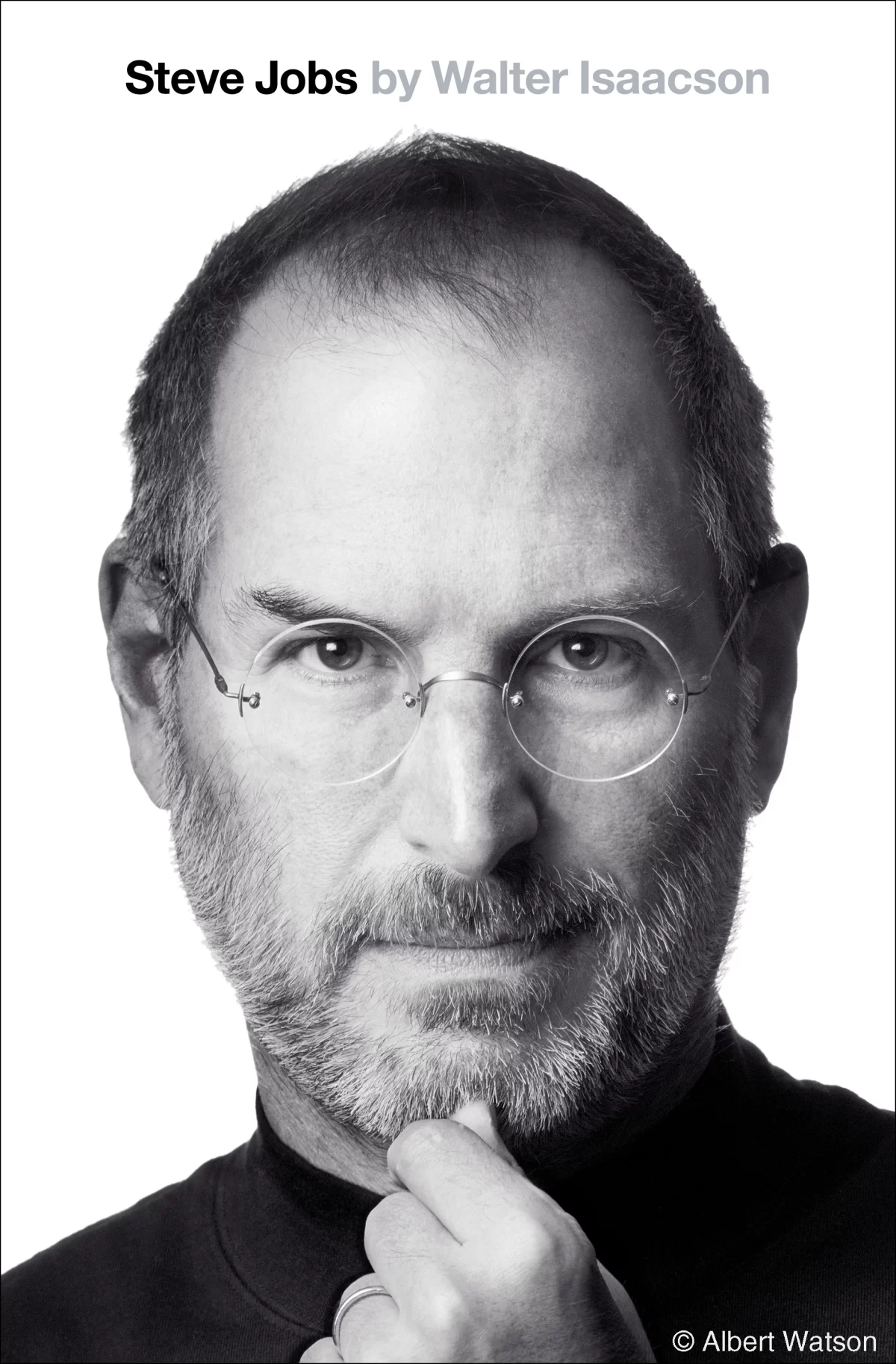
Steve Jobs

I don’t think I’ve ever finished a biography and felt so completely like I understood a person. Jobs was simultaneously a barefoot hippie who went on carrot-only diets until he turned orange, a man with a cruel streak who denied paternity of his own daughter and reduced engineers to tears in elevator rides, and one of the most visionary minds of the last century. Isaacson holds all three of those truths at once without flinching.

Rating ⭐️⭐️⭐️⭐️⭐️/5

What This Book Is Actually About

Steve Jobs is Walter Isaacson’s authorized biography of Apple’s co-founder, built on forty-plus interviews Jobs gave him in his final years, access Jobs himself initiated, on one condition: write all of it. The result is a warts-and-all portrait that even Apple executives hated. Tim Cook said it did Jobs “a tremendous disservice.” Jony Ive said his regard for it couldn’t be any lower. I’d argue that’s actually the highest compliment the book could receive. The people closest to him wanted a warmer version. Isaacson gave us a real one.

Isaacson is the best working biographer of scientists and technologists, his The Code Breaker on Jennifer Doudna and CRISPR is my all-time favorite from him, and this is him at his best, with his most complicated subject.

What Got Me Thinking

What I keep sitting with is how completely I felt I understood a person by the end. Not liked, that’s a different question, but understood. The early abandonment, the Zen Buddhism, the reality distortion field, the design obsession, the cruelty that was, in his own mind, inseparable from the standard he held everyone to. Isaacson never asks you to excuse any of it. He just shows you how it all fit together into someone who made objects that changed how billions of people move through the world.

My one genuine critique: he occasionally lets Jobs’s toxicity off the hook by circling back to remind you it produced great things. That starts to feel like an ends-justify-the-means argument by the final hundred pages, and I don’t think the book needs to make that move. The accomplishments speak for themselves.

Why I Think You Should Read This

5/5. I finished it in what I can only describe as the complicated middle, not admiring Jobs, not condemning him, just holding the full picture of someone who was genuinely difficult to look at directly and impossible to look away from. Read it and decide for yourself where you land on the man. Wherever that is, the book will have earned it.

My Takeaway

The question humming underneath every chapter is one Isaacson never quite asks directly: what do the people who build things that matter owe to everyone around them? Jobs seemed to believe the answer was nothing. I don’t believe that. But I came away genuinely uncertain about how to weigh what he built against how he built it, and that uncertainty felt honest, not like a failure to reach a verdict. The best biographies don’t resolve their subjects. They make them legible. This one does.

May’s Science Read is The Power of Life by Jessica Riskin about the life and discoveries of French biologist Jean-Baptiste Lamarck, and I have a feeling this one is going to spark some serious conversation. See you there. 📚
Invisible Women

Yes, I’m really late with this one!! I did finish the book in March, but editing the YouTube review took it out of me 🥲

Rating ⭐️⭐️/5

What This Book Is Actually About

Invisible Women is Caroline Criado Perez’s argument that the world, its medicine, its infrastructure, its safety standards, its economic models, has been built around a default human template that is male. Not through deliberate malice, but through the quieter, more pervasive force of data gaps. When women aren’t included in clinical trials, when their bodies aren’t used to calibrate safety equipment, when their unpaid labor goes uncounted in economic data, the result is a world that treats half the population as an afterthought. The book moves across medicine, urban planning, crash testing, workplace design, and disaster relief, stacking case after case until the pattern becomes impossible to ignore.

Criado Perez is a journalist and feminist activist, and this is very much a journalist’s book, reported, specific, and genuinely enraging in the way that the best nonfiction is.

What Got Me Thinking

I tried to read this book three times. I started it halfway through my PhD and had to put it down. Tried the audiobook, same problem. Finally finished it with the physical copy, specifically because I could set it down and walk away when I needed to. That’s not a critique of the writing. That’s what it feels like to sit with this much accumulated evidence of being overlooked.

The example that has stayed with me hardest: when a woman is in a car crash, she is 47% more likely to be seriously injured than a man and 17% more likely to die, because crash test dummies are modeled on a 5’9″, 170-pound male body. That’s not an abstract policy failure. That is a design choice, made from a data gap, that costs lives.

But the section that reorganized something in my thinking was the gap inside the gap. Trans women don’t appear in this book. In a work explicitly about how failing to collect data on people renders them invisible, that is a painful irony the book doesn’t fully reckon with. Black women, disabled women, and women in the Global South are also significantly underrepresented. Criado Perez acknowledges this, she says she struggled to find disaggregated data. But that scholarship existed. Dorothy Roberts had been writing about medical racism and Black women’s health for decades before this book was published. The absence isn’t just a data problem. It’s a question of whose invisibility gets treated as the central story.

Why I Think You Should Read It

2/5, and I want to be precise about what that rating means. The information in this book is genuinely important, everyone should know it, and I believe everything she has written. I still had an extremely hard time getting through it, and not entirely for the reason the book intends. The argument works. The execution has real limitations, and those limitations matter most in a book whose entire thesis is about who gets left out.

It’s an important topic. I just think it could have been executed better.

My Takeaway

Data gaps are not neutral. Every time a researcher says “we didn’t have enough data on X group,” that absence has a history, it was built by choices, and it has consequences for real people. Criado Perez makes that case compellingly for women as a category. What I keep thinking about is how that same logic has to apply within the category, recursively, or you end up replicating the exact structure you set out to critique. Invisibility doesn’t stop at one layer.

April’s Science Read is Steve Jobs by Walter Isaacson, a complete tonal departure, but equally hard to put down. See you there. 📚

Enshittification

Have you ever opened an app you used to love and thought, “when did this get so exhausting?” Maybe your search results feel less useful than they did five years ago. Maybe your social media feed is more ads than content. Maybe you’re paying more for tools that somehow do less. You’re not imagining it, and you’re definitely not alone. When I came across Enshittification by Cory Doctorow, I knew it was going to be the kind of book that puts words to a feeling so many of us have had for a long time. It absolutely delivered.

What This Book Is Actually About

Enshittification – yes, that’s the actual term – describes the predictable lifecycle of digital platforms. It goes something like this: platforms start out genuinely great for users, because that’s how they grow. Over time, priorities shift toward advertisers and business customers. And eventually, once people are locked in, the platform starts squeezing everyone for as much value as possible. The result is that the tools we rely on every day feel more frustrating, more extractive, and frankly less innovative than they used to.

Cory Doctorow is a science fiction author, tech journalist, and long-time digital rights activist – someone who has been thinking seriously about the relationship between technology and power for decades. What makes this book stand out isn’t just the diagnosis (though it’s a good one). It’s the argument underneath it: that the decline of the internet isn’t inevitable. It isn’t simply what happens when companies get greedy. It’s largely the result of specific policy decisions that allowed massive tech platforms to consolidate power and control the ecosystems around them. That reframe changed everything about how I read the rest of the book.

What Got Me Thinking

Honestly, the term “enshittification” alone is worth the price of admission. It’s funny, it’s uncomfortably accurate, and once you have the word, you can’t stop seeing the pattern everywhere.

But the section that really stayed with me was Doctorow’s discussion of solutions – because so often, books about tech dysfunction give you a thorough diagnosis and then leave you with a vague sense of dread. Doctorow doesn’t do that. He walks through concrete, realistic policy ideas that could meaningfully change the digital world we’re living in:

  • Stronger antitrust enforcement to break up monopolistic consolidation
  • Interoperability requirements so platforms can actually talk to each other
  • Right-to-repair protections that put ownership back in users’ hands
  • Limits on surveillance-based business models
  • Policies that make it easier for workers and innovators to move between companies

These might sound like dry policy debates – and I get that. But Doctorow makes them feel urgent, and as someone who works in science communication, I kept coming back to how directly these issues affect how scientific information moves through the internet. When algorithms are optimized for engagement above everything else, information ecosystems suffer. That includes science. It’s a thread I’m still sitting with.

Why I Think You Should Read This

A full 5/5 – genuinely one of the most useful things I’ve read in a while. Doctorow writes with urgency but not despair, and that combination makes this feel less like a tech critique and more like a call to pay attention. He’s angry about the right things and specific about the solutions, and that specificity matters. You come away not just understanding what went wrong, but with a clearer sense of what could actually change it.

Whether you’re in science, education, journalism, or just someone who uses the internet every day (so, everyone), the argument here is relevant to you. It’s a 5/5 from me – genuinely one of the most useful things I’ve read in a while.

My Takeaway

The biggest thing I’m carrying with me from this book: decline isn’t destiny. The frustrating digital world we navigate every day didn’t just happen to us – it was built through specific choices, and it can be rebuilt through better ones. Doctorow writes with urgency but not despair, and I think that’s exactly the energy we need when talking about big, complicated systems, whether those systems are tech platforms or the scientific enterprise itself. It reminded me that advocacy, in any space, starts with understanding how we got here, and then refusing to stop there.

Come Read Along

Have you read Enshittification? I’d love to hear what stuck with you, drop your thoughts in the comments or come find me on Instagram where we can keep this conversation going.

March’s Science Read is Invisible Women: Data Bias in a World Designed for Men by Caroline Criado Perez,  and I have a feeling this one is going to spark some serious conversation. See you there. 📚
The Evolution of Beauty

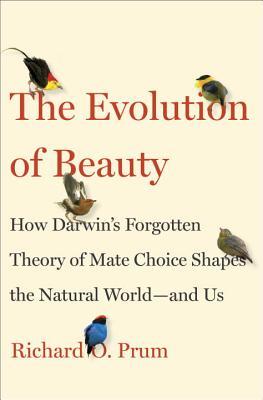
Survival of the fittest. It’s the phrase most of us learned first about evolution, and if you’re anything like me, it became the lens through which almost everything in evolutionary biology made sense. Stronger, faster, better adapted, those traits survive. Simple, clean, satisfying. Except it turns out that’s only part of the story, and the part we’ve been leaving out is, frankly, a lot more interesting. The Evolution of Beauty cracked that lens open for me in the best possible way, and somewhere along the way it also made me seriously consider taking up birdwatching, which I did not see coming.

What This Book Is Actually About

The Evolution of Beauty is ornithologist and evolutionary biologist Richard Prum’s passionate, meticulously argued case for bringing a largely sidelined idea back to the center of evolutionary thinking: sexual selection. Specifically, the power of mate choice, and the radical possibility that aesthetic preferences, the simple fact of finding something beautiful or attractive, can drive evolutionary change entirely independently of survival advantages.

This isn’t a new idea. It comes directly from Charles Darwin, who explored it in his lesser-known second book, The Descent of Man, and Selection in Relation to Sex. Darwin described “the taste for the beautiful” as a distinct evolutionary force, one that operates alongside natural selection but doesn’t answer to it. The idea was largely dismissed or absorbed into the mainstream natural selection framework for over a century. Prum’s book is an extended, evidence-rich argument for why that dismissal was a mistake, and why beauty itself deserves recognition as a genuine driver of how life on Earth has evolved.

What Got Me Thinking

Prum really likes ducks. I say this with complete affection, because by the end of this book he had me thoroughly hooked on ducks too, and on birds generally, in a way I did not anticipate when I picked this up. The physical copy has photographs, and they are genuinely stunning. When you see the iridescent plumage, the elaborate tail feathers, the courtship displays that seem to have no possible survival justification,  you start to feel Prum’s argument in a way that pure text can’t quite deliver. These traits exist because they were found beautiful. Because somewhere in evolutionary history, a preference emerged, and the trait that satisfied that preference got passed on, and over generations an extraordinary, seemingly impractical display of color or movement became fixed in a species. Beauty shaped the biology. That idea, once it lands, is hard to let go of.

The section that reorganized something in my thinking most fundamentally was Prum’s treatment of the distinction between natural selection and sexual selection as genuinely separate forces. We tend to assume they converge,  that whatever gets selected for sexually must also offer some survival advantage, otherwise why would it persist? Prum argues, with Darwin, that this assumption is wrong. Mate choice can produce traits that are purely aesthetic, that offer no survival edge and may even be costly, simply because the preference for them exists and self-reinforces over time. The taste for the beautiful is its own evolutionary engine.

There are stretches of ornithological detail that go deep, deep enough that I found myself genuinely considering whether a pair of binoculars might be a reasonable next purchase. And toward the end, when Prum extends his framework to human sexual evolution, the argument does become more speculative. That leap from bird behavior to human psychology is a long one, and I think the book is honest enough that you can feel where the firm ground ends and the interpretation begins. It didn’t undermine the earlier chapters for me, it just asked me to hold that section with a little more skepticism.

Why I Think You Should Read This

A solid 4/5 – and the rating is entirely about those speculative stretches at the end, not about any shortage of ideas worth having. Prum’s passion for his subject is present on every page in the best possible way – the kind of infectious enthusiasm that makes you care about things you never expected to care about. Iridescent plumage. Elaborate courtship dances. The evolutionary logic of beauty. I came in mildly curious and came out wanting to learn bird calls.

If you’ve ever felt like the standard survival-of-the-fittest narrative leaves something unexplained about the sheer extravagance of the natural world,  the peacock’s tail, the bird of paradise’s dance, the seemingly unnecessary gorgeousness of so much of life on Earth, this book is the answer you were looking for. Highly recommended for anyone curious about evolution beyond the standard narrative.

My Takeaway

What I keep sitting with is how much of the living world we’ve tried to explain through a single lens, usefulness, survival advantage, adaptive value, and how much of it quietly resists that framing. Beauty persists in nature not always because it helps an organism survive, but sometimes simply because it was chosen. Because a preference existed, and the trait that satisfied it got passed on. That’s a different kind of logic than the one I was trained on, and it opens up something generous about how evolution actually works, messier, more aesthetic, more driven by desire than pure utility. As someone who thinks about science communication, I find that humanizing. The natural world isn’t just optimizing. Sometimes it’s just making something beautiful because something else found it beautiful first.

Come Read Along

Has this one shifted how you think about evolution, or do you have a favorite example of a trait that seems to defy simple survival logic? Drop it in the comments or find me on Instagram. And if anyone else is now considering birdwatching after reading this, please let me know immediately so we can compare notes.

February’s Science Read is Enshittification by Cory Doctorow, a complete tonal departure from the birds and the bees, but equally hard to put down. See you there. 📚

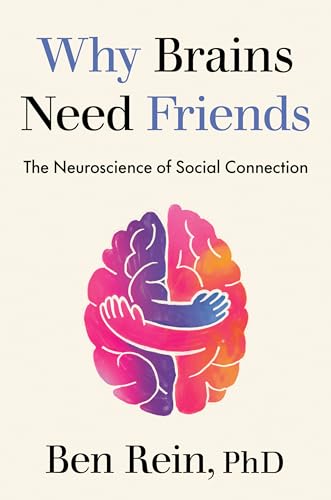
Why Brains Need Friends

I read most of this book sitting with my grandma, and somewhere in the middle of it we ended up having one of the best conversations we’ve had in a long time, about loneliness, about getting older, about how easy it is to let the people you love slip into the background of a busy life. That conversation is probably the best review I can give this book. It does something rare: it takes a body of scientific research and makes it feel immediately, personally relevant to whoever is in the room with you. My grandma isn’t a neuroscientist. Neither conversation required her to be.

What This Book Is Actually About

Why Brains Need Friends is Dr. Rein’s case for something that sounds simple until you see the full weight of evidence behind it: human beings are hardwired for connection, and when that connection is absent, our health, physical, cognitive, emotional,  suffers in measurable, documented ways.

Dr. Rein moves efficiently through the history of socialization research, breaking down decades of neuroscience and psychology without the unnecessary fluff that bogs down so many books in this space. The throughline is clear from the start: we spend enormous energy monitoring and managing what breaks down inside our bodies, diet, sleep, exercise, genetics, while consistently underestimating how much the world outside our bodies shapes our health. Human connection isn’t a lifestyle bonus. It is, the science increasingly suggests, a biological requirement. And understanding the neuroscience of isolation, Dr. Rein argues, could help us come together in a world that is becoming more divided by the year. That’s not a small ambition for a book, and he earns it.

What Got Me Thinking

The highlight that stopped me completely was the data on romantic partnership and cancer mortality. Studies show that people in romantic relationships have a meaningfully higher likelihood of surviving cancer than those who are not. Could there be confounding factors? Absolutely, and Dr. Rein acknowledges that honestly. But he also asks the quieter question underneath the statistics: how much does feeling loved and cared for actually affect our capacity to heal? That question doesn’t have a clean answer yet, and the book doesn’t pretend it does. But sitting with it, especially having just watched my grandma light up in the middle of a conversation she didn’t know she needed, made it feel less like a research question and more like something I already knew in a different register.

What I also appreciated deeply was that the book doesn’t take the easy route of blaming everything on smartphones. Yes, devices are part of the story. But Dr. Rein engages honestly with the more complicated reality: the older we get, the more structurally isolated we tend to become, regardless of screen time. Social networks shrink. Mobility decreases. The infrastructure of daily life stops generating the incidental human contact that younger people take for granted. That’s not a phone problem. It’s a design problem, in how we build communities, care for elderly relatives, and structure the later chapters of a human life.

As a template for accessible science communication, this book is also worth studying in its own right. Dr. Rein demonstrates exactly what it looks like to take a complex body of research and make the takeaway clear without oversimplifying the science. No unnecessary jargon, no hedging so heavy it buries the point. Just evidence, clearly presented, in service of something that matters.

Why I Think You Should Read This

Five out of five, and this is genuinely one of the most giftable science books I’ve come across in this entire reading series. If you have someone in your life who is curious about health or how the brain works but wouldn’t necessarily pick up a neuroscience book on their own, this is the one to hand them. It is the kind of push, seeing all the evidence assembled in one place, that makes you actually want to call someone, visit someone, be more deliberate about the relationships you might have been letting drift.

And go check in on an elderly relative. The book will tell you why. Your gut already knows.

My Takeaway

What I keep coming back to is how much we have medicalized health while simultaneously ignoring one of its most powerful inputs. We optimize sleep, track nutrition, monitor heart rate, and then sit alone scrolling for three hours without registering that as a health behavior at all. Dr. Rein’s book reframes connection not as a soft, emotional nice-to-have but as a hard, biological necessity, one with real correlative data attached to it. In science communication, we talk a lot about making research relevant to people’s daily lives. This book does that effortlessly, because the subject matter already is. The science of why we need each other is, ultimately, a story about all of us.

Come Read Along

Did this one make you want to call someone? Because it absolutely did that to me. I’d love to hear how it landed for you, drop your thoughts in the comments or find me on Instagram. And if you’ve been reading along with the series, you know how much I value the community this has built. That’s not accidental. Turns out brains really do need friends. 📚

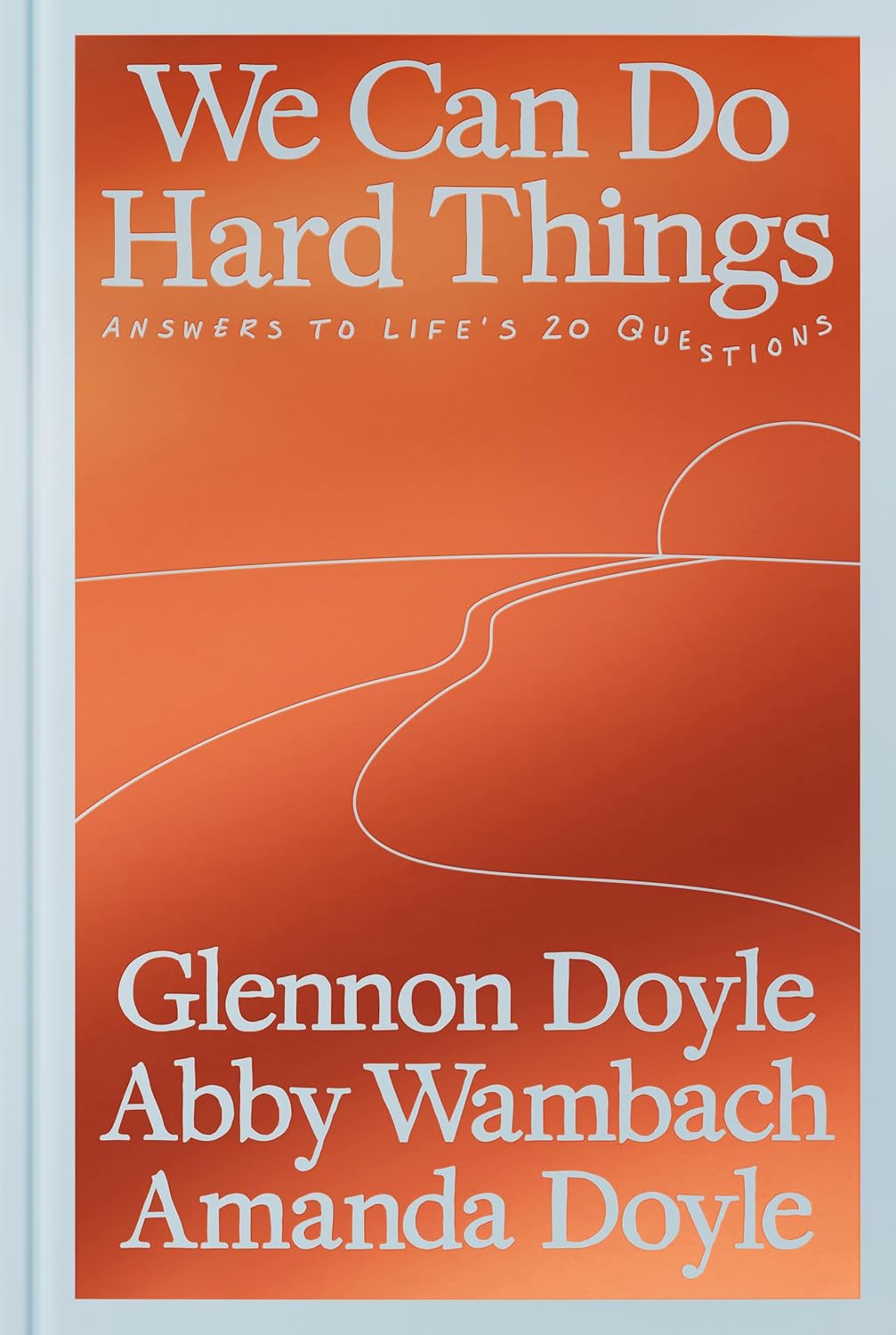
We Can Do Hard Things

I want to be upfront with you: this wasn’t supposed to be a Science Read. I usually reserve this space for biological and physical sciences, the kind of books I can connect back to research, policy, cells, molecules, systems. This one is none of those things. And it is, without question, the most important book I’ve read this year. I’m a week late posting this, and I’m going to tell you exactly why.

What This Book Is Actually About

We Can Do Hard Things is built around a deceptively simple premise: that listening to your body, its signals, its grief, its stored emotions, its needs, is not separate from health. It is health. That western medicine, for all its extraordinary capability, has been treating the body as a biological system while largely ignoring the equally real and equally consequential inner landscape that shapes how we move through the world.

The book is written as a series of quotes and reflections rather than conventional chapters, which is not at all how I usually read. But that structure turns out to be exactly right for what the book is doing, it reads like one long, flowing conversation, each point arriving at exactly the moment it’s relevant, weaving together into a narrative that somehow manages to feel both universal and deeply personal at the same time. It breaks down the individual pieces that have made you who you are, and asks honest questions about how much of who you present to the world has been shaped by what society told you to hide.

What Got Me Thinking

I have to be honest with you about what this book actually did to me, because I think that’s the only way to honor it properly.

I cried reading this. More than I expected. I processed grief I didn’t know I was still carrying, about leaving academia, about losing my identity not once but twice in the space of two years. There is something about seeing your own experience reflected back at you in language that is honest and warm and completely without judgment that breaks something open. This book did that. Blame it for the late post. It took me somewhere I didn’t know I needed to go, and I had to stay there for a while before I could come back and write about it.

The section I keep returning to most is the one about productivity and self-worth, the idea that rest has to be earned, that a day without output is somehow a day less deserved of its small joys. I recognized myself so completely in that framing that it was uncomfortable. The narrative I had built around what I owe the world, and what I owe myself, in order to justify simply existing in a day is one I had never fully examined. This book held it up and asked me to look at it directly. And then, gently and without prescribing a single right answer, it suggested that reconstructing that narrative was possible. That leaning into every day being the best day ever, not as toxic positivity, but as a genuine reorientation toward what a day is actually for, was something worth trying.

What the book doesn’t do is equally important. It doesn’t hand you a ten-step plan. It doesn’t sell you on one right way to heal, because there isn’t one. That’s the most powerful message of all, that there are as many paths through hard things as there are people carrying them, and that the work of finding yours is yours alone to do, but you don’t have to do it in isolation.

Why I Think You Should Read This

Five out of five, and I say this as someone who would not normally pick up a psychology or self-help book. I understand if that’s not your usual territory. It isn’t mine either. But if you try one book outside your usual genre this year, please let it be this one. There are parts of it for every chapter of your life, and it will find the chapter you’re in right now with an accuracy that feels almost unfair.

This book made a convincing case for something I think science, in all its forms, sometimes forgets: that the data we collect from our bodies, the signals they send, the emotions they store, the grief they carry quietly for years, are as real and as worth attending to as any measurement we take in a lab. Western medicine is extraordinary. And it is incomplete without this.

My Takeaway

The thing I’m carrying most from this book is permission, which sounds small and turns out to be enormous. Permission to rest without earning it. Permission to grieve things that are over. Permission to reconstruct the story you’ve been telling yourself about what you have to be in order to deserve the life you’re living. Science gives us tools to understand the world outside our bodies with extraordinary precision. This book is a reminder that the world inside them deserves the same quality of attention, the same curiosity, the same care, the same willingness to sit with uncertainty and ask what’s actually true.

Come Read Along

Has a book ever found you at exactly the right moment and taken you somewhere you didn’t know you needed to go? I’d love to hear about it,  in the comments, on Instagram, wherever feels right. This one was that book for me. I hope it finds you when you need it too.

October’s Science Read is Why Brains Need Friends by Dr. Rein, back to the science, and a book about something every scientist who has ever buried themselves in work at the expense of everything else probably needs to read. See you there. 

With love,
Chloe 🩵

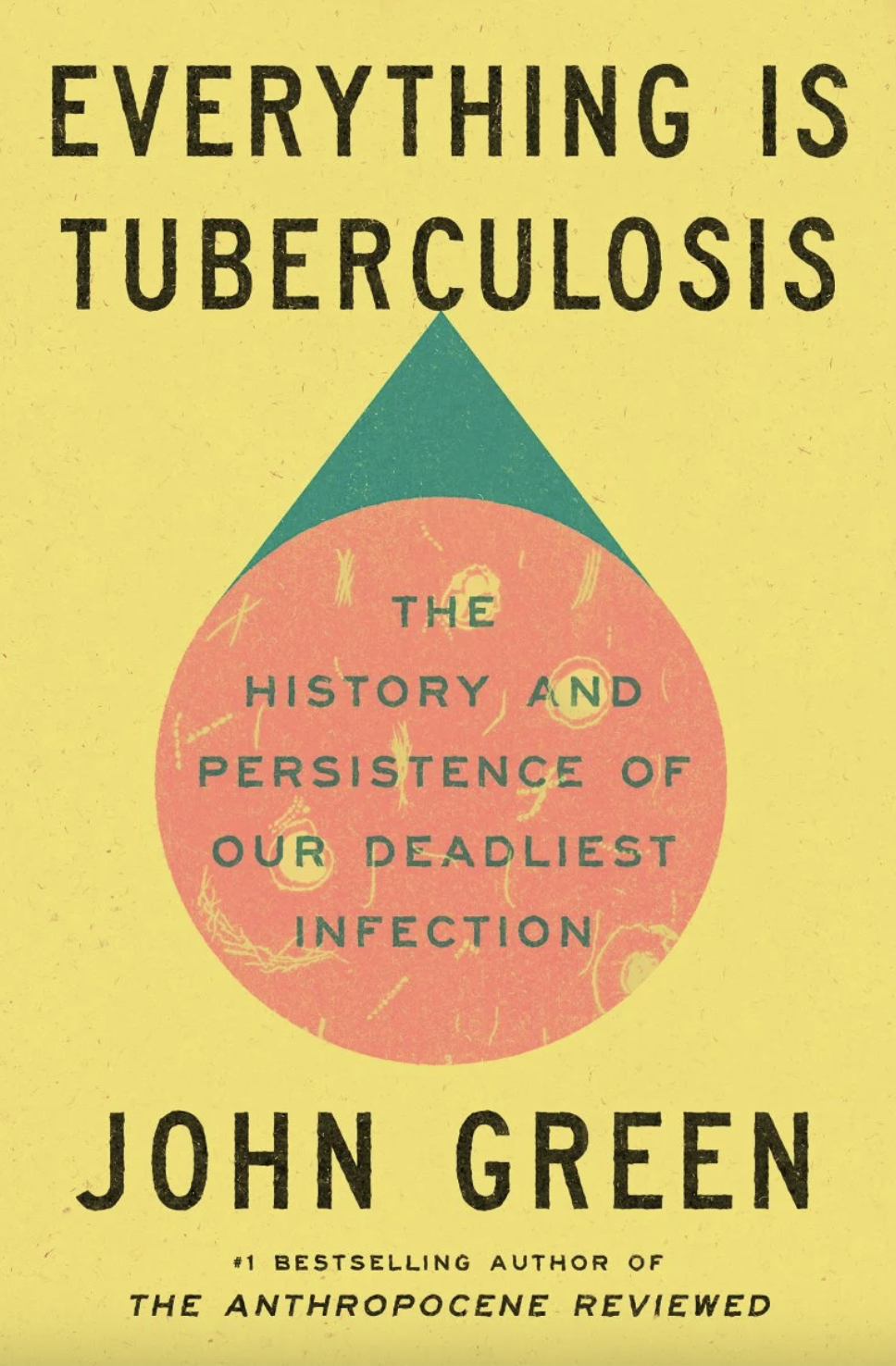
Everything is Tuberculosis

I will start by telling you that the photo accompanying this post was taken by my husband, who I asked to take it, and who produced exactly the kind of photo you’d expect from someone who was asked to take your photo. Some things are universal. So is tuberculosis, apparently, which is the kind of sentence I did not expect to be writing this month, and yet here we are.

What This Book Is Actually About

Everything is Tuberculosis is author John Green’s examination of one of the oldest, deadliest, and most persistently misunderstood infectious diseases in human history. Tuberculosis, a bacterial infection primarily targeting the lungs, has been with us for thousands of years, and Green’s book traces that long arc: from TB’s historical romanticization as a disease of sensitive artists and poets, through its gradual reframing as a marker of poverty and moral failure, to its present-day reality as the deadliest infectious disease on the planet, killing millions annually despite being entirely curable.

Green opens with a personal narrative, visiting Sierra Leone and meeting a drug-resistant TB patient named Henry Reider, whom he initially mistook for a child because the disease had stunted his growth. That image anchors the entire book. This isn’t a history of a disease. It’s a history of what happens when a curable disease is allowed to keep killing people because the systems designed to treat it aren’t reaching the people who need them most. Green writes with urgency and genuine emotion throughout, and the historical sweep he covers,  from ancient civilizations through some fairly bold claims, including that TB played a role in starting World War One, is ambitious, occasionally a reach, but always compellingly told.

What Got Me Thinking

The central contradiction the book keeps returning to is the one that haunts global health more broadly: we have the resources to combat TB. We have the drugs. We know how to treat it. And yet millions of people die from it every year, not because the science failed, but because the systems failed. Because health inequities mean treatment doesn’t reach the people who need it. Because incomplete drug courses, themselves often the result of those same inequities, allow the bacteria to develop resistance. Because a disease that was once romanticized as poetic has been reframed as a disease of the poor, and that stigmatization shapes how seriously it gets taken and how reliably it gets funded.

Green makes this contradiction feel urgent and specific rather than abstract, and he wrote this book at exactly the right moment to make that urgency land. Reading about TB treatment programs and USAID funding in the same news cycle where that funding is being halted, with hundreds of thousands of treatment courses expected to be affected, makes the book feel less like history and more like a warning that is actively not being heeded. That part hit hard.

Where the book lost me was in the science itself. I came in wanting to understand TB as a disease, the biology of the bacterial infection, the mechanisms of drug resistance, the immunology of why some people develop active disease while others don’t. Green gestures at all of this, but never goes deep enough for the science to feel satisfying. The history is rich. The emotional narrative is powerful. But when I was asking for more of the biological detail, the book kept moving back toward the human story rather than into the cellular one. As I heard someone put it after reading, it reads more like a really good podcast than a science book. That description is accurate, and depending on what you’re looking for, it’s either a feature or a limitation.

The WW1 claim is also worth flagging, I follow the dots Green is drawing, and the historical argument is interesting, but it leans toward the speculative in ways that felt a little far-fetched. He’s clearly aware of that, and doesn’t oversell it, but it’s the kind of claim that pulls you briefly out of the flow.

Why I Think You Should Read This

Three out of five, and that rating reflects a mismatch between what I was hoping for and what the book actually is, rather than any failure of the book on its own terms. Green is a gifted writer and Everything is Tuberculosis is well-researched, emotionally intelligent, and deeply important as a piece of health advocacy. If you want to understand why TB remains one of the world’s most devastating public health crises despite being curable, and how stigma, poverty, and policy failures combine to keep it that way, this book will give you that understanding clearly and movingly.

If you’re coming in hoping for rigorous biological science, the mechanisms, the microbiology, the immunology, you may find yourself wanting more than the book is prepared to offer. Go in knowing which book you’re reading, and you’ll get a lot out of it.

My Takeaway

What I keep sitting with is the gap between scientific capability and public health reality, a gap that shows up in TB, in vaccine access, in drug pricing, in almost every conversation about global health equity. We have, repeatedly, solved the scientific problem. And then failed to solve the human one. Green’s book is fundamentally about that failure, about what it means to live in a world capable of curing a disease that is still killing millions of people every year because we haven’t collectively decided it matters enough to fix. That’s not a science problem. It’s a values problem. And science communicators, I think, have a role to play in making that distinction visible, and in making the case that the values problem is just as urgent as any question we’re trying to answer in a lab.

Come Read Along

Have you read this one, or do you have thoughts on how we tell stories about global health in ways that actually move people to care? I’d love to hear from you in the comments or over on Instagram.

September’s Science Read is We Can Do Hard Things, a complete departure from everything that came before it in this series, and the most important book I’ve read this year. See you there. 📚

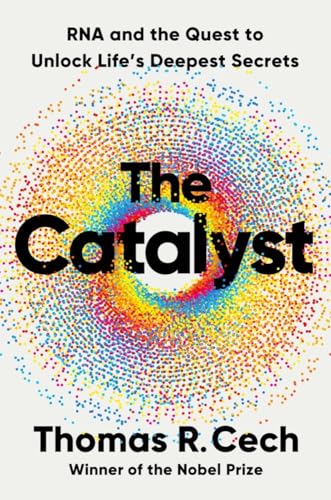
The Catalyst

I have two things to say before we get into this. First: why is there no RNA emoji? There is a DNA emoji. There is a microbe emoji. The molecule that is quietly running more of the show than most people realize deserves its own emoji, and I will be thinking about this injustice for longer than is probably reasonable. Second: this is the first Science Read in this entire series that made me genuinely miss the lab bench. I did not expect to be writing those words from my honeymoon. And yet here we are.

What This Book Is Actually About

The Catalyst is written by Thomas R. Cech, Nobel Prize winner in Chemistry in 1989, awarded for discovering that RNA isn’t just a passive messenger between DNA and proteins but can itself act as a catalyst, actively driving chemical reactions in the cell. That discovery rewrote a fundamental assumption of molecular biology, and Cech’s book is his attempt to bring general readers inside the full sweep of what RNA research has revealed in the decades since, and why it matters far more than most people realize.

The book moves through RNA’s history chapter by chapter, each one packed with discoveries and the scientists behind them, building from the basics of what RNA is and does, through the landmark findings that expanded our understanding of its roles, all the way to the mRNA vaccine technology that became a household conversation in 2020. Cech writes with the clarity of someone who has spent decades making complex science accessible, and with the humility of someone who understands that no discovery happens in isolation. Collaboration, funding battles, gender discrimination, the limitations of available techniques, the constraints of model organisms, he engages with all of it honestly, and that honesty is a significant part of what makes this book feel trustworthy rather than triumphalist.

What Got Me Thinking

I should be transparent: my PhD research was in non-coding RNA, which means reading this book felt like a light, deeply satisfying refresher on territory I know intimately, and also like being reminded, repeatedly, why I fell in love with it in the first place. Non-coding RNA was for a long time the part of the genome dismissed as “junk”, sequences that didn’t code for proteins and therefore, the assumption went, didn’t do much of anything. The story of how that assumption was dismantled, discovery by discovery, is one of the most exciting narratives in modern molecular biology, and Cech tells it with the enthusiasm it deserves.

What I appreciated most was how each chapter builds on the last, a discovery opens a question, the question drives the next experiment, the next experiment reveals something no one expected, and suddenly the picture of what RNA can do has expanded again. It never feels drawn out. It feels like momentum.

The argument Cech makes about basic science funding is the one I haven’t been able to stop thinking about, especially given how much the funding landscape has shifted since this book was published in 2024. Most people now associate RNA with vaccines, and rightly so. But those vaccines only existed because researchers spent decades studying RNA with no particular medical application in mind, asking fundamental questions about what RNA is and what it can do, long before anyone thought to ask whether it could be used therapeutically. Disease-targeted research is valuable and necessary. But without the basic science that preceded it, the translational research has nothing to build on. Cech makes that case clearly and urgently, and the timing of this book, arriving just as basic science funding faces increasing pressure, gives that argument a weight that feels uncomfortably prescient.

The one honest note: the book covers so much ground and involves so many scientists and discoveries that it doesn’t read like a novel with a single protagonist driving the story forward. If you’re coming in hoping for the narrative momentum of something like The Emperor of All Maladies, you may find this more dense. But if you’re willing to follow the science as the protagonist, letting each discovery lead you to the next, the structure works beautifully.

Why I Think You Should Read This

Six out of five, and I’m standing by it. This is one of my new favorite science reads in the entire series, and not just because the subject matter is close to my own research. Cech does something genuinely difficult, he takes decades of worldwide scientific collaboration, involving hundreds of researchers across multiple fields, and weaves it into a narrative that never loses the thread or the wonder. The science is rigorous. The storytelling is warm. And the argument about why we need to protect basic research funding is one that everyone, scientists and non-scientists alike, needs to be hearing right now.

My Takeaway

What I keep carrying from this book is the reminder that the most transformative discoveries in science are almost never the ones anyone planned for. RNA catalysis, non-coding RNA, mRNA vaccines, none of these were the intended destination when the researchers who laid the groundwork started their experiments. They were following questions, not applications. And the funding structures that allow that kind of open-ended, curiosity-driven inquiry, the basic science that looks impractical until suddenly it isn’t, are exactly what’s under pressure right now. Protecting that space isn’t just good science policy. It’s how we ensure the next unexpected breakthrough actually gets to happen.

Come Read Along

RNA enthusiasts, molecular biologists, and anyone who has ever wondered what their cells are actually doing, this one is for you. Drop your thoughts in the comments or find me on Instagram. And yes, there’s a honeymoon sneak peek in the photo, any guesses where we went? 🌍

August’s Science Read is Everything is Tuberculosis by John Green, a completely different corner of the science world, but just as important a conversation. See you there. 📚
The Kissing Bug

I have never read a science book quite like this one. And I mean that as both a compliment and, ultimately, the source of my frustration, because The Kissing Bug does something I haven’t seen another book in this series come close to doing, and then stops just short of the finish line in a way that left me genuinely unsettled. I finished it wanting more in the best possible way, and also in the most maddening possible way. Let me explain.

What This Book Is Actually About

Chagas disease, also known as the Kissing Bug disease, is an infectious disease caused by a parasite found in the feces of the triatomine bug. It is endemic across Central and South America, largely invisible to the medical establishment in wealthier countries, and if left untreated it causes congestive heart failure by slowly destroying the walls of the heart. The parasite, in the most literal sense, eats you from the inside.

Daisy Hernandez came to this subject personally, Chagas affected her own family, and The Kissing Bug is her attempt to tell the story of this disease not through data and clinical literature but through the people living inside it. She moves chapter by chapter through individuals whose lives have been shaped by Chagas, patients, families, researchers, advocates, weaving their stories into a portrait of a disease that has been systematically overlooked, underfunded, and stigmatized as a disease of poverty in the regions where it does the most damage. Hernandez is a gifted writer, and that gift is present on every page. The first-person storytelling pulls you in and keeps you there. I found myself genuinely rooting for each person she introduced, which is not something I say lightly about a science book.

What Got Me Thinking

The writing here does something genuinely important that I hope more science nonfiction takes note of. Most books in this genre lead with the science and bring in human stories to illustrate it. Hernandez inverts that entirely, she leads with the humans and lets the disease emerge through them. For most of the book, that inversion is a revelation. It adds depth and urgency to a subject that most readers will know nothing about, and it makes you care about Chagas in a way that a clinical overview simply wouldn’t.

The stories running through each chapter made this a genuine page-turner, which is not a phrase I use often about books on infectious disease. There isn’t one cohesive plot in the traditional sense, but the momentum never dropped because Hernandez keeps finding new angles, new people, new ways to show you the same disease from a different human vantage point. Each chapter opens a new window.

And then the book ends.

I sat with it for a moment, genuinely expecting the next chapter to load. It didn’t. There was no closing synthesis of the science. No small chapter walking through what we actually know about Chagas at the cellular or immunological level. No call to action, no concrete guidance for how to learn more, advocate for funding, or support the people working on poorly understood tropical diseases. The ending just, stopped. After spending the entire book making me care intensely about this disease and the people it affects, Hernandez leaves you with nowhere to put that caring. It felt like an unresolved story. It felt, if I’m being completely honest, like finishing Game of Thrones. I looked up from the last page and thought: that was the ending?

Why I Think You Should Read This

Three out of five, and every point of that rating is earned by Hernandez’s writing, which is undeniably brilliant and which I genuinely hope influences how science nonfiction is written going forward. The human-first approach to telling a disease story is powerful and underused, and she executes it with real skill.

But Daisy Hernandez, you clearly know this disease intimately. You spent years studying it, following its patients, documenting its impact. You had the knowledge to give readers the scientific grounding they needed at the end. The choice not to feels like the one place the book lets both the science and the reader down. We needed that resolution. We needed something to do with everything the book made us feel.

Read it for the storytelling. Just know going in that the ending will leave you wanting, and have a follow-up resource ready for when it does.

My Takeaway

What I keep thinking about is the responsibility that comes with making a reader care. Hernandez does the hardest part, she makes Chagas feel urgent and human and impossible to look away from. And then the book ends without telling you what to do with that urgency. In science communication, I think about this constantly: it is not enough to make people feel something. You have to give them somewhere to go with the feeling. Awareness without agency is just frustration. The best science communication, the kind that actually moves the needle on underfunded, overlooked diseases like Chagas, closes the loop. It shows people the problem, makes them care about it, and then hands them a thread to pull. This book gets two out of three. That last one matters.

Come Read Along

Have you read The Kissing Bug, and did the ending land differently for you than it did for me? I genuinely want to know if I missed something. Drop it in the comments or find me on Instagram.

July’s Science Read is The Catalyst by Thomas R. Cech, Nobel Prize winner in Chemistry and the scientist who discovered that RNA itself can act as a catalyst. A book about the molecule that is quietly running more of the show than most people realize, and one I have been looking forward to for a long time. See you there. 📚

Challenger

Let me be upfront about something before we get into this one: it took me three months to finish. Not because the book isn’t good, it is, genuinely and impressively good, but because I am, at my core, a cells-and-bugs person. Diseases we can see under a microscope. Consequences we can trace through a body. Space science has always felt abstract to me in a way I’ve never quite been able to bridge, and Challenger lives firmly in that territory. I want to be transparent about that bias, because I think it’s the only honest way to review a book I deeply respect and cannot call a page-turner.

What This Book Is Actually About

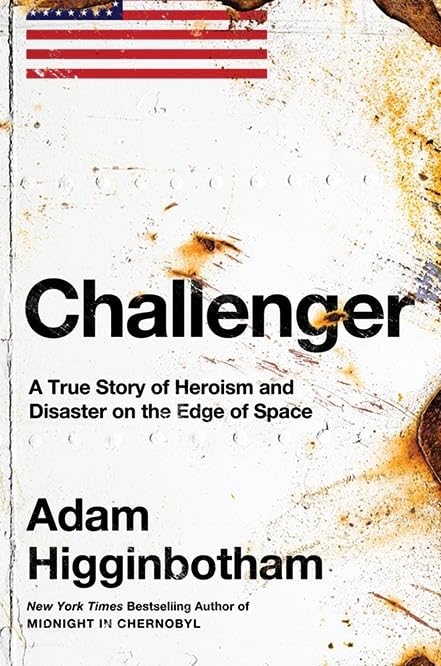
Challenger is Adam Higginbotham’s meticulously reconstructed history of one of the most consequential disasters in the history of American science, the 1986 Space Shuttle Challenger explosion, which killed all seven crew members 73 seconds after launch and sent NASA and the American space program into decades of stagnation. Higginbotham, who also wrote the acclaimed Midnight in Chernobyl, brings the same obsessive archival rigor to this subject, interviewing survivors, families, engineers, and officials, and reconstructing events from the ground up with a level of detail that is both extraordinary and, at times, genuinely dense.

What distinguishes the book from a straightforward disaster narrative is its scope. Challenger is not just about why one mission failed. It is about the entire arc of the American Space Age, the extraordinary momentum of the 1960s and 70s, the Cold War pressure to outpace the Soviet Union, and all the small, compounding factors that quietly eroded the culture of safety and rigor that the early program was built on. The Challenger disaster, Higginbotham argues, didn’t happen suddenly. It was assembled, incrementally, over years.

What Got Me Thinking

The argument that hit hardest, and that I think extends well beyond NASA, is the portrait of how institutional culture degrades under sustained pressure. Public interest in the space program waned after the initial rocket launches, and with it went the scrutiny that had kept safety standards sharp. The quadruple-checking that characterized the early program became an obstacle to timeline. Engineers were given goals that felt, and in some cases genuinely were, impossible. And somewhere in that gradual erosion, sticking to a launch schedule became more important than the safety concerns individual engineers were raising and being asked to set aside.

That arc, from extraordinary rigor to normalized risk, is one of the most important patterns in the history of institutional failure, and Higginbotham traces it with clarity and without simplifying the human complexity underneath it. No single villain. No single moment where everything went wrong. Just a series of small decisions, each of which seemed defensible in isolation, accumulating into a catastrophe.

The chapter structure mirrors that accumulation in a way that is impressive even when it’s slow, each section adding one more layer to a picture that only becomes fully visible at the end. I can see exactly why this book has been described as a thriller. For readers who find space history naturally gripping, it probably is one. For me, the density was real, and I want to be honest about that rather than pretend the three months it took me to finish were effortless.

Why I Think You Should Read This

Four out of five, and I’m knocking off one star specifically because the thriller framing that accompanied the marketing didn’t quite match my experience of reading it, and I think that mismatch is worth naming for anyone else who, like me, finds space science more abstract than visceral. That is a reader preference note, not a quality note. The quality is unimpeachable.

If you are fascinated by the history of the space program, by institutional failure, by the human cost of bureaucratic pressure on scientific decision-making, this is among the best books you will find on those subjects. Higginbotham is a remarkable reconstructive historian, and the level of care that went into this book is evident on every page. I cannot think of a better way this history could have been written.

My Takeaway

What I keep sitting with is how much the Challenger disaster has to say about the relationship between external pressure and scientific integrity, a relationship that feels urgently relevant right now. When timelines matter more than safety checks, when engineers raising concerns are asked to stand down, when the culture of an institution shifts from “is this ready?” to “we need this to be ready”, the consequences are sometimes catastrophic and always foreseeable in hindsight. Science communication has a role here too: keeping the public engaged with the work, so that the scrutiny that comes with public interest never fully fades. The space program stagnated in part because people stopped watching. What we stop watching, we stop protecting.

Come Read Along

Have you read Challenger, and did it grip you the way it’s been described? I’m genuinely curious whether the thriller framing landed differently for readers who love space history. Drop it in the comments or find me on Instagram. And if you want to find all of these books with my full reviews, my Goodreads account is linked in my bio 📚

March’s Science Read is The Kissing Bug by Daisy Hernandez, and I have already started it, and I am already telling you to go get a copy so you can read along. See you there. 🫶

    Share Your Story