βœ•

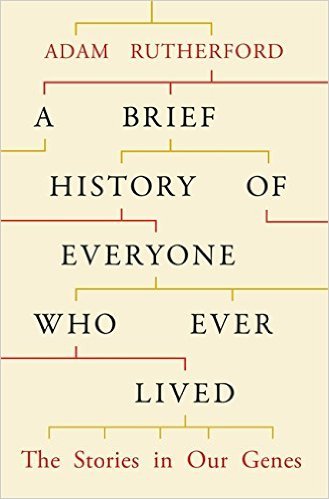
A Brief History of Everyone Who Ever Lived (Part 2 of 2)

What if everything you think you know about your ancestry is both true and not nearly as simple as you’ve been told? That question is essentially the engine of this book, and it’s the kind of question that sounds almost casual until you’re three chapters in and your entire mental model of human genetics has been quietly, completely dismantled. I ended 2023 with this one, and I could not have chosen better. A Brief History of Everyone Who Ever Lived is exactly the book that reminds you why you fell in love with biology in the first place.

What This Book Is Actually About

Adam Rutherford is a geneticist, science writer, and broadcaster who has a rare and genuinely enviable gift: the ability to take four billion years of complex genetic evolution and make it feel not just accessible but thrilling, without ever sacrificing the actual science to do it. This book is his attempt to tell the story of humanity entirely through our genes, what they reveal about where we came from, how we’re all connected, and just as importantly, what they absolutely cannot tell us.

He takes us from the first bipedal apes four million years ago through the entire arc of scientists building on their predecessors to understand what our genome holds. Along the way he dismantles some of the most persistent myths about genetics, the science fiction thriller version of DNA where genes determine intelligence, predict behavior, or sort humans into clean categories. Our brains, he reminds us, are not more evolved than other species. They are differently evolved. The Human Genome Project didn’t solve our genome. It expanded our toolset to explore it further. Every answer, as always in science, opened more questions.

What Got Me Thinking

The line that stopped me in my tracks early on, “You carry an epic poem in your cells”, is the kind of science writing that makes you close the book for a moment just to sit with it. It’s not decoration. It’s the thesis. Everything Rutherford writes flows from that idea: that our genome is not a fixed blueprint but a living, layered, endlessly complex record of everything that had to happen for you to exist.

One of my longstanding fascinations has always been genetic ancestry, the Ancestry.com question. Can you really submit a saliva sample and find out what percentage English or West African or Scandinavian you are? Rutherford’s short answer is no. His long answer is one of the most illuminating things I’ve read about human inheritance. Six hundred years ago, the Black Death swept through Europe. Twenty percent of the people alive at that time left no living descendants whatsoever. The other eighty percent are, mathematically, ancestors of every person alive today. Every single one. Let that breathe for a second.

Human ancestry, Rutherford argues, is not a tree, it’s a tapestry. The strands stretch from one end of the world to the other, overlapping, doubling back, merging in ways that make clean ethnic percentages not just imprecise but conceptually misleading. That reframe hit hard, and it’s one I think about every time I see someone share their 23andMe results with absolute confidence.

The cell biology he weaves through the book, Virchow’s foundational principles, Schleiden and Schwann’s tenets, the understanding that disease is disrupted cellular physiology, grounds the whole narrative in something tangible. This isn’t just a story about ancient DNA. It’s a story about the living science that had to be built, piece by careful piece, before any of this was knowable at all.

Why I Think You Should Read This

Five out of five, the perfect note to end the year on and honestly one of the best science books I’ve read in years. Rutherford writes with the kind of enthusiasm that makes you trust him completely, and the clarity he brings to genuinely complex material is the standard I hold science communication up to. This is what it looks like when a scientist decides to tell the full story, not just the clean parts, not just the headline findings, but the whole sprawling, humbling, magnificent picture.

If you’ve ever submitted a DNA sample to an ancestry service, or wondered what your genome actually says about you versus what it can’t say, this book will give you a far more honest and fascinating answer than any algorithm.

My Takeaway

“The genome is a history book, and as long as there are people, our exploring will never be at an end.” That’s the sentence I closed the year on, and I think it’s the right one to carry into a new year of Science Reads. Science is not a march toward complete answers. It’s a continuously expanding map of better questions. Our genes don’t define us, they connect us, to each other and to every living thing that came before. The tapestry Rutherford describes isn’t just biological. It’s a reminder that individuality and interconnectedness are not opposites. They’ve always been the same story, told at different scales.

Come Read Along

Did you end 2023 with a book that rewired something for you? I’d love to hear what it was, drop it in the comments or find me on Instagram. And if you’ve been following Science Reads all year, thank you, genuinely. This community makes every single month of reading better.

January’s Science Read is Breaking Through by Katalin KarikΓ³, Nobel Prize winner, mRNA pioneer, and one of the most remarkable stories in modern science. We’re kicking off the new year right. See you there. πŸ“š

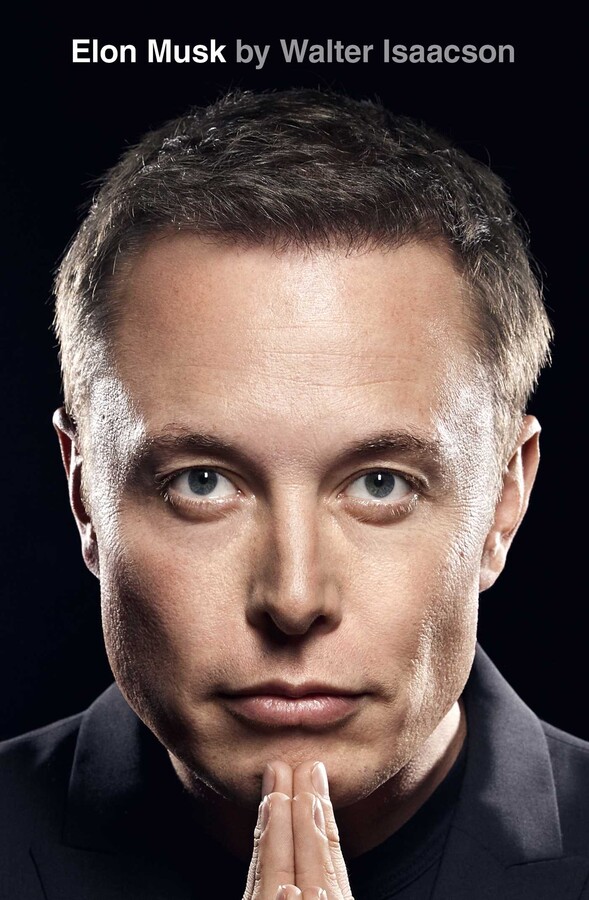
Elon Musk (Part 1 of 2)

I’ll be upfront with you: I almost didn’t include this one. The name alone has become so loaded, so politically charged, that it’s hard to approach it without bringing a lot of noise into the room. But then I remembered it was a Walter Isaacson biography, and I have never, not once, put down a Walter Isaacson biography without feeling like I understood a human being more fully than I did before. So I read it. And I loved it. Genuinely, unexpectedly, top-reads-of-the-year loved it. Let me explain why.

What This Book Is Actually About

Elon Musk is Walter Isaacson’s attempt to answer one of the most genuinely interesting questions of our current moment: what actually makes this person tick? Not the Twitter version, not the meme version, not the political lightning rod, but the human being underneath all of it, and the extraordinary, strange, specific mind that has built more transformative companies than almost anyone in modern history.

Isaacson, who also wrote the definitive biography of Steve Jobs, spent two years shadowing Musk, attending meetings, watching decisions get made in real time, interviewing the people closest to him. The result is an unusually intimate portrait of someone who has simultaneously changed the world in measurable ways and made himself one of the most divisive figures alive. PayPal reimagined electronic payment. Tesla forced the automotive industry to take electric vehicles seriously. SpaceX made commercial space flight and reusable rockets a reality. Starlink brought internet access from space. Neuralink is working on implantable brain-computer interfaces. As Isaacson notes, even at his peak, Steve Jobs was CEO of two companies. Musk is CEO of six. Let that sink in.

What Got Me Thinking

The line that stopped me completely was from Musk’s brother, Kimbal, talking about Twitter: “It’s just a pimple on the ass of what should be your impact on the world.” I laughed. And then I sat with it, because he’s right, and the fact that Twitter has consumed so much of the public conversation about Musk is genuinely strange when you look at the full picture of what he’s built.

What Isaacson is really exploring is the question of what drives someone to operate at this scale. His answer, and it’s one that surprised me, is that for Musk, the mission has never been money, power, or fame. It’s something closer to a cosmic obligation. As Isaacson puts it, while other entrepreneurs develop a worldview, Musk developed a cosmic view. A multi-planetary, sustainable, free-speech humanity, the kind you’d find in his favorite science fiction novels, The Hitchhiker’s Guide to the Galaxy among them. That framing made a lot of his decisions, including some of his most baffling ones, suddenly make a different kind of sense.

The operational philosophy Isaacson lays out is equally fascinating and exhausting in equal measure: question every rule, learn by failing, maintain a constant maniacal sense of urgency, push until you find the actual limit because you genuinely don’t know what you’re capable of until you do. Musk needs to be in control of every project. He needs the urgency to be felt by everyone around him. Whether that approach is genius or destructive, or both simultaneously, depending on the day, is something the book doesn’t try to resolve. It just shows you, unflinchingly, and lets you draw your own conclusions.

And that’s what Isaacson does best. He makes clear throughout that Musk is just human. He makes mistakes. He has blind spots. He has trauma running through his story that shapes decisions in ways even he may not fully recognize. Some of his biggest mistakes, Isaacson argues, involve Twitter, and that thread gets its own space in Part 2.

Why I Think You Should Read This

Five out of five, and I say that knowing full well the subject is controversial. This book is not an endorsement of every decision Musk has made or will make. It is a masterclass in biography writing, and a genuinely useful lens on how visionary thinking and destructive behavior can exist in the same person at the same time. Isaacson never lets Musk off the hook, but he never reduces him to a villain or a hero either. That balance is rare, and it’s what makes this book worth your time regardless of where you stand on the man himself.

If you’ve been avoiding this one because of the noise around his name right now, I’d gently push back. Understanding how transformative, and complicated, human beings operate is part of what science communication is all about.

My Takeaway

The question I keep sitting with is one Isaacson never quite answers directly: do we need a bit of crazy to change the world? The history of science is full of people who were considered unreasonable, obsessive, impossible to work with, until suddenly they weren’t, because the thing they wouldn’t stop believing in turned out to be real. That doesn’t excuse everything. But it does complicate the clean story we sometimes tell about what visionary science and innovation are supposed to look like. Musk’s story, at minimum, is a reminder that the people reshaping the world are rarely the ones who fit neatly into any box we build for them.

Come Read Along

I want to know, did you read this one? Did it change your mind about him, in either direction? Drop it in the comments or find me on Instagram. And stay tuned for Part 2, where we get into the Twitter chapters and the parts of this book that are harder to sit with. πŸ“š

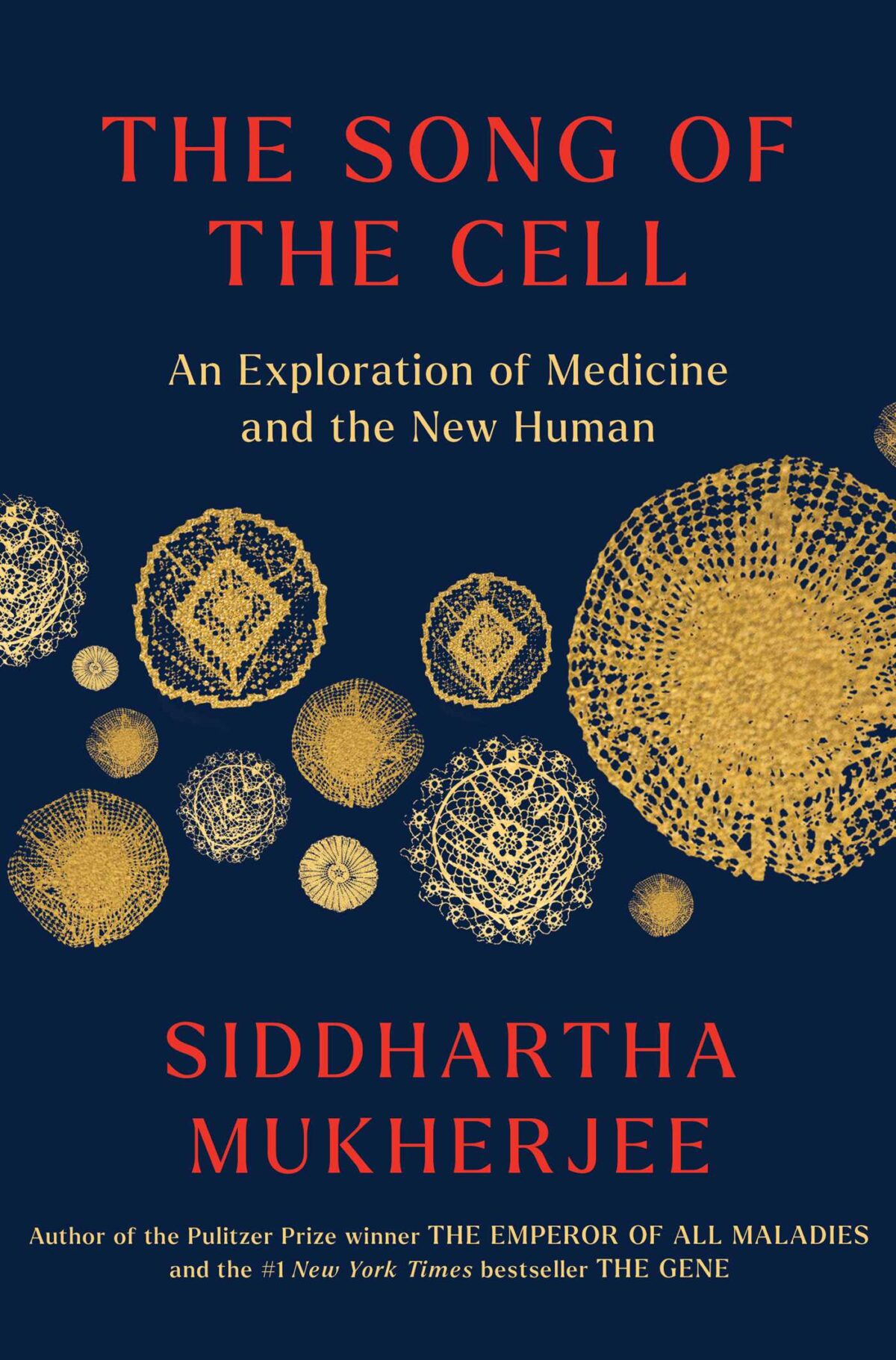
The Song of the Cell

There are science writers who explain things clearly. And then there is Siddhartha Mukherjee, who does something else entirely, who takes the foundational machinery of life and turns it into something that reads like literature. I came into The Song of the Cell with a molecular biology background and a longstanding fascination with the ethical frontiers of cell biology, expecting to enjoy it. I did not expect to be moved by it. That’s the Mukherjee effect, and it got me again.

What This Book Is Actually About

Siddhartha Mukherjee is an oncologist, researcher, and author best known for The Emperor of All Maladies, his Pulitzer Prize-winning history of cancer that remains one of the finest pieces of science writing produced this century. In The Song of the Cell, released in 2022, he turns his attention to something even more fundamental: the cell itself.

The book is a sweeping, beautifully constructed journey through the entire history of cellular biology, from the first cells on Earth 3.5 to 4 billion years ago, through the gradual human discovery of our own anatomy and cellular function, through the stories of the scientists and patients whose lives were changed by those discoveries, all the way to the vast, barely mapped frontier of what cellular medicine might become. Mukherjee writes with the eye of a clinician and the instincts of a novelist, and that combination produces something rare: a science book that makes you feel the weight of what it means to understand life at its most basic level.

What Got Me Thinking

The opening quote sets everything up perfectly: “We can name cells, and even systems of cells, but we are yet to learn the songs of cell biology.” That word, songs, meaning interconnectedness, meaning the relationships between cells rather than their individual identities, runs through the entire book like a thread. And it reframed something I thought I already understood well.

The cell is the basic unit of life: autonomous, reproducible, capable of specializing to perform specific tasks within a body that depends on millions of them working in concert. Rudolf Virchow’s founding principle of cellular pathology, that all disease involves changes to normal cells, is the bedrock the book builds on. But Mukherjee’s argument pushes past that bedrock toward something more complex and more urgent. Understanding what individual cells do is no longer enough. The next frontier is understanding how cells work together, how the relationships between them, the communication, the signaling, the dynamic and constantly shifting ecosystem of a human body, produces either health or disease.

Cancer is the example he returns to most powerfully, and it stopped me cold every time. Cancer treatment isn’t difficult simply because there is one type of mutated cell. It’s difficult because there are many, constantly evolving, constantly mutating through Darwinian natural selection to survive the very drugs designed to destroy them. The tumor is not a fixed target. It is an adaptive system. And treating it requires thinking at the level of that system, not just the individual cell. Having read about game-theoretic modeling in cancer treatment earlier this year in Playing with Reality, this section hit with a particular resonance, the same idea arriving from a completely different direction.

The ethical dimensions of cellular medicine that Mukherjee weaves through the later chapters are where my eyes kept widening. Humans have been endeavoring to understand and harness cells to treat disease and rebuild parts of the body for decades. But the scale of what is now becoming possible, cell therapies, organoids, engineered tissues, raises questions that biology alone can’t answer. Mukherjee doesn’t shy away from those questions. He sits in the uncertainty with the same seriousness he brings to the science, and I deeply appreciated that.

Why I Think You Should Read This

Five out of five, one of the most satisfying reads of the year for anyone with a molecular biology or medical background. But I’d push back gently on limiting the recommendation to that audience. Mukherjee is genuinely accessible to any curious reader, and the story he tells, of how humans came to understand the basic unit of life, and what we are only now beginning to do with that understanding, is one that belongs to everyone.

If you loved A Brief History of Everyone Who Ever Lived for the way it reframed human genetics as something living and interconnected rather than fixed and deterministic, The Song of the Cell is a natural companion. Both books are ultimately about the same humbling truth: the closer you look at life, the more intricate and surprising the picture becomes.

My Takeaway

What I keep sitting with is the idea that we have spent centuries learning the names and functions of individual cells, and are only now beginning to hear the actual music. The relationships, the signals, the emergent behavior of cells in community with each other. That shift in scale feels like the shift that science communication needs to make too. We are very good at explaining individual facts, individual discoveries, individual breakthroughs. We are less practiced at conveying the interconnected system, the song underneath the notes. Mukherjee does it as well as anyone I’ve read. And it makes me want to try harder to do the same.

Come Read Along

If you’re in a biological or medical field, I especially want to hear how this one landed for you, what Mukherjee got right, what surprised you, what you wish he’d gone deeper on. Drop it in the comments or find me on Instagram.

December’s Science Read is a two-parter, starting with Elon Musk by Walter Isaacson. Yes, really. Come find out why I loved it. See you there. πŸ“š

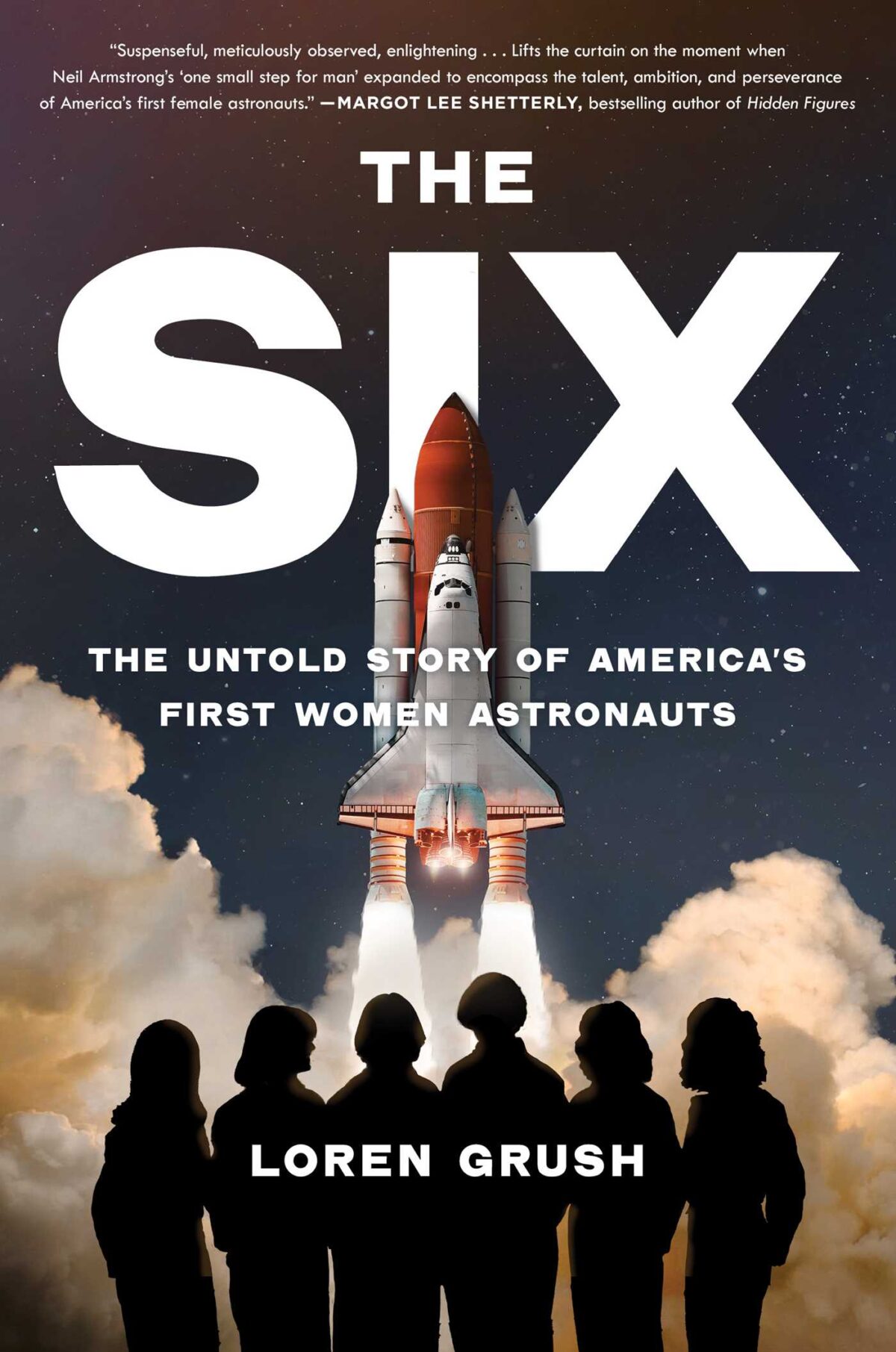
The Six

Judy. Sally. Rhea. Anna. Shannon. Kathy. Six names that should be as instantly recognizable as any in the history of American space exploration, and yet somehow aren’t, at least not the way they deserve to be. The Six is Loren Grush’s attempt to change that, and it could not have landed on my reading list at a better moment. It was World Space Week when I picked this up, which felt exactly right for a book about the women who looked at a program that had never considered them and decided to go anyway.

What This Book Is Actually About

The Six was released just last month, and science journalist Loren Grush, who covers the space industry for Bloomberg and has spent years reporting on NASA, documents the stories of the first six American women selected as astronauts: Sally Ride, Judy Resnik, Rhea Seddon, Anna Fisher, Shannon Lucid, and Kathy Sullivan. Together, they formed NASA’s class of 1978, the first class to include women after decades of lobbying just to get the agency to consider it.

Grush weaves their individual narratives into a single, propulsive story, covering the selection process, the training, the institutional resistance, the cultural scrutiny, and ultimately the flights that made history. She writes with the instincts of a journalist who has clearly spent a long time with this material and genuinely cares about getting it right. The result is a book that is as much about what these women had to navigate on the ground as it is about what they achieved above it.

What Got Me Thinking

I love a good story about women firsts in STEM, it’s a genre I return to again and again, and for good reason. But The Six got under my skin in ways that even I didn’t anticipate, because the specific texture of what these women navigated was so vivid and so infuriating and so familiar all at once.

Some of them hid their pregnancies until the four-month mark. Not because they were ashamed, but because more training meant a higher likelihood of being selected for a flight, and they were not willing to let a pregnancy become a reason to be sidelined. Think about that for a moment. The calculus these women had to run, constantly, just to stay in the room.

And then there were the moments that almost read as satire, except they weren’t. Being questioned by the media about why they weren’t home with their children. Being told they couldn’t wear shorts in space because their legs would be too revealing. Constantly having to perform at a standard higher than their male peers just to be seen as equally qualified. The barriers weren’t abstract. They were specific, daily, and relentless, and these women cleared them anyway, with a kind of focused, determined grace that the book captures beautifully.

The firsts they accumulated speak for themselves: Sally Ride became the first American woman in space. Judy Resnik was the second, and the first Jewish American astronaut. Kathy Sullivan became the first American woman to spacewalk. Anna Fisher was the first mother to go to space, followed by Rhea Seddon and Shannon Lucid, who also logged the longest spaceflight time of the six. Each of these milestones was hard-won in ways the milestone alone doesn’t convey.

And then the book winds toward the Challenger. Judy Resnik was on board. The way Grush handles that ending, the weight of it, the way it recontextualizes everything that came before, is quietly devastating and deeply respectful. It doesn’t overshadow the joy of what these women achieved. It honors it.

Why I Think You Should Read This

A 4/5 from me, and my only genuine critique is that the first half carries some extra detail that slows the momentum in places. Grush is thorough, sometimes to the point where the pacing feels like it’s working against the story. But the second half more than earns it back, and by the final chapters I was fully absorbed.

If you’ve read The Exceptions earlier in this series, about Nancy Hopkins and the women who fought for equity at MIT, The Six is a natural and powerful companion read. Both books are ultimately about the same thing: women in STEM refusing to accept the limits placed on them, and what it actually cost them to push back. The settings are different. The fight is the same.

My Takeaway

What I keep coming back to is this: these six women didn’t just open a door for the women astronauts who came after them. They built the argument, with their bodies and their careers and their tireless, brilliant persistence, that the door should exist at all. And the fact that we still live in a world where that argument has to be made, in different rooms, about different doors, in different fields, is something The Six quietly refuses to let you forget. The path these women cleared is real. It is also not finished. Every generation of women in STEM inherits both the progress and the remaining work.

Come Read Along

Are you a space person? Did you grow up knowing these names, or did this book introduce them to you for the first time? I’d genuinely love to know, drop it in the comments or find me on Instagram.

October’s Science Read is The Song of the Cell by Siddhartha Mukherjee, back to the bench, and back to a story about how science really works, told by one of the finest science writers alive. See you there. πŸ“š

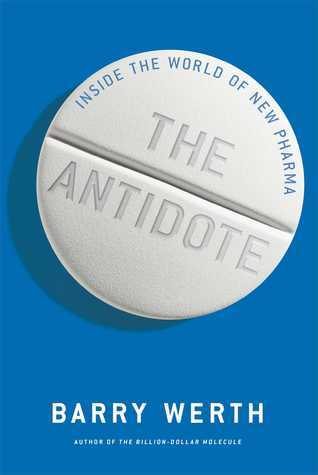
A Billion Dollar Molecule & The Antidote by Barry Werth

I want to start by saying I genuinely tried. I tried twice, actually, because I started with The Antidote, the second book, thought maybe I was just disoriented from missing the context of the first, went back and read A Billion Dollar Molecule, and then returned to finish The Antidote with fresh eyes. Reader, it did not help. These two books have a genuinely fascinating story at their center, and somehow managed to make it feel like sitting through a very long meeting you weren’t supposed to be in.

What These Books Are Actually About

Barry Werth’s two-book series documents the rise of Vertex Pharmaceuticals, a company founded in 1989 by Joshua Boger that became one of the first to use rational drug design as its core strategy. Instead of tweaking existing molecules borrowed from nature, the way most pharmaceutical companies operated at the time, Vertex designed specific molecules from the ground up. That distinction matters, and it was genuinely radical when Boger launched the company into a field dominated by giants who thought a startup with that approach couldn’t possibly sustain itself.

A Billion Dollar Molecule, published in 1994, covers Vertex’s early years, the competition with Merck on immunosuppressants, the scramble for funding, the culture of a company trying to prove its model before the industry closed the door on them. It ends with progress but no finished molecule, and Vertex just entering clinical trials for an HIV drug. The Antidote, published twenty years later in 2014, picks up the thread, following Vertex through to the development of Incivek, the first effective Hepatitis C treatment, in 2011, and Kalydeco, a drug that meaningfully improved the lives of a subset of cystic fibrosis patients, in 2012. The science at the heart of both books is genuinely worth knowing about. The execution, unfortunately, is a different story.

What Got Me Thinking

Vertex is a cool story. I want to say that clearly, because my issues with these books are about the writing, not the subject. A small company using a fundamentally different scientific approach to take on established pharmaceutical giants, and winning, eventually, with drugs that genuinely changed lives, is exactly the kind of story science communication should be telling more of.

The rational drug design strategy Boger built Vertex around represents a real shift in how the industry thought about molecule discovery, and the development of Kalydeco in particular, targeting a specific genetic mutation in cystic fibrosis patients, is a landmark moment in precision medicine. That story deserves to be told compellingly. I just don’t think these books quite manage it.

What Werth does instead is spend page after page on stock valuations, conference room politics, and the biographical backgrounds of a character list so extensive it becomes genuinely impossible to track. Snippets of the actual science appear occasionally, almost haphazardly, sandwiched between ten-page breakdowns of board meeting dynamics and drug pipeline tangents about molecules that never made it through development. I read these books for the science. The science kept getting buried.

The structural problem in both books is the same: it reads like someone taking thorough notes in real time without stepping back to find the thread that connects them. Individual scenes exist. A cohesive narrative, one that makes you feel the momentum of what Vertex was building toward, never quite materializes.

Why I Have Mixed Feelings Recommending This

Three out of five, and that rating is almost entirely carried by how interesting Vertex’s actual story is, not by how well it’s told here. If you work in pharmaceutical development, biotech, or drug discovery and want an insider account of what building a company like Vertex actually looked like from the inside, there is value here. The details Werth captures, the competitive intelligence, the investor dynamics, the specific scientific gambles Boger made, are real and hard to find elsewhere.

But if you’re coming to this as a science reader looking for the kind of narrative that makes you feel the discovery, the way The Song of the Cell or Bad Blood does, this is likely to frustrate you. The bones of a great book are here. They just needed a different architect.

My Takeaway

What I keep thinking about after these two books isn’t actually anything from the text itself, it’s the gap between a great story and great storytelling. Vertex’s journey from scrappy rational-design startup to the company that developed a working cystic fibrosis treatment is the kind of story that should make you feel something. It involves real scientific courage, real competitive pressure, and real patients whose lives changed because of what this team built. That story exists in these books. It’s just buried under too much noise to fully land. And that, more than anything, is a reminder of what science communication is actually for, not just to document what happened, but to make you understand why it matters.

Come Read Along

Have you read either of these, or do you know the Vertex story from another angle? I’d genuinely love to hear a take from someone who loved them, because I think the subject matter deserves better than my 3-star experience of it. Drop it in the comments or find me on Instagram.

September’s Science Read is The Six by Loren Graham, the story of six Russian scientists whose discoveries changed the world, and what the Soviet system did to them in return. A completely different kind of science story, and one I have been thinking about ever since I finished it. See you there. πŸ“š

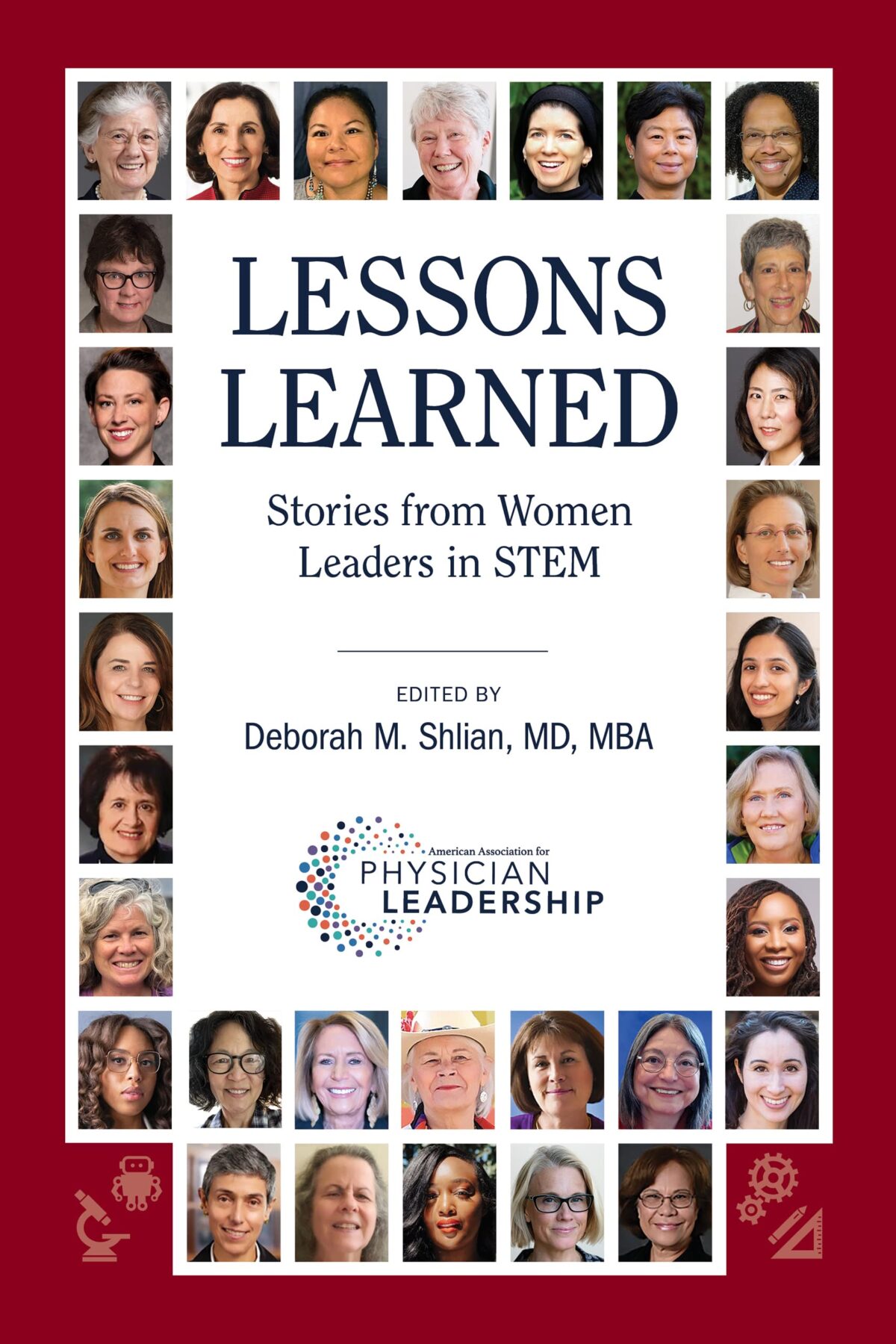
Lessons Learned: Stories from Women Leaders in STEM

You can’t be what you can’t see.” Marian Wright Edelman wrote that, and I have turned it over in my mind more times than I can count, especially during the stretches of my PhD where I found myself wondering whether I was cut out for this, whether I was doing enough, whether everyone else in the room had figured something out that I was still missing. This book found me at exactly the right moment. I didn’t know how much I needed it until I was already three chapters in and underlining things with an urgency that surprised me.

What This Book Is Actually About

Lessons Learned is a collection of first-person stories from women leaders across STEM fields, each chapter a different woman’s life, a different set of roadblocks, and a different hard-won lesson about what it actually takes to build a career in spaces that weren’t always built to include you.

The statistics that frame the book are worth sitting with before you even get to the stories: women make up 48% of the overall workforce, but hold only about 27% of positions in STEM, and even within that number, representation drops sharply outside the biological and life sciences. The book doesn’t dwell in those numbers for long. It moves quickly into the human stories behind them, which is exactly the right instinct. The barriers these women faced, gender bias, lack of mentors and role models, racial disparities, work-life balance pressures, the particular loneliness of being the only one in a room, are not abstract. They have names and faces and specific moments attached to them. That specificity is what makes this book land the way it does.

What Got Me Thinking

I want to share some of the lines that stopped me, because I don’t think I can do this book justice by paraphrasing them:

I applied for 244 positions and had interviews at 3 companies. That’s 1.23%.“, Jiwon Yang


I certainly wasn’t the best student and still don’t ever consider myself the most knowledgeable person in any room of scientists.“, Cathleen Lutz


Losing my advisors forced me to reflect on the importance of having multiple mentors and sponsors. It was the first time I realized the significance of having a community of people around you.“, Malika Grayson


Why are minority women not obtaining more STEM degrees or advancing in the field? One answer is that we do not see ourselves reflected or represented in the field or research.”, Korie Grayson


I could keep going. There are so many moments in this book that I couldn’t begin to cover them all here, which is itself a kind of tribute to how dense with honesty and hard-earned wisdom it is.


What hit me most personally was how universal the internal experience turned out to be. As women in STEM, we are handed a million conflicting ideals about what it means to be “the best”, to be ambitious but not aggressive, confident but not arrogant, focused but always available, driven but never at the expense of everything else. It’s easy, in the middle of a PhD, to spiral into overthinking every decision and feeling like you’re never doing quite enough. Reading these stories, from women who are further along the road, who felt exactly the same things and kept going anyway, made me exhale in a way I didn’t know I needed. We are all navigating the same terrain. That’s not a small thing to know.


The quote that has stayed with me longest is the simplest one: “The further you go in science, the more you realize just how much you don’t know.“, Cathleen Lutz. Not as a discouragement. As a liberation.

Why I Think You Should Read This

Five out of five, a must-read for anyone in STEM, considering a career in STEM, or supporting someone who is. The diversity of voices in this book is its greatest strength. These are not all the same story told by different people. They are genuinely different lives, different fields, different barriers, different lessons, and together they build something more powerful than any single narrative could. Rachel Willand-Charnley puts it best: “Diversity of minds is key to problem-solving, inclusivity, and equitability.” This book lives that argument from the inside out.

If you’ve ever sat in a lab or a classroom or a conference room and felt like you were the only one struggling, this book is for you. You are not alone. Not even close.

My Takeaway

The thread that runs through every single chapter of this book, underneath all the different stories and fields and obstacles, is community. Find it. Build it if you have to. “Find or create a community… advocate for yourself… prioritize your health.”, Korie Grayson. Three sentences. An entire philosophy. The women in this book didn’t succeed in spite of asking for help and building networks around themselves, they succeeded because of it. Science can feel like a solitary pursuit, especially in the hard stretches. But the evidence in these pages is overwhelming: no one does it alone, and no one should have to.

Come Read Along

Did this one resonate with you, or do you have a book that made you feel less alone in your STEM journey? I want to hear about it. Drop it in the comments or find me on Instagram, where this kind of conversation is always open and always welcome. You are not alone. 🩡

August’s Science Read is A Billion Dollar Molecule and The Antidote by Barry Werth, a two-for-one this month, and I have honest thoughts about both. See you there. πŸ“š

Life and Research: A Survival Guide for Early-Career Biomedical Scientists

If you follow me because you’re trying to figure out how to survive graduate school, this is the post you’ve been waiting for. I’m not being dramatic. I genuinely wish someone had handed me this book on day one of my PhD, and I’m a little annoyed at myself for not finding it sooner. Consider this your official introduction to what might become your holy grail.

What This Book Is Actually About

Life and Research: A Survival Guide for Early-Career Biomedical Scientists is exactly what it sounds like, and that directness is part of what makes it so valuable. Written by two academic professors with years of experience mentoring early-career researchers, the book is a comprehensive, honest guide to navigating the specific and often bewildering terrain of a research-based graduate program.

Unlike law school, medical school, or business school, graduate school doesn’t come with a clear scorecard. There are no standardized exams that tell you whether you’re on track. The metrics are murky, the expectations vary wildly between advisors and labs, and a lot of the essential knowledge about how to actually survive and thrive tends to get passed down informally, one overwhelmed graduate student to the next, in hallways and coffee shops, with varying degrees of accuracy. This book takes all of that scattered, inconsistent advice and puts it in one place, organized around six core principles that hold up across fields, lab cultures, and career stages.

What Got Me Thinking

The six principles the book is built around are worth laying out, because each one is doing real work:

You’re not alone. You need to build and maintain a mentoring network. What works for a labmate might not work for you. Resilience matters more than brilliance. Maintaining your wellness and work-life balance isn’t always easy, but it shouldn’t be a constant struggle. And ultimately, you’re working for yourself.

That last one hits differently depending on where you are in your program. Early on it can feel like you’re working for your PI, for your committee, for the department, for the funding agency. The reminder that the degree at the end of this is yours, the skills you’re building are yours, the career you’re shaping is yours, that’s the kind of reframe that can genuinely change how you move through the hard stretches.

The sections I found most personally resonant were the ones on fine-tuning presentations, managing work-life balance without guilt, and, I have to mention this, an entire section on the importance of scientists doing science communication. That one hit close to home in the best possible way. A lot of what the book covers are things I’ve figured out over time through trial and error, how to manage a project, how to build a mentorship network that actually functions, how to navigate competing expectations from different people in your graduate life. Seeing it laid out clearly and practically made me realize how much energy I spent learning things I could have just been told.

The book also addresses something that doesn’t get said enough: graduate school often feels like stumbling in the dark. The gray area, how much you need to work, what you need to produce, what “enough” actually looks like, is enormous and largely unspoken. Having a resource that names that gray area and gives you tools to navigate it is not a small thing. It’s the difference between feeling lost and feeling like you have a map.

Why I Think You Should Read This

Five out of five, required reading, full stop. If you are entering a research lab, starting a PhD program, or even in the middle of one and feeling like you’ve been making it up as you go, this book belongs in your hands. The advice is practical, the tone is supportive without being patronizing, and the breadth of what it covers, from mentorship and project management to wellness and science communication, means it stays useful across the entire arc of early-career research.

And to my local friends: hit me up if you want to borrow my copy. I mean it.

My Takeaway

The principle I keep coming back to is the fourth one: resilience matters more than brilliance. Graduate school has a way of selecting for and rewarding a very particular kind of performance, grades, publications, presentations, while the thing that actually determines whether you make it through is something quieter and harder to measure. The ability to fail an experiment, sit with it, and come back the next day. The ability to receive criticism and use it. The ability to keep going when the timeline stretches and the results aren’t coming and the comparison spiral starts. Brilliance is useful. Resilience is what actually gets you to your defense. This book understands that distinction deeply, and it treats you like someone capable of building both.

Come Read Along

Are you in grad school, considering it, or on the other side of it looking back? I want to hear what you wish someone had told you earlier, drop it in the comments or find me on Instagram. This community has always been one of the best parts of Science Reads for me, and this is exactly the kind of conversation I love having there.

July’s Science Read is Lessons Learned: Stories from Women Leaders in STEM, and it found me at the exact right moment in my PhD. See you there. πŸ“š

Life on the Edge

I have a confession that anyone who has followed my science journey for a while will find either amusing or entirely unsurprising: I picked biochemistry specifically because physics felt too abstract. Biology I could see, cells under a microscope, chemical reactions unfolding in real time, molecules with shapes and behaviors I could draw and hold in my mind. Physics felt like it existed in a dimension I couldn’t quite reach. Equations about things I couldn’t observe. Abstract in a way that never fully clicked for me. And then I read Life on the Edge, and spent a significant portion of it thinking about how differently my path might have looked if I’d found this book sooner.

What This Book Is Actually About

Life on the Edge is a collaboration between JohnJoe McFadden, a genetics professor, and Jim Al-Khalili, a theoretical physicist, and that pairing is the whole point. Together they make the case that quantum mechanics isn’t just a framework for understanding subatomic particles in a physics lab. It is actively, fundamentally at work in the biological processes we take for granted every single day.

The book moves through the history of both fields, tracing the discoveries in biology and physics that have quietly been answering each other’s questions for decades, and builds toward a single, genuinely stunning argument: that life didn’t just happen to exist within the physical world. Life evolved to exploit quantum effects, to harness the strange behavior of matter at the atomic level in ways that make biological systems more efficient, more precise, and more resilient than they could otherwise be. McFadden and Al-Khalili call this quantum biology, and by the time they’re done making their case, it’s hard to think about a cell the same way again.

What Got Me Thinking

I know DNA replication and transcription well, the mechanics, the error rates, the way mutations arise and propagate. I’ve spent years thinking about these processes at the molecular level. What this book cracked open for me was the layer underneath that, the quantum layer, the atomic level at which even these familiar processes are shaped by physics in ways I had never considered.

The example that genuinely stopped me: DNA replication creates molecular vibrations at the atomic level. The more frequently a region of the genome is read, the more vibrations accumulate, and the authors argue this quantum mechanical activity could explain why more frequently replicated regions of the genome are more prone to mutations. Quantum genes. I read that section twice. The idea that the mutation patterns I’ve studied in the context of cancer biology might have a quantum mechanical explanation, that physics reaches all the way down into the processes I work with every day, was the kind of perspective shift that makes you feel like you’ve been looking at a picture and suddenly noticed an entirely different image hidden inside it.

That’s the rhythm of the whole book. Every biological interaction I take for granted in my research has a physics explanation at the atomic level. Enzyme catalysis, photosynthesis, bird navigation, the sense of smell, McFadden and Al-Khalili walk through each one, showing how quantum effects don’t just lurk in the background but actively drive the biology. The history they weave through it, how discoveries in each field kept illuminating questions in the other, makes the whole thing feel like watching two long-running conversations finally realize they’ve been about the same thing all along.

Where the book lost me, and why it’s a 4 rather than a 5, is the section on consciousness. The authors use their quantum biology framework to reach toward an explanation of human consciousness, and somewhere in chapter eight, the clarity that carried the rest of the book started to dissolve. Neurons are explained as an argument for consciousness, but the conclusion I was supposed to reach never quite materialized. I closed that section genuinely uncertain whether I’d missed something or whether the authors had. Whatever the definition of consciousness and wherever it comes from, and these are real, open, fascinating questions, I would not go to this book for those answers.

Why I Think You Should Read This

A solid 4/5, and if you love biology or physics and want to understand the deep, elegant dance between the two that has been running through evolution all along, this book is absolutely for you. The consciousness chapters aside, McFadden and Al-Khalili are exceptional guides, rigorous enough to be trusted, accessible enough to be enjoyed by anyone who doesn’t have a physics background.

And if, like me, you spent years keeping biology and physics in separate mental compartments, this book will dismantle that partition in the most satisfying way possible.

My Takeaway

The thing I’m still sitting with is how much the tools we use to ask questions shape the questions we think to ask. I spent years in molecular biology without ever thinking seriously about what physics had to say about the processes I was studying. Not because the connection wasn’t there, it was always there, all the way down to the atomic level, but because my training gave me one set of lenses and I looked through those. Life on the Edge is an argument for building more lenses, for staying genuinely curious about what the fields adjacent to yours might see that yours can’t. That feels like important advice for any scientist, and maybe especially for science communicators trying to tell stories that are actually complete.

Come Read Along

Did this one spark any physics curiosity for the biologists in the room? Or did the physicists among you already know biology was this interesting? I want to hear from both sides, drop it in the comments or find me on Instagram.

June’s Science Read is Life and Research: A Survival Guide for Early-Career Biomedical Scientists, and if you’re in grad school, this one is for you specifically. See you there. πŸ“š

For Blood and Money

I do not say this lightly: I read this book in a weekend. I picked it up on a Friday and it was done by Sunday, not because I had nothing else to do but because I genuinely could not put it down. Science, money, ego, betrayal, billion-dollar payouts, and a blockbuster cancer drug at the center of all of it, For Blood and Money is the kind of book that reminds you that the most compelling stories in science aren’t always found in the lab. Sometimes they’re playing out in boardrooms and hedge funds and courtrooms, and the science is just the thing everyone is fighting over.

What This Book Is Actually About

For Blood and Money began as a Forbes story. Journalist Nathan Vardi became fascinated by Wayne Rothbaum, an extraordinarily elusive billionaire biotech investor whose fingerprints kept appearing on some of the most significant deals in the pharmaceutical industry. The more Vardi reported, the bigger the story got, until it had outgrown any magazine format entirely and demanded a full book.

What he ended up with is the account of one of the most dramatic drug development stories in recent biotech history: the race to bring two BTK inhibitors to market, cancer therapeutics designed specifically for blood cancers like leukemia, targeting the BTK pathway to regulate cell division like a light switch. The science is genuinely important. The human story wrapped around it is almost impossible to believe, except that it’s all real and all documented. The conflicts, the betrayals, the staggering sums of money, and the deeply unequal distribution of the rewards, it reads like something someone invented, and it isn’t.

What Got Me Thinking

The story splits into two tracks almost immediately, and the split itself is where things get interesting. Pharmacyclics was developing the first BTK inhibitor, financed heavily by investor Bob Duggan, a Scientologist with no formal scientific background who became one of the most controversial figures in the company’s history. Early in the process, Duggan fired two of the founding BTK scientists: Raquel Izumi and Ahmed Hamdy. They left, started their own BTK inhibitor company, Acerta, and kept going.

That second company was backed by Rothbaum, who had originally been one of Pharmacyclics’ biggest investors before backing out at exactly the wrong moment. Fueled by what sounds very much like a refusal to let that mistake stand, he poured his resources into the startup the fired scientists had built. Two companies. Two drugs. Both targeting the same pathway. Both racing toward the same market. Both eventually acquired by major pharmaceutical companies, Pharmacyclics for $35 billion, Acerta for $7 billion.

And then comes the part of the story that I haven’t been able to shake. Duggan and Rothbaum made 70x and 35x their original investments respectively. Duggan’s payout is considered one of the largest Wall Street returns of any industry, ever. The scientists who designed the clinical trials, the people who did the actual scientific work of figuring out whether these drugs worked and who they worked for, became multimillionaires. But due to the complex structuring of their stock options, they captured only a fraction of the wealth their work created. The annual prescription cost for either drug sits at roughly $160,000.

That gap, between who creates the science and who profits from it, is a thread that runs through the entire book and connects directly to conversations happening right now about drug pricing, biotech investment, and who the pharmaceutical industry ultimately serves. Vardi doesn’t editorialize heavily. He lets the numbers speak, and they speak loudly.

Why I Think You Should Read This

Five out of five, one of my favorite Science Reads to date, and I’d recommend it to almost anyone. If you work in biotech, pharmaceutical development, or research, this is a masterclass in how drugs actually make it from a scientific hypothesis to a prescription, and how much of that journey has nothing to do with science. If you’re interested in the business and investment side of medicine, it’s one of the most compelling case studies of the biotech market climate I’ve encountered.

And if you just love a story where the stakes are genuinely enormous and the characters are stranger than fiction, don’t walk, run.

My Takeaway

What I keep sitting with is the question of credit, and how differently it gets distributed between the people who imagine a scientific possibility, the people who prove it works, and the people who finance the proof. The scientists who built these drugs changed the lives of blood cancer patients in measurable, documented ways. The investors who bet on them walked away with returns that rewrote their net worth. Both things are true simultaneously, and the system that produced that outcome wasn’t accidental. It was designed. Understanding how it was designed, who benefits, who doesn’t, and why, feels like essential knowledge for any scientist thinking about where their work goes after it leaves the lab. For Blood and Money is one of the clearest windows into that world I’ve found.

Come Read Along

Have you read this one? Or do you have a biotech story that’s equally unbelievable and entirely true? I want to hear it, drop it in the comments or find me on Instagram.

May’s Science Read is Life on the Edge by JohnJoe McFadden and Jim Al-Khalili, quantum biology, and the book that almost made me reconsider my complicated relationship with physics. See you there. πŸ“š

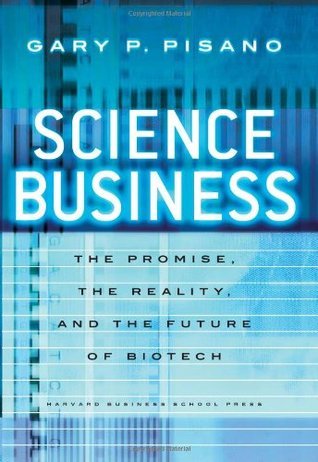
Science Business

When I started graduate school, I made a decision that felt slightly terrifying at the time: I was going to learn the business side of biotechnology, not just the science. And for a while, that process felt exactly like what it was, stumbling in the dark, googling terms I’d half-heard in informational interviews, trying to build a mental map of an industry from scattered pieces that didn’t always connect. I wish, with a sincerity I cannot overstate, that someone had handed me this book at the start of that process. It would have saved me a lot of very confused evenings.

What This Book Is Actually About

Science Business is Harvard Business School professor Gary Pisano’s attempt to answer a question that sounds simple and turns out to be anything but: why hasn’t biotechnology, despite decades of revolutionary science, consistently produced profitable businesses? The book covers the development of the biotech industry from the 1970s through the early 2000s, examines what makes biotech fundamentally different from other established industries, and makes a clear-eyed argument for how the industry needs to change if it’s going to fulfill the extraordinary promise of its science.

A note worth making upfront: this book was published in the early 2000s, so some of the specific predictions and prescriptions have aged differently than others. But as a foundational overview of how biotechnology developed as both a scientific and commercial enterprise, what it got right, what it got structurally wrong, and why, it remains one of the clearest, most useful frameworks I’ve found. I only wish I’d started here before diving into the deeper histories of individual companies like Genentech and Amgen. This is the context that makes those stories make sense.

What Got Me Thinking

Pisano structures the history of biotech around three waves, and that framework alone is worth the read. The first wave was built on large molecules, the founding of companies like Genentech, the creation of the biotech model of spinning university research into companies, and the early products: replacement hormones, recombinant proteins, monoclonal antibodies. The second wave came as the reality of drug development risk set in with investors, pushing companies toward earlier collaboration with pharmaceutical partners and opening the door to gene therapy, cell therapy, and tissue engineering. The third wave arrived with the Human Genome Project, ushering in high-speed automation, large-scale data analysis, and the genomics platforms that still define much of the industry today.

Seeing those three waves laid out clearly, understanding the logic of each transition, why the industry moved the way it did and when, reorganized a lot of things I had learned piecemeal into something coherent. That reframe is the book’s most immediate gift.

But the structural problems Pisano identifies are where things get genuinely thought-provoking. The gap between academic research and translational science, the valley of death where promising discoveries run out of funding before they become startups, is still one of the most pressing challenges in the field. The estimated 1 in 6,000 compounds that ever makes it to market puts the risk profile of this industry in stark, almost vertiginous terms. The ten to twelve year development timeline for a product creates an almost impossible tension with the short-term earnings pressure that comes with being a public company. The $800 million overhead required to develop a product is a number that reshapes how you think about every drug pricing conversation you’ve ever had. And the deep specialization of science, the way expertise silos itself, working directly against the interdisciplinary research that produces the best breakthroughs is a problem that universities and funding bodies are still, two decades later, actively wrestling with.

None of these are new problems. That’s part of what makes Pisano’s framework so useful, it shows you that the structural tensions in biotech aren’t bugs that crept in recently. They were baked in from the beginning, and understanding their origins makes the current landscape significantly easier to read.

Why I Think You Should Read This

Five out of five, and if you’re in grad school trying to understand how the science you’re doing connects to the industry you might eventually work in, start here. Read this before you read the company-specific histories, before the investor narratives, before the drug development deep dives. This is the map that makes all of those other stories navigable.

Yes, it’s from the early 2000s. The specific numbers have shifted and some of the predictions have dated. But the structural logic, the fundamental reasons why turning science into a sustainable business is so much harder than it looks, is as relevant now as it was when Pisano wrote it.

My Takeaway

The thing I keep returning to is the gap between scientific value and commercial viability, and how much of the biotech industry’s history is essentially an extended, expensive negotiation between those two things. The science that matters most is often the science that’s hardest to fund, slowest to develop, and most resistant to the timelines that investors and public markets demand. Understanding that tension doesn’t make it easier to solve. But it does make it easier to navigate, and it makes you a sharper, more clear-eyed participant in the conversations about where research goes after it leaves the lab. That clarity, more than anything, is what this book gave me.

Come Read Along

Are you in the early stages of trying to understand the biotech industry, or do you have a resource that helped you make sense of it faster than I did? Drop it in the comments or find me on Instagram. Genuinely, I want to know.

April’s Science Read is For Blood and Money by Nathan Vardi, and I read it in a single weekend. That tells you everything. See you there. πŸ“š

    Share Your Story