SciCom Basics

What Science Communication

Science communication is bigger than social media and simpler than you think. This page covers the basics - from finding your voice to choosing your platform - so you can figure out what scicomm looks like for you.

SciCom Basics

What Actually Matters in

These are the basics that make science communication work — no matter where you show up or who you’re talking to. 

The scientists who connect most effectively aren't the most credentialed, they're the most genuine. Here's how to figure out what makes your perspective worth sharing.

  • Start with what genuinely excites you, not what you think you “should” talk abou
  • Your background – even the non-science parts – is a scicomm asset
  • Consistency of voice matters more than frequency of posting
  • You don’t need a PhD to be a science communicator. You need curiosity.

Academic writing is built for peer review. Public writing is built for people. Here's how to build that muscle without losing your scientific integrity.

  • Lead with the question, not the method
  • If your labmates are the only ones who understand it, rewrite it
  • Short sentences aren’t a sign of dumbing down, they’re a sign of clarity
  • Read broadly outside science. Good writing teaches good writing.

Instagram, TikTok, LinkedIn, BlueSky - each one works differently. Here's a breakdown of what works where, so you're not guessing.

  • You don’t need to be on every platform – pick one and do it well first
  • Short-form video rewards personality; long-form writing rewards depth
  • LinkedIn is underrated for researchers. Seriously.
  • Post for your audience, not your peers

Collaborations can fund your scicomm work - but they come with real responsibilities. Here's how to evaluate them and protect your credibility.

  • Always disclose. Always.
  • If you wouldn’t recommend it to a friend, don’t promote it to your audience
  • Know your rate before the conversation starts
  • A bad brand deal costs more than it pays

Talking about your science to a non-expert audience is one of the highest-impact things you can do. It's also a skill, and it gets easier with practice.

  • Start small, a lab meeting or classroom visit counts
  • Lead with a story, not a slide full of data
  • Your audience wants to be curious, not impressed
  • Nerves don’t go away. You just get better at using them.

My Journey

Stuff I Figured Out Along the Way

Nobody handed me a roadmap when I started doing scicomm during my PhD. These are the things that stuck. Grad school teaches you how to do science. It doesn't really teach you how to talk about it. Here's what I picked up on my own.

You will cringe at your early posts. Post anyway.

There's no way around the awkward phase, you just have to go through it. The sooner you start, the sooner your judgment catches up with your ambition.

Credentials help, but authenticity converts.

A PhD might get someone to follow you. But if they don't feel like they actually know you, they won't stick around. People follow people, not resumes.

Comments are your content R&D lab.

The questions, the confusion, the things people get weirdly excited about, that's your audience telling you exactly what to make next. Don't scroll past it.

Saying 'I don't know' is a scicomm superpower.

Scientists who oversimplify might sound confident, but they lose trust the moment reality gets complicated. Sitting with uncertainty out loud is both honest and disarming, it works.

Resources

Where to Go

If you're ready to take scicomm seriously, these are the communities and programs worth looking into.

AAAS Mass Media Fellowship

Spend a summer in a real newsroom as a working scientist. It's one of those experiences that completely changes how you think about communicating research, I can't recommend it enough.

Alan Alda Center for Communicating Science

Built around improvisation techniques, which sounds unusual until you try it. It teaches you how to actually listen to your audience and respond in the moment, something no slide deck can prepare you for.

ComSciCon - Science Communication Workshop

Run by grad students, for grad students. If you're early in your research career and feeling like scicomm is a world you don't quite belong in yet, this is your community.

NASW - National Association of Science Writers

The professional home for science communicators. Great for networking, finding mentors, and figuring out where scicomm can actually take you career-wise.
More Coming Soon!

I am always adding new things as I find them.

Book Recommendations

Books Worth Reading

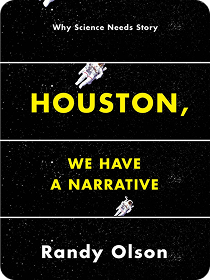
Houston, We Have a Narrative

Randy Olson

Scientists are wired to list facts, and Olson explains exactly why that's the problem. The ABT framework (And, But, Therefore) alone makes this worth reading.
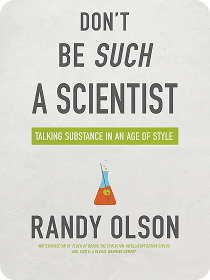
Don't Be Such a Scientist

Randy Olson

It stings a little, in the best way. Olson's core message is that being a great scientist doesn't automatically make you good at talking about it. Don't be offended. Just read it.
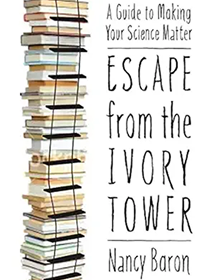
Escape from the Ivory Tower

Nancy Baron

Practical in a way most scicomm books aren't. Covers how to talk to media, policymakers, and the public,  including how to handle criticism when you do.

The Rhetoric of Science

Alan Gross

More academic than the others but genuinely eye-opening. It breaks down how scientific texts persuade, and changes how you read a paper, not just how you write about science.

    Share Your Story