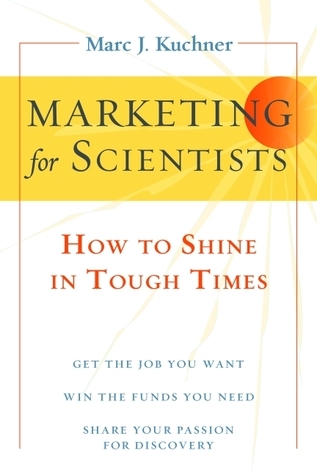
Marketing for Scientists

Bear with me. I know this isn’t the kind of book you might expect to see in Science Reads. There are no cells, no evolutionary biology, no sweeping histories of discovery. But I would argue, genuinely, not as a disclaimer, that this book belongs in the hands of every scientist at every stage of their career, and that the skills it covers are as essential to science as any technique you’ll learn in a lab. Give me a few minutes to make the case.

What This Book Is Actually About

Marketing for Scientists is Marc Kuchner’s practical, sometimes irreverent guide to something most scientists are never taught and rarely feel comfortable doing: marketing themselves and their work. Kuchner is an astrophysicist at NASA who became fascinated by the gap between great science and the ability to communicate and advocate for that science, and this book is his attempt to close it.

The core argument is straightforward: every scientist, regardless of field or career stage, will at some point need to sell their science. To a funding committee. To a hiring panel. To a journalist. To a room full of people who don’t share your background and need a reason to care. Kuchner’s book covers all of it, social media presence, talk structure, grant framing, handling rejection, with the practical specificity of someone who has thought deeply about why scientists struggle with this and what actually helps. Some sections are stronger than others, and there are tangential stories that you can feel free to skim. But the core of the book is genuinely useful, and I found myself returning to specific sections more than once.

What Got Me Thinking

The section that hit first, and hardest, was the one about selling your science. I’ll be honest: every time I hear the phrase “sell yourself,” something in me recoils. It sounds performative. It sounds like the opposite of the integrity that drew me to science in the first place. But Kuchner reframes it in a way I couldn’t argue with: selling your science is how you secure funding, how you land jobs, and how you get more people excited about what you’re doing. It’s not performance. It’s advocacy. That distinction matters, and once it clicked I found myself reading the rest of the book differently.

The social media chapter is one I think every scientist needs to read right now. Kuchner talks about a “neglected middle”, a large segment of the public that knows science exists but doesn’t know enough about it to make informed decisions using it. That’s the audience science communication is most urgently needed for, and social media is one of the most direct ways to reach them. His advice, build or update your website, get active on the platforms where your audience is, make connections with journalists so science gets portrayed accurately, is practical and specific and not nearly as daunting as it sounds once he breaks it down.

The talk structure advice is something I have genuinely used. Format your science talk like an action movie: open with a compelling hook, pull back to establish the broader context and why it matters, and then, don’t be afraid to get technical when the science demands it. The goal is to hold both the generalist and the expert in the room simultaneously, which is a harder balance to strike than it sounds. But having a framework for it makes the attempt feel manageable rather than impossible.

And then there’s the “what’s in it for me?” principle, the idea that every talk, every grant, every paper needs to answer that question for its audience before asking them to follow you into the details. Relate to your audience first. Give them a reason to care. The science will land so much better once they have one.

The reframe around rejection is the one I want to tape to my wall: rejection doesn’t mean you’re bad. It means you haven’t yet met someone’s particular needs. Find out what those needs are, and address them. That is a more useful and more accurate way to understand rejection than anything else I’ve heard, in science or anywhere else.

Why I Think You Should Read This

A full 5/5 from me, with the honest caveat that some of the author’s tangential stories are skimmable and a handful of sections should be taken with a grain of salt rather than accepted wholesale. But if you’re willing to engage critically and take what’s useful, this book offers more practical, career-shaping advice per page than almost anything else in this series.

Whether you’re just starting graduate school, mid-PhD, or already established in a research career, the skills this book covers are ones you will use constantly and that almost no formal scientific training prepares you for. That gap is real, and this book addresses it directly.

My Takeaway

The thing I keep sitting with is how much the scientific community has historically treated communication and marketing as somehow beneath the work, as if the quality of the science should speak for itself, and learning to advocate for it is a concession to something lesser. Kuchner’s book is a quiet but persistent argument against that view. The best science in the world doesn’t fund itself, doesn’t reach the public by accident, and doesn’t land in a job offer without someone making a compelling case for it. Learning to make that case isn’t a compromise of scientific integrity. It’s an extension of it, and arguably one of the most important skills we can build if we want science to have the influence on the world that it deserves.

Come Read Along

Have you read Marketing for Scientists, or do you have a book that changed how you think about communicating your work? I’d love to hear what helped you most. Drop it in the comments or find me on Instagram.

May’s Science Read is The Death and Life of the Great Lakes by Dan Egan, a story about one of the most extraordinary freshwater systems on the planet, and what we are doing to it. See you there. 📚
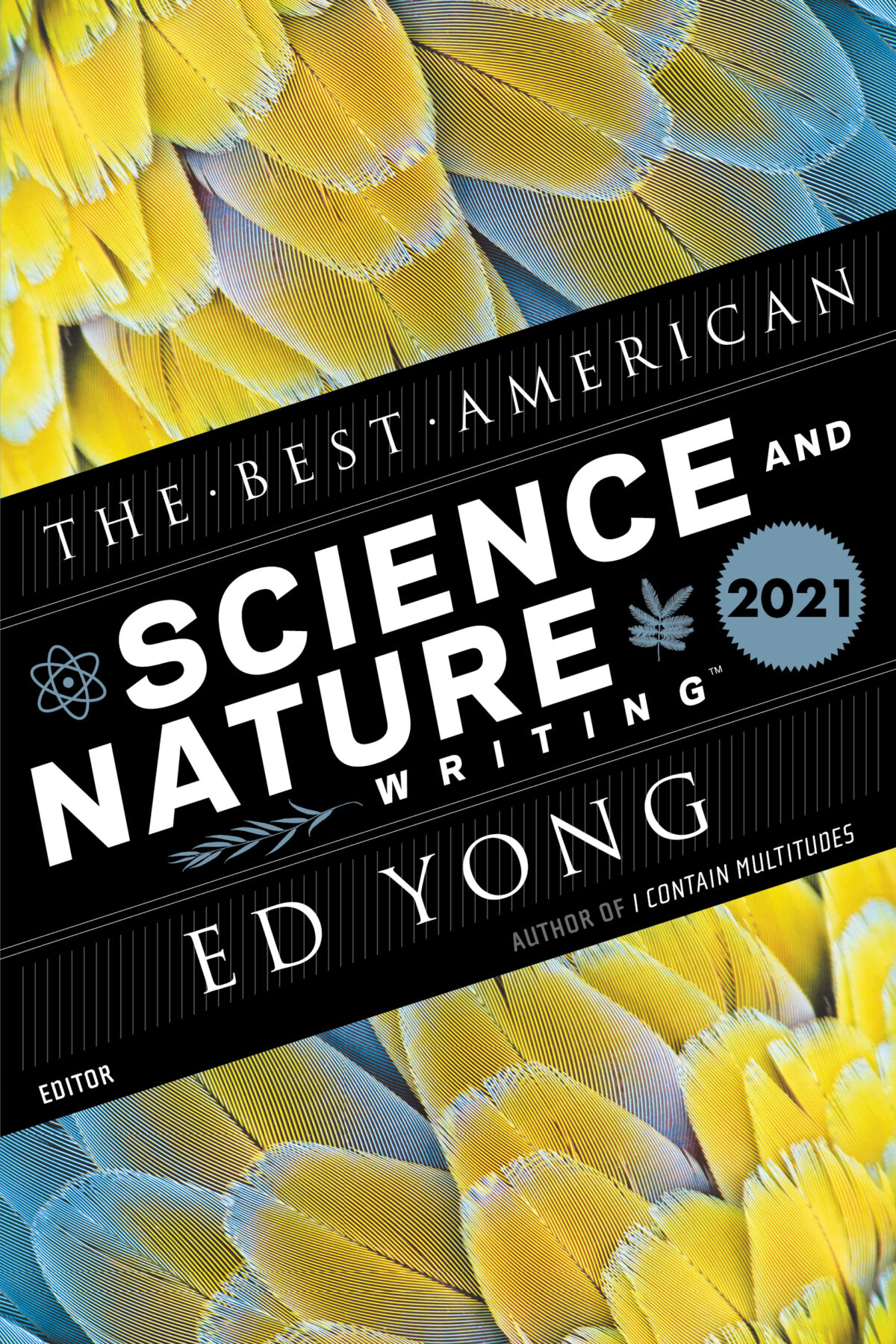
The Best American Science and Nature Writing 2021

“Science is not a procession of facts and breakthroughs but an erratic stumble toward gradually diminished uncertainty; peer-reviewed publications are not gospel… and scientific endeavor is plagued by all-too-human failings like hubris.”

Ed Yong wrote that in the introduction to this book, and I have come back to read it more times than I can count. It is one of the most honest sentences about science I have ever encountered in print, and it set the tone for one of the heaviest, most thought-provoking reads I’ve had in a long time. Heavy in the best sense. And also, genuinely, in the physical sense. This book has been sitting on my bedside table for four months, and I could only manage one article at a time. Some books you race through. This one you sit with.

What This Book Is Actually About

Each year, a guest editor compiles The Best American Science and Nature Writing, a collection of what they consider the finest science articles published that year. In 2021, that editor was Ed Yong, a science journalist whose work I have admired for years and whose ability to find the human truth inside complex science is, in my opinion, unmatched.

The collection is organized into three themes, Contagion, Connections, and Consequences, and yes, COVID gets its own section, which given the year is entirely appropriate. But the book extends well beyond pandemic coverage, moving through ecology, medical ethics, systemic inequality in science, climate, and the quiet moral dilemmas that live at the edges of research most people never think about. Every piece was originally published in a magazine or journal, which means each one is tightly written, sharply edited, and built to make you think rather than simply inform. The combination of Yong’s editorial eye and the quality of the writing he selected makes this a genuinely exceptional document of what science communication looked like at one of the most consequential moments in modern history.

What Got Me Thinking

Read the introduction. Please. I know introductions are easy to skip, and I know this one is asking you to read an intro to a collection of essays you’ve already committed to, but it is one of the best things Yong has written, which is saying something. The quote at the top of this post comes from there, and it doesn’t even scratch the surface. He lays out a philosophy of science communication that I keep returning to: that the job isn’t to present science as a clean march toward truth, but to be honest about the stumbling, the uncertainty, the very human messiness of how knowledge actually gets made. That framing colored every article I read afterward.

The pieces themselves do something I don’t think any single book in this series has done quite as consistently: they make you feel your place in society as a scientist, and the weight of the moral and ethical dilemmas that come with it. These aren’t abstract questions. They’re questions about who gets to do science, who benefits from it, who gets left out, and what happens when the institutions that are supposed to protect scientific integrity fail to do so. Article after article, that reckoning is present, quietly, in different registers, from different angles.

The take-home message that crystallized for me over four months of reading one piece at a time: science is political. Not in the partisan sense, but in the deepest sense, it is shaped by funding, by power, by whose questions get asked and whose don’t, by the social structures scientists live and work inside. Science is not simply facts laid out before you. And science has limitations that are as important to understand as its capabilities.

I’d also say this: the pacing the format enforces, one article, then a break, then another, is actually the right way to read this book. Not because the writing is difficult, but because each piece gives you enough to think about that rushing to the next one would mean shortchanging the one you just finished.

Why I Think You Should Read This

Five out of five, with one honest piece of advice: read this alongside something lighter. Not because it’s depressing, but because the cumulative weight of serious, morally complex science journalism does something to you over time, and balancing it with something that makes you laugh or feel uncomplicated joy is genuinely good practice. I’d pair it with The Hitchhiker’s Guide and let the two talk to each other.

If you care about science communication, what it is, what it could be, what it owes the public, this book is essential reading. Yong assembled it at a moment when the stakes of science communication had never been more visible, and the pieces he chose reflect that seriousness without losing the wonder that makes science worth communicating in the first place.

My Takeaway

The sentence I keep returning to is the one about gradually diminished uncertainty. Not eliminated uncertainty, diminished. That’s the honest version of what science does, and it’s a harder thing to communicate than the triumphant narrative we often default to. But it’s also, I think, a more trustworthy one. When we tell the public that science moves in a straight line toward answers, we set them up to feel betrayed when the line turns out to be crooked. When we tell them the truth, that it stumbles, that it self-corrects, that it is human in all the ways that means, we build something more durable. That’s the kind of science communication this book is full of. And it’s the kind I want to keep working toward.

Come Read Along

Have you read any of the pieces in this collection, or do you have a favorite science article from 2021 that should have made the cut? Drop it in the comments or find me on Instagram. And if you have recommendations for what I should read next, I genuinely want to hear them.

April’s Science Read is Marketing for Scientists by Marc Kuchner, not the typical science book you might expect, but one I’d argue every scientist needs to read regardless of career stage. See you there. 📚

February Roundup, Sapiens, The Hitchhiker’s Guide, and The Love Hypothesis

I have a new favorite hobby, and it has quietly transformed my relationship with books: listening to audiobooks while I’m on the microscope. Hours that used to disappear into the quiet hum of lab equipment are now filled with entire worlds, which is how I made it through three books this month. Three very different books, with three very different reactions. Let’s get into it.

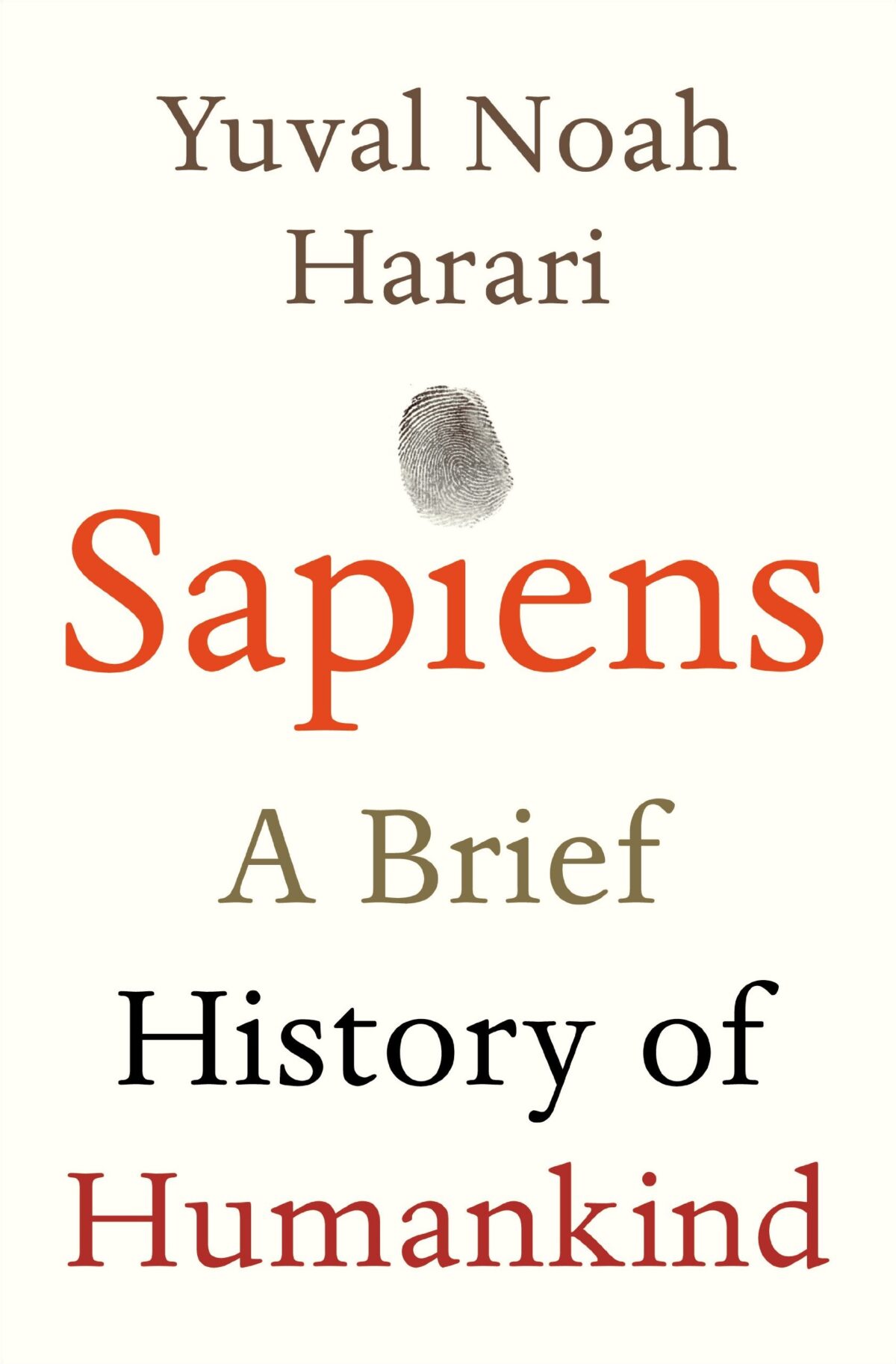
Sapiens: A Brief History of Humankind by Yuval Noah Harari ⭐️⭐️⭐️⭐️

Sapiens has one of the most ambitious premises of any book I’ve picked up: the entire history of humankind, from our earliest ancestors to the present, in a single volume. Harari pulls it off, mostly. The breadth is genuinely staggering, and somewhere around chapter three I started carrying a notebook with me specifically to capture all the ideas and arguments he raises that I wanted to sit with longer.

The ones that have stayed with me most: the argument that the agricultural revolution, far from being humanity’s greatest leap forward, was actually our biggest trap, trading freedom and variety for food security and hard labor. The observation that humans have never truly gotten over “us versus them” thinking, no matter how sophisticated our civilizations become. The idea that so much of what holds human society together, religion, nationality, currency, exists entirely in collective imagination, and works only because enough of us agree to believe in it. And perhaps most sobering: the success of a species does not guarantee the happiness of that species.

One honest note, and this matters, some of what Harari presents as fact is closer to opinion, and the book doesn’t always make that distinction clearly. Go into it with your critical thinking fully engaged, treat some of the broader assertions as ideas worth examining rather than conclusions worth accepting, and it’s a genuinely rewarding read. A solid 4/5.

The Hitchhiker’s Guide to the Galaxy (series) by Douglas Adams ⭐️⭐️⭐️⭐️⭐️

I loved this series completely and without reservation. Douglas Adams takes the infinite universe, the meaning of life, and the staggering smallness of human existence and turns them into something that manages to be simultaneously profound and absolutely hilarious. The absurdism is the point, and it lands.

What made this read particularly special was reading it in parallel with Sapiens. The two books are in an unexpected conversation with each other: Harari makes the case for how little humans actually understand about their own existence, and then Adams comes along and makes that same point, but funnier, through the lens of a galaxy that finds humans largely unremarkable. The sections about how little humans know hit differently when you’ve just finished a chapter in Sapiens about the collective fictions holding civilization together. I’d genuinely recommend reading them together, the combination is something else. A full 5/5.

The Love Hypothesis by Ali Hazelwood ⭐️

I want to be honest here, because I think it matters: this book rubbed me completely the wrong way, and I’ve thought carefully about whether that’s just personal preference or something worth naming out loud. I’ve decided it’s the latter.

The Love Hypothesis centers on a romantic relationship between a graduate student and a professor, a dynamic that, whatever the legal status, carries a significant and well-documented power imbalance that the book largely romanticizes rather than interrogates. Beyond that, the portrayal of graduate school as a uniformly toxic, hostile environment painted a picture I don’t think serves anyone who is curious about research careers or considering graduate school.

I’m not trying to tell anyone what to read. But if you’re a prospective graduate student who has encountered this book as a window into what academic life looks like, please talk to actual graduate students first. The real experience is more nuanced, more varied, and more human than this book suggests. For that reason, it’s a 1/5 from me.

My Takeaway

Three books, three completely different experiences, which is, honestly, exactly what a reading month should look like. Sapiens reminded me that the stories humans tell about themselves are simultaneously our greatest strength and a source of enormous collective self-deception. The Hitchhiker’s Guide reminded me that sometimes the most honest thing you can say about existence is something absurd. And The Love Hypothesis reminded me that the stories we tell about science and scientists matter, and that we have a responsibility to tell them carefully.

That last point feels close to the heart of what Science Reads is about. The books we read shape how we understand science, who belongs in it, and what it feels like from the inside. That’s not a small thing.

Come Read Along

Have you read any of these? I’d especially love to hear from fellow scientists about The Love Hypothesis, I’m curious whether it landed differently for people outside of academic research. Drop it in the comments or find me on Instagram. And as always, my full reviews are on Goodreads, link in bio. 📚

March’s Science Read is The Best American Science and Nature Writing 2021, edited by Ed Yong, a collection of the finest science journalism published during one of the most consequential years for science in recent memory. It has been sitting on my bedside table demanding attention, and I’m finally giving it. See you there.

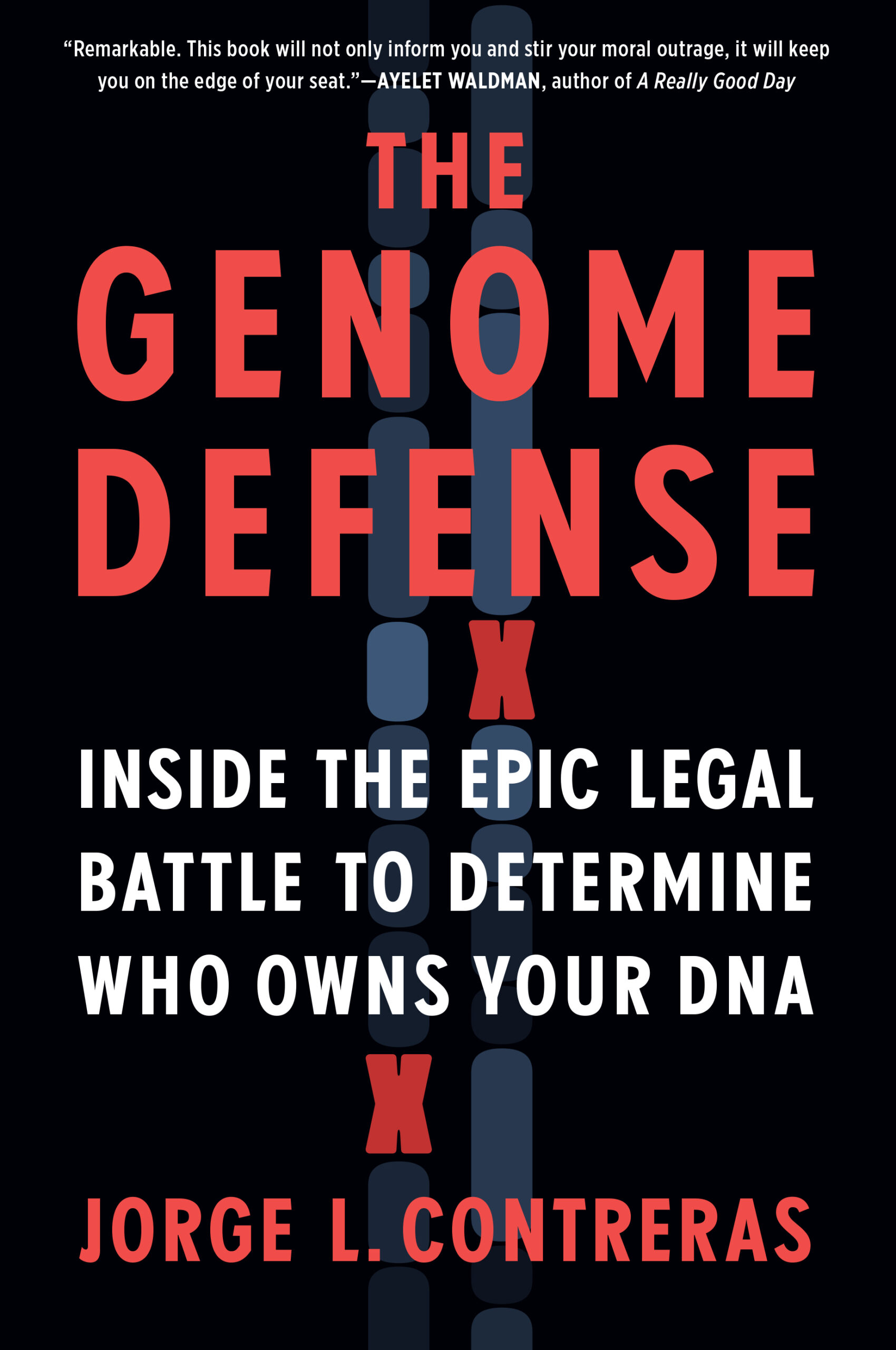
The Genome Defense

I was scrolling through the New York Times top 100 books of 2021 recently, and something stopped me cold. Great memoirs. Stunning fiction. Celebrated nonfiction. And not one, not a single book on the list, was about science. In the middle of a global pandemic that had been shaped, moment by moment, by science writing and science communication, the most prominent book list in American media had no room for a science book. Not one.

I sat with that for a while. And then I decided to do something about it.

What This Book Is Actually About

The Genome Defense is the true story of one of the most consequential legal battles in the history of modern science: the case that went all the way to the Supreme Court to answer a question that sounds almost philosophical until you realize how much money, power, and human health hangs on the answer, can a company patent a human gene?

Author Jorge Contreras is a legal scholar, not a scientist, and that turns out to be exactly the right background for this book. He has an outsider’s instinct for explaining the scientific and legal concepts clearly, without assuming prior knowledge, and an insider’s access to the people who fought this case from both sides. The result is a book that walks any reader, regardless of scientific background, through the full moral and ethical minefield of gene patenting: what it means for research, for patients, for access to diagnostics, and for the fundamental question of who gets to own the building blocks of human life.

What Got Me Thinking

I carried this book to multiple Christmas events over the holidays. My family can confirm. I was that person in the corner of a festive gathering, unable to put it down, because Contreras structures the whole thing like a legal thriller, except it’s real, and the stakes are ones that affect every person who has ever needed a genetic test or ever will.

The central case involves BRCA1 and BRCA2, the genes associated with hereditary breast and ovarian cancer, and the company that held patents on them, controlling who could test for mutations and at what price. What sounds like a dry intellectual property dispute becomes, in Contreras’s hands, a story about patients who couldn’t afford the tests that might have saved their lives, researchers who couldn’t study genes they weren’t licensed to touch, and a legal system trying to apply century-old frameworks to questions it was never designed to answer.

The moral complexity is real and the book doesn’t flatten it. There are genuine arguments on both sides, about incentivizing innovation, about the cost of drug and diagnostic development, about what it means to protect intellectual property in a field where the “invention” is something that existed in human cells long before any company discovered it. Contreras lays those arguments out honestly and lets you sit in the difficulty of them, which is exactly what the best science communication does.

Why I Think You Should Read This

A full 5/5, one of my favorite books, full stop. Whether you have a science background or none at all, this book will pull you in and hold you there. It is proof that science writing can be as gripping as any thriller, as morally rich as any literary fiction, and as urgently relevant as anything on any bestseller list.

Which brings me back to that New York Times list.

Science writing has shaped the world we live in. It explained a pandemic in real time. It has told us who we are, where we came from, and what we’re made of. It deserves a seat at every table where great books are discussed, and if the major lists aren’t going to make room for it, then we’re going to make room for it ourselves.

My Takeaway

The biggest thing The Genome Defense left me with is a question I think about constantly now: who does science belong to? The researchers who spend decades studying something? The companies that fund the translation of that research into products? The patients whose lives depend on access to what that research produces? The answer the Supreme Court eventually gave was important, but the book makes clear that the legal answer and the moral answer aren’t always the same thing. That tension lives at the heart of so much of what makes science policy complicated, and understanding it starts with stories exactly like this one.

Come Read Along

Have you read The Genome Defense? I’d love to know what you thought, and if you have suggestions for great science books I should add to the list, please drop them in the comments or find me on Instagram. This is the beginning of something I’m genuinely excited about.

Every month in 2022, I’ll be reading and sharing a science book, right here, in my stories, and on Goodreads. Because the best way to learn more about science is to read about it. And there are so many great books waiting. Let’s go. 📚

February’s Science Read is Sapiens: A Brief History of Humankind by Yuval Noah Harari, one of the most ambitious books I’ve picked up in a long time, and one I’ll be carrying a notebook alongside. See you there.

    Share Your Story