βœ•

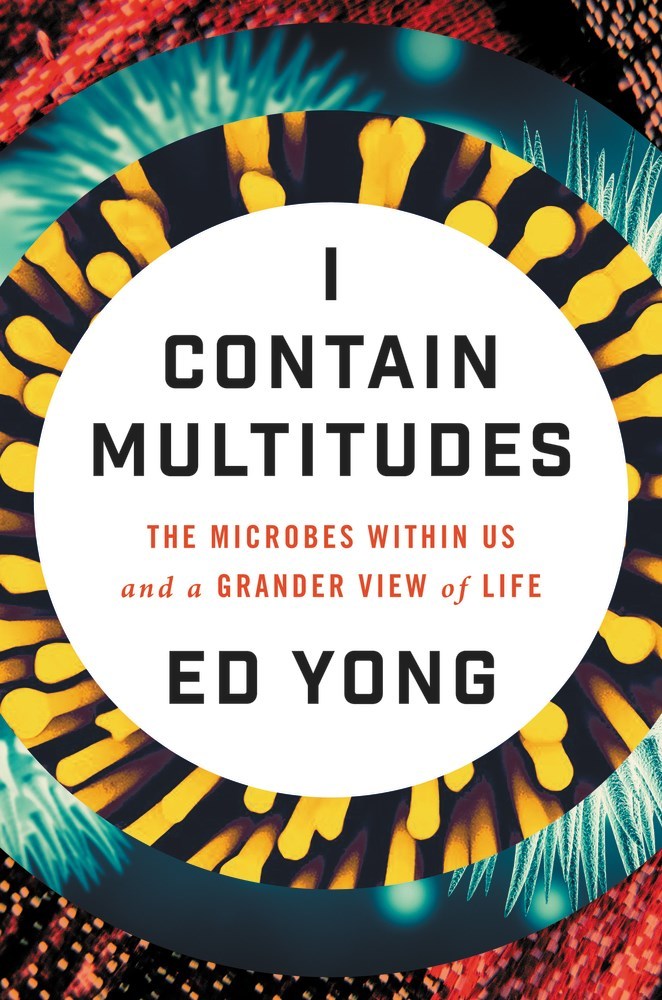
I Contain Multitudes

Quick gut check: when you hear the word bacteria, what’s your first instinct? If your brain immediately goes to illness, infection, something to be scrubbed away, you are in very good company, and you are also, it turns out, only seeing a tiny sliver of the actual picture. I went into I Contain Multitudes thinking I had a reasonably solid grasp of microbiology. I came out feeling like I had been looking at the world through a keyhole and someone had finally opened the door.

What This Book Is Actually About

I Contain Multitudes is Ed Yong’s exploration of the microbiome, the vast, astonishingly complex ecosystem of bacteria and other microbes that live in and on every living thing on Earth, including us. The title is the question as much as the premise: if roughly half of our cells aren’t even human, where exactly does “you” end and your microbiome begin?

Yong is a science journalist whose writing has the rare quality of making genuinely complex biology feel not just accessible but thrilling, the kind of writer who makes you feel the discovery alongside the scientists rather than simply being told what they found. In this book, he moves through the history of how humans first encountered, then largely misunderstood, then began to genuinely reckon with the microbial world, covering the research, the researchers, and the open questions that still remain at the frontier of microbiome science. It is, as he makes unmistakably clear, a frontier with an enormous amount of territory still unmapped.

What Got Me Thinking

The history alone is worth the price of admission. Microbes were first discovered in the 1600s by Antonie van Leeuwenhoek, a microscope maker who scraped plaque from his own teeth, put it under his lens, and found tiny living things moving about in extraordinary quantities. The problem was that no one else could build microscopes the way van Leeuwenhoek could, and so his discovery, extraordinary as it was, largely fell flat for nearly two centuries.

When microbes were effectively rediscovered around 1900, the scientists who picked up the thread focused almost exclusively on one thing: disease. Germ theory. The bad bacteria. That framework took hold so completely that it is still, more than a century later, the first thing most of us think when we hear the word bacteria. Yong makes you feel the weight of that historical accident, how a single, narrow entry point into the microbial world shaped an entire cultural instinct that we are only now beginning to correct.

The correction is long overdue. Every hour, each of us aerosolizes around 37 million bacteria. Our bodies are habitats, complex, dynamic ecosystems that microbes have co-evolved with for hundreds of millions of years, and in turn those microbes work to sustain us in ways we are only beginning to document. The Earth Microbiome Project, still ongoing, is attempting to take stock of every microbial species on the planet. The scale of what we don’t yet know is staggering.

The example that hit me hardest was hospitals. We sterilize everything, for good reason, to protect vulnerable patients from infection. But Yong’s framing recontextualized that practice in a way I couldn’t shake: “Sterility is a curse, not a goal. A diverse ecosystem is better than an impoverished one.” By eliminating the good bacteria alongside the bad, we may be inadvertently creating a more dangerous environment, one where harmful microbes face less competition, less resistance, less of the natural complexity that keeps them in check. The question isn’t how do we kill more microbes. It’s how do we protect the ones that are doing essential work while targeting the ones that cause harm. That reframe alone is worth the entire book.

Why I Think You Should Read This

Five out of five, and this is genuinely one of the books I recommend most readily to people who want to understand what modern biology actually looks like at its most exciting frontier. Yong takes science nonfiction and turns it into something that reads like an adventure novel, not by dumbing anything down, but by finding the human and narrative pulse inside the research and refusing to let go of it.

If you’ve ever taken a probiotic without being entirely sure what you were doing or why, if you’ve ever wondered what “gut health” actually means at a biological level, or if you’ve simply never thought much about the microbial world you’re constantly swimming in, start here. You will not look at your own body, or a hospital, or a forest floor, or a handful of soil the same way again.

My Takeaway

What I keep coming back to is how much our instinct to eliminate and sterilize, to see the microbial world purely through the lens of threat, has cost us in understanding. We built an entire cultural and scientific framework around a fraction of the picture, and then acted on that framework for over a century. The work of correcting it is ongoing and genuinely exciting, but it’s also a reminder that the stories we tell about science shape the science we do. Germ theory wasn’t wrong, it was incomplete. And the difference between those two things matters enormously when you’re deciding what to study, what to fund, and what to protect. Yong makes that argument without ever stating it directly, which is exactly what the best science writing does.

Come Read Along

Has this one shifted how you think about the microbial world, or did you already have a healthy appreciation for bacteria before picking it up? I want to hear where you started and where the book took you. Drop it in the comments or find me on Instagram.

March’s Science Read is Science Business by Gary Pisano, a completely different world from the microbiome, but just as essential if you’re trying to understand how science actually moves from a lab bench to the world. See you there. πŸ“š

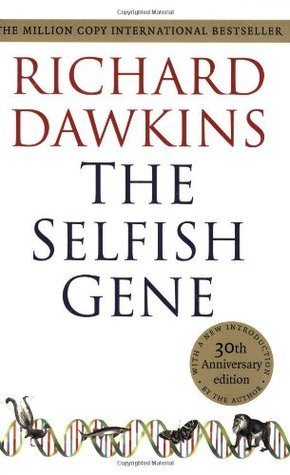
The Selfish Gene

There is a specific kind of reading experience that only happens when you return to a book you first encountered before you were ready for it. I read The Selfish Gene for the first time as an assigned reading in high school chemistry class. I retained almost nothing, which, in my defense, is mostly because I was in high school and the idea of reading anything for fun felt like a personal affront. But coming back to it now, as a working scientist with years of biology and biochemistry behind me, felt like meeting an old acquaintance and finally understanding what they were actually saying. I’m so glad I came back.

What This Book Is Actually About

The Selfish Gene, published in 1976, is Richard Dawkins’ landmark argument for understanding evolution from the perspective of the gene rather than the individual organism or the species. The premise sounds almost provocative in its simplicity: our genes are selfish. Every single one of them. And Dawkins argues that the entire arc of our existence, our bodies, our behaviors, our social instincts, even our capacity for altruism, can be understood as the product of genes relentlessly pursuing one goal: their own survival and replication.

He calls our bodies “survival machines”, vehicles that evolution has shaped over millions of years not for our benefit, but for theirs. That reframe is disorienting the first time you encounter it, and then, as the book builds its case chapter by chapter, it becomes almost impossible to unsee. It is one of the most foundational arguments in modern biology, and nearly fifty years after it was first published, it still holds up as a framework for understanding how we got here.

What Got Me Thinking

I want to be honest: this book is long-winded. The analogies are extended and the arguments circle back on themselves repeatedly, which is, I suspect, a significant part of why high school me checked out entirely. But coming back to it with context, I can see exactly what Dawkins is doing with that length. The overlapping, layered arguments aren’t padding. They’re the method. Each chapter builds on the last in ways that are hard to extract individually, which is also why I’m not going to try to summarize the main points here, every chapter has them, and pulling them apart does the book a disservice.

What I can share are the ideas that have stuck with me most viscerally. Everything in your body is competing, not just against the outside world, but internally, at the level of the genome itself. The “mistakes” in our genome, the mutations and errors that might seem like flaws, are actually what make evolution possible. Evolution happens in spite of genes, not because of them. Natural selection favors conformity until it doesn’t. And then there’s the one that stopped me completely: altruism, genuine selflessness, is often more successful in the long run precisely because it serves gene survival better than straightforwardly selfish behavior does. The most cooperative instincts we have are, at their deepest level, genetic strategy. That is either deeply comforting or deeply unsettling depending on the day, and I’ve been both about it.

The idea of competing strategies creating stable behavioral patterns, what Dawkins develops through game theory before game theory was widely applied to biology, is something that echoes forward into so many of the other books in this reading series. The selfish gene framework keeps showing up in unexpected places once you have it, and that’s the mark of a genuinely foundational idea.

Why I Think You Should Read This

Five out of five, one of the most foundational books for understanding biology and evolution, full stop. If you are in any biological field and haven’t read this, it belongs on your list. If you read it years ago and didn’t quite absorb it, come back. The book rewards the re-read in a way that very few science classics do, especially once you have enough biology behind you to feel the arguments land in real time rather than taking them on faith.


Yes, it’s long. Yes, Dawkins takes his time making each point. Give it that time. It earns it.

My Takeaway

What strikes me most, returning to this book as a scientist rather than a reluctant high schooler, is how much it changed the level at which I think about biology. Before The Selfish Gene, my instinct was to understand life at the level of the organism, the cell, the body, the individual. Dawkins shifted that lens down one level, to the gene, and suddenly a whole range of biological phenomena that had always felt slightly mysterious, cooperation, competition, altruism, the strange logic of natural selection, snapped into focus. The best foundational science books don’t just give you information. They give you a new place to stand when you look at everything else. This is one of those books, and I am genuinely glad I gave it a second chance.

Come Read Along

Have you read The Selfish Gene, and if so, what were your favorite parts? I’d especially love to hear from anyone who read it young and came back to it later. Drop it in the comments or find me on Instagram. This is the book that started Science Reads for me, and it feels right to begin there together.

February’s Science Read is I Contain Multitudes by Ed Yong, a completely different scale of biology, but the same spirit of making you see the living world entirely differently. See you there. πŸ“š

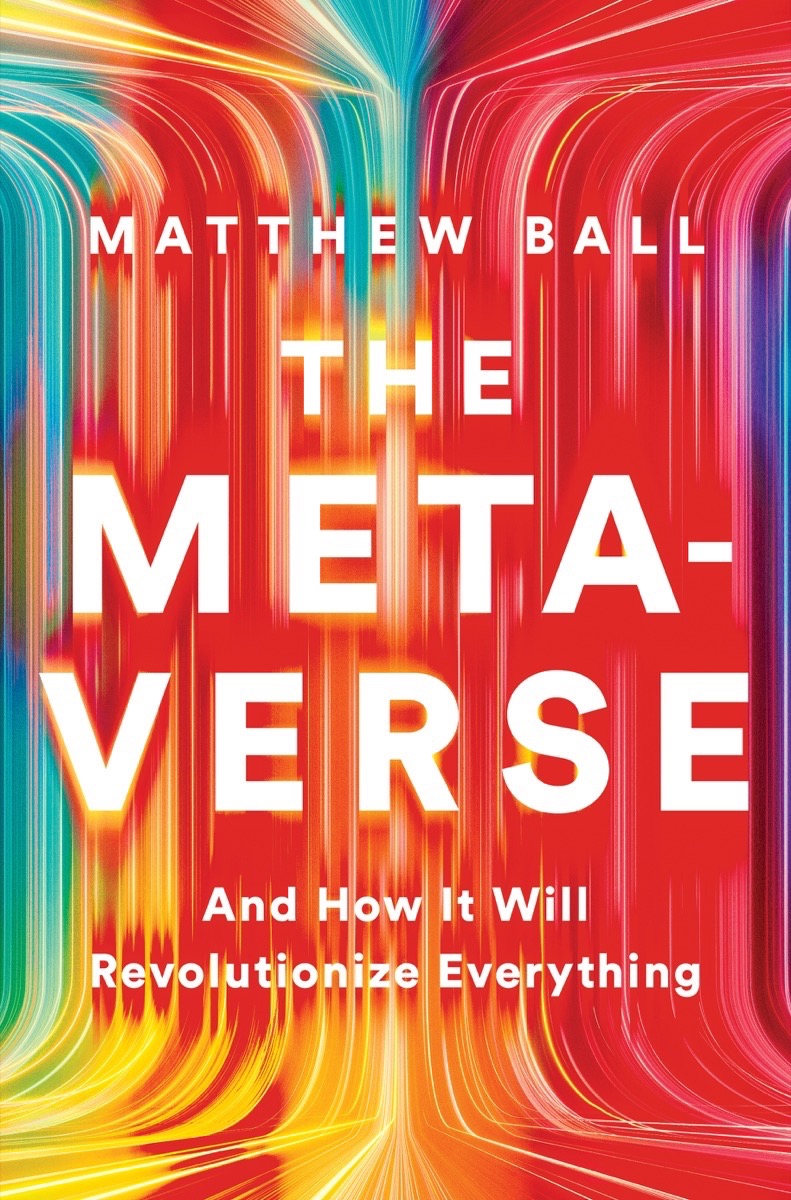
The Metaverse

I checked this book out of the library three times in physical form. I also downloaded the audiobook twice. Five separate attempts before I finally made it through, not because the book isn’t worth it, but because the first third is genuinely dense and I kept getting stuck in the definitions and the setup and putting it down with good intentions to return. I’m telling you this upfront because if you pick this up and feel the same way in the first fifty pages, I want you to know: keep going. Because once the foundation is laid, the rest of it completely changed how I think about technology. And that is not a small thing to say about the last Science Read of 2022.

What This Book Is Actually About

The Metaverse is Matthew Ball’s attempt to define, explain, and map the future of what he argues will be the next major evolution of the internet, a single, large, interconnected virtual world in which people can play, work, pay, and essentially live. Not a collection of separate virtual experiences like Fortnite or Roblox or Instagram, but one persistent, interoperable digital environment that exists continuously, whether or not you’re logged in.

Ball is a venture capitalist and tech strategist who has been writing about the Metaverse longer than almost anyone, and the book reflects that depth. He is careful, deliberately, almost stubbornly careful, not to assign a timeline to when this becomes reality, because the honest answer is that we are further from it than the current cultural conversation suggests. The infrastructure doesn’t exist yet. The computing power isn’t there. The network requirements haven’t been solved. But Ball’s argument is that all of those barriers are engineering problems rather than fundamental impossibilities, and understanding what they are is the first step toward understanding where technology is actually going.

What Got Me Thinking

The section that finally cracked the book open for me was the breakdown of the specific hurdles standing between where we are and where the Metaverse needs to be. Computing power is the most obvious, the scale of what a persistent, fully realized virtual world requires makes current hardware look like a starting point rather than an almost-there. Network limitations follow closely: latency and bandwidth constraints that feel acceptable in today’s online experiences would become catastrophic in an environment requiring real-time, seamless interaction across millions of simultaneous users. Interoperability, the ability to carry your identity, your purchases, your data across different platforms and experiences, is a problem that is as much political and economic as it is technical. Hardware needs to evolve dramatically, from VR headsets that are still too cumbersome for daily use to the clothing sensors and environmental tools that a truly immersive experience would require. And virtual payment infrastructure, the rails for transacting in a digital economy, needs to exist at a scale and accessibility we haven’t built yet.

What Ball is essentially describing is not a single technological breakthrough but a convergence, many different fields and industries solving their specific pieces of a much larger puzzle simultaneously, over an extended period, without any single company being able to control the outcome. Which leads to the future battles he identifies: the fight over centralization, ensuring that no single company like Apple or Google ends up dictating the terms of the entire Metaverse the way platform monopolies have shaped the current internet; and the hardware race, which Zuckerberg has framed with characteristic bluntness as “fitting a supercomputer into the frame of normal looking glasses.”

The sectors where the Metaverse will develop first, education, lifestyle and fitness businesses, entertainment, fashion and advertising, and eventually industrial applications, gave me a completely different framework for understanding decisions that tech companies are making right now that otherwise look inexplicable or premature. Once you have Ball’s map, a lot of things that seemed like expensive experiments start looking like infrastructure investments.

Why I Think You Should Read This

A 4/5 from me, and the missing star belongs entirely to that first third, which asks a lot of patience from readers who aren’t already fluent in tech infrastructure. If you are a beginner in the tech world, which I largely am, the payoff for pushing through is real and significant. Ball writes for a general audience and the complexity is earned rather than gratuitous, but it is genuinely there, and I want to be honest about that rather than set you up to feel like you’re missing something.

Once you’re through it, this is one of the most useful frameworks I’ve found for understanding where technology is going and why, and for a scientist thinking about how research, education, and science communication will exist in a world where the line between physical and virtual experience is increasingly blurred, those questions feel increasingly urgent.

My Takeaway

The thing I keep sitting with as I close out this year of Science Reads is how much the Metaverse, as Ball describes it, is fundamentally a question about interoperability, about whether the systems we build can talk to each other, share information, and create something larger than any of them could produce alone. That is also, I keep thinking, a description of how the best science works. Not isolated breakthroughs in sealed silos, but fields in conversation, sharing data, building on each other’s foundations toward something none of them could have reached independently. The engineering problems standing between us and the Metaverse are real. So are the ones standing between us and the next generation of scientific discovery. In both cases, the answer is the same: build better connections, and see what becomes possible.

Come Read Along

Have you read The Metaverse, or do you have thoughts about where virtual technology is actually heading versus where the hype says it is? I’d love to hear a range of perspectives on this one. Drop it in the comments or find me on Instagram.

And that’s a wrap on Science Reads 2022. What a year of books it has been, from gene patenting to the Great Lakes to bad blood to the beginnings of biotechnology. Thank you for reading along. I cannot wait to see what 2023 brings. πŸ“š

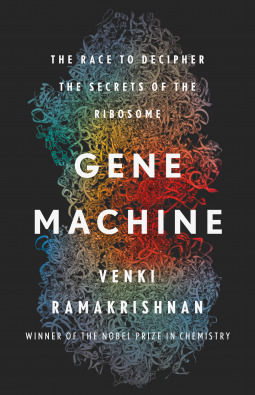
Gene Machine

I picked this one up on a whim. No particular reason, no recommendation, just a Nobel laureate’s name on a cover and a curiosity about ribosomes that I hadn’t realized I had until I was already three chapters in and completely hooked. Gene Machine did something I didn’t know I needed it to do: it made me fall in love with science research again. Not the polished, retrospective version of science where breakthroughs arrive cleanly and credit flows to the right people. The real version, messy, competitive, lucky, collaborative, and endlessly more interesting than the heroic narrative we usually tell about it.

What This Book Is Actually About

Gene Machine is Venki Ramakrishnan’s account of the race to determine the structure of the ribosome, the molecular machine responsible for translating genetic code into proteins, present in every living cell, and one of the most complex and consequential structures in biology. Ramakrishnan shared the 2009 Nobel Prize in Chemistry for this work, alongside Ada Yonath and Thomas Steitz.

But the book is less about the Nobel Prize than about everything that had to happen before it, and more importantly, about dismantling the idea that a Nobel Prize represents one person’s singular genius finally receiving its due. Ramakrishnan is unusually, refreshingly honest about how science actually works: the false starts, the competition, the moments of luck that shaped the outcome as much as any insight, and the many people whose work made his own possible. He writes with the specific authority of someone who was inside the race and has spent years thinking carefully about what it actually meant.

What Got Me Thinking

The line that I keep returning to is the one Ramakrishnan offers almost as an aside: “I don’t subscribe to the heroic narrative of science. Rather, some of us are fortunate enough to be the agents of important discoveries that would have been made anyway, sometimes not even that much later.” That sentence is doing an enormous amount of work. It is honest in a way that scientists rarely allow themselves to be publicly, and it reframes every Nobel Prize announcement, every landmark paper, every “eureka moment” story we tell about scientific progress.

The race to determine the ribosome structure involved dozens of labs, competing and collaborating in shifting configurations, sharing data when it was advantageous and guarding it when it wasn’t, making breakthroughs that built on predecessors who sometimes received far less credit than the work warranted. Sound familiar? It should, it is how almost all of the most important science in history has actually happened, and the gap between that reality and the story we tell about it has real consequences for how young scientists understand what they’re walking into.

The takeaways Ramakrishnan pulls from the experience are the kind that stick: always ask why you’re doing what you’re doing. No question is too basic to be worth asking. The biggest breakthroughs tend to come from the intersection of multiple fields, Ramakrishnan himself came to crystallography through physics and basic biology, and that combination of lenses was part of what made his approach distinctive. Advancing science requires not just better techniques but easier ones, accessibility matters as much as capability. And the grant system, for all its apparent fairness on paper, can be deeply arbitrary when it comes to risky or original proposals. Ramakrishnan worked on the ribosome project as a side project for years because he didn’t think it would get funded as a primary focus. The Nobel Prize-winning work was, for a significant stretch, a gamble he was running in his spare time.

The section on scientist fame is one I’ve been thinking about since I put the book down. The way public recognition distorts our picture of what science looks like, concentrating credit on a small number of famous names while making invisible the collaborative, cumulative, luck-dependent nature of the actual work, is a science communication problem as much as anything else. The stories we tell about science shape who believes they belong in it. And the heroic lone genius narrative excludes, by design, most of the people who actually make science happen.

Why I Think You Should Read This

A full 5/5, and if last month’s The Code Breaker gave you the story of CRISPR through Doudna’s eyes, Gene Machine is a perfect companion: another Nobel laureate, another foundational discovery, and a completely different, and I’d argue even more honest, perspective on how these moments actually come to be. Read them together and you’ll come away with a much fuller picture of what scientific discovery looks like from the inside.

Ramakrishnan is funny, self-aware, occasionally sharp about his competitors in ways that feel entirely earned, and consistently generous toward the people whose work made his possible. That combination makes this one of the most readable and trustworthy accounts of modern science I’ve encountered in this series.

My Takeaway

The image that has stayed with me is the one Ramakrishnan uses for scientific progress: not a summit you climb toward, but a series of foothills, each discovery building on the previous, each new vantage point revealing more terrain ahead rather than less. There is no finishing line. There is no complete understanding waiting at the top. There is only the next question, made possible by the answer you just found. That framing is both humbling and energizing in equal measure, and it is, I think, the most honest thing you can say about what a scientific career actually is. Not a march toward mastery. A willingness to keep climbing, knowing the view will always open onto more.

Come Read Along

Has a book ever made you fall in love with research again when you needed it most? I’d love to hear what it was, drop it in the comments or find me on Instagram. And if you’re a scientist who has ever felt like the heroic narrative of science didn’t quite match your experience of actually doing it, this book will feel like a conversation with someone who gets it.

December’s Science Read is The Metaverse by Matthew Ball, a complete departure from the lab, but one of the most consequential questions about where we are all headed. A fitting way to close out a year of reading. See you there. πŸ“š

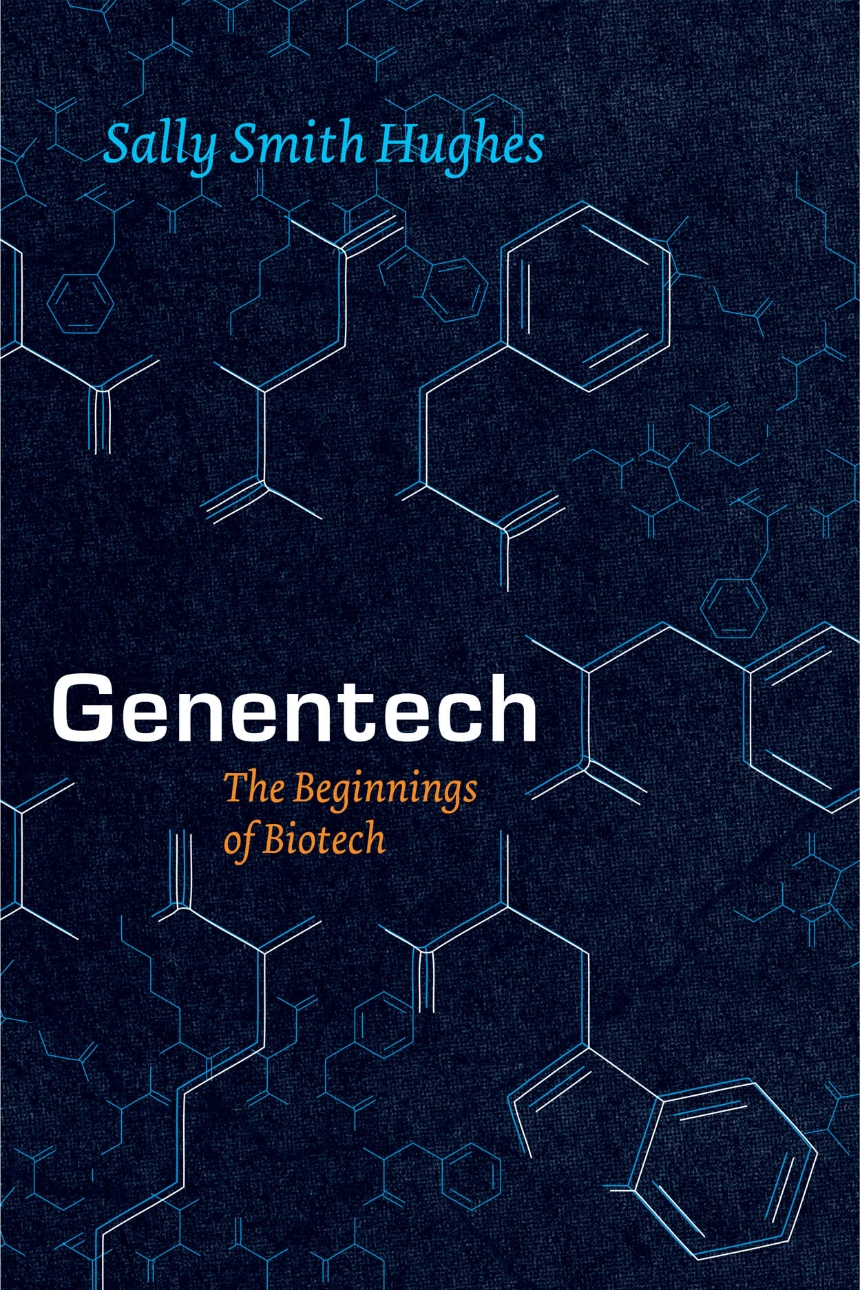
Genentech: The Beginnings of Biotechnology

Happy Halloween, and what better way to spend it than talking about the origin story of an entire industry? I knew Genentech was a significant name in biotechnology. I did not know it was the first company of its kind, full stop. Reading this book felt like finding the root system underneath a forest I had been walking through for years without knowing it was there. The techniques that Genentech was built on, plasmid cloning, recombinant DNA, using bacteria to grow new genetic combinations, are things I use in my own research. The GFP tags in my plasmids exist because of the science this book is about. That realization made every page feel personal in a way I didn’t expect.

What This Book Is Actually About

Genentech: The Beginnings of Biotechnology is historian Sally Smith Hughes’s account of the founding of the first biotechnology company ever, tracing the scientific discoveries that made it possible, the people who took the leap from university lab to commercial enterprise, and the extraordinary resistance they faced from nearly every direction along the way.

The story begins with Herb Boyer, a professor at UCSF, and Stanley Cohen at Stanford, who in the early 1970s combined their research to discover something that has since become utterly foundational to molecular biology: that you could use bacteria to replicate and recombine DNA, producing new genetic sequences that didn’t exist in nature. Recombinant DNA. Plasmid cloning. The ability to insert a gene into a bacterial cell and let it grow up copies, tagged, modified, expressed. The technique is so embedded in modern research that it is easy to forget it had to be invented, by specific people, in specific labs, at a specific moment when almost no one believed it would amount to anything commercially useful.

Boyer eventually co-founded Genentech in 1976 with venture capitalist Robert Swanson, and Hughes documents everything that followed, the backlash from the academic community over the use of university scientists in a commercial enterprise, the regulatory hurdles, the investor skepticism, and ultimately the breakthroughs that proved the model worked. The first major product: human insulin, produced using bacterial fermentation rather than extracted from animal pancreases. That single achievement changed medicine and proved to the world that biotechnology was real.

What Got Me Thinking

The investor skepticism documented in the book is one of the most striking parts of the story, not because it’s surprising that investors were cautious, but because of the specific nature of the doubt. Many weren’t convinced that genetic engineering would actually work. Others couldn’t see what commercially interesting products it might produce even if it did. The gap between what Boyer and his collaborators knew was possible in the lab and what the people with capital could imagine doing with it is a gap that still exists in every conversation about early-stage science funding, and this book shows you exactly what it looks like when the scientists on one side of that gap turn out to be right.

The tension between academic science and commercial enterprise runs through the whole book and never fully resolves, which is honest, because it hasn’t resolved in the decades since. The backlash Boyer faced for using university research as the foundation for a private company raised questions about intellectual property, the public funding of scientific discovery, and who benefits from translational research that are still being argued today. Reading this alongside Science Business and For Blood and Money gives you an extraordinary longitudinal view of how those tensions have evolved, and how much they haven’t.

What I kept coming back to personally was the direct lineage from Boyer and Cohen’s 1970s discovery to my own bench work. The plasmids I work with, the tags I use, the bacterial expression systems that are so routine they barely register as technique anymore, all of it traces back to the science this book is about. That is not a small thing to sit with. The tools that feel like given facts of research were once genuinely radical ideas that a significant portion of the scientific establishment thought were either impossible or irresponsible.

Why I Think You Should Read This

A full 5/5, and I read it in a single weekend, which tells you everything about the pacing. Hughes writes with the clarity and momentum of someone who genuinely loves the story she’s telling, and the book never gets bogged down in the technical or the procedural. It moves like a good origin story should, with the sense that everything that follows, the entire biotechnology industry, is gathering just off the edge of the page.

If you’ve read Science Business or Science Lessons in this series, Genentech is the essential prequel. And if you work in any area of molecular biology and have never traced your techniques back to their origins, this book will do that for you in the most satisfying way possible.

My Takeaway

The thing I keep returning to is how radical the obvious eventually becomes invisible. Recombinant DNA technology was so controversial when Boyer and Cohen published their work that it sparked a moratorium on certain types of genetic research while scientists debated the safety and ethics. Now it is so foundational that students learn it in undergraduate labs without a second thought about its origins. That invisibility is both a triumph and a risk, a triumph because it means the technique worked and became trusted, a risk because forgetting where our tools came from means forgetting the arguments that shaped how we use them. The ethics of genetic engineering didn’t get resolved when plasmid cloning became routine. They got quieter. And quieter isn’t the same as resolved.

Come Read Along

Did you know Genentech was the first biotech company of its kind, or did this book surprise you the way it surprised me? I’d love to hear from anyone who works with recombinant DNA techniques and has thoughts about tracing the lineage of the tools they use every day. Drop it in the comments or find me on Instagram.

November’s Science Read is Gene Machine by Venki Ramakrishnan, a Nobel laureate’s account of the race to map the ribosome, told from the inside. After a month tracing the origins of biotechnology, following it with the story of one of the most fiercely contested structural biology races in history felt exactly right. See you there. πŸ“š

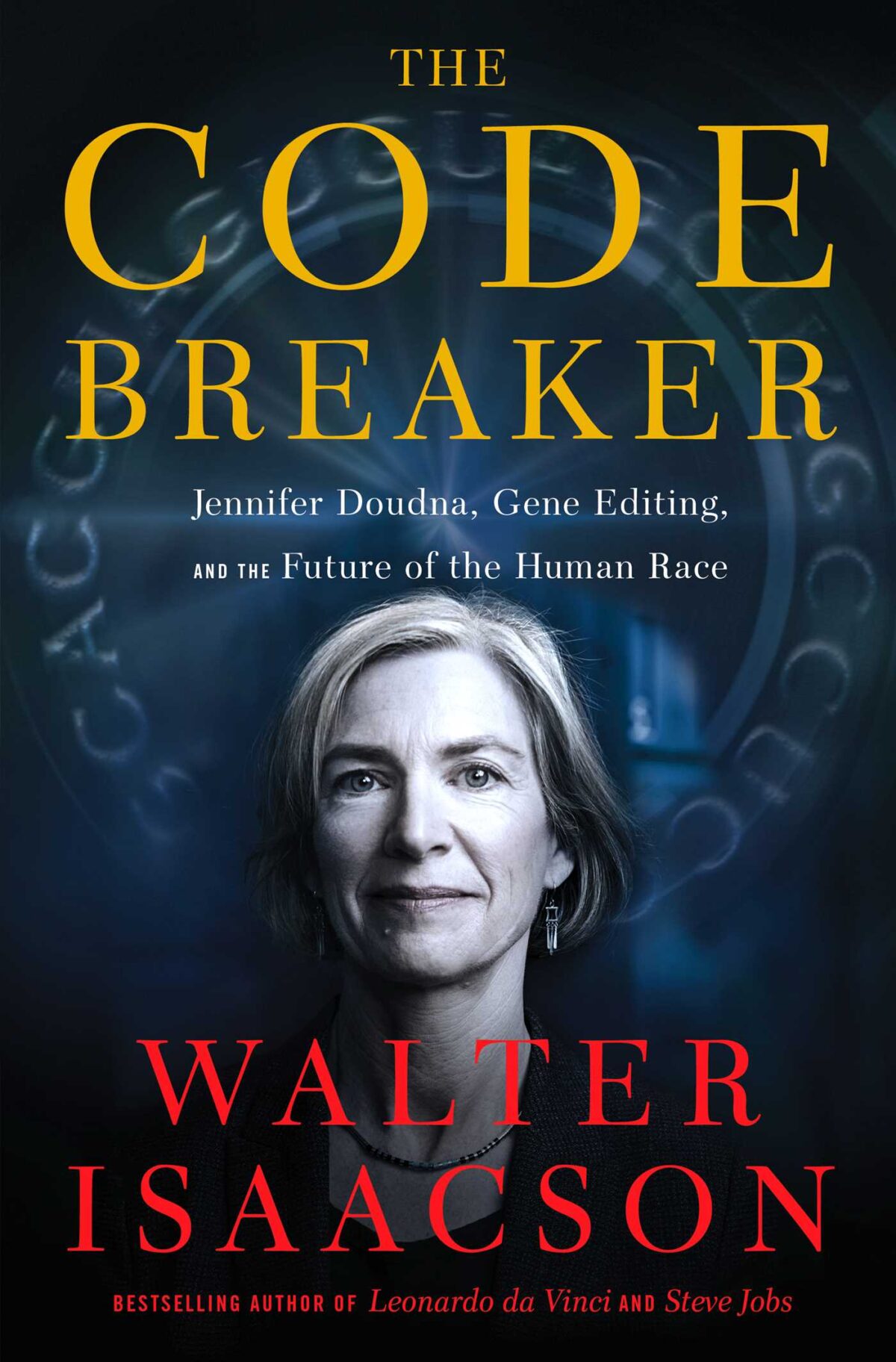
The Code Breaker

There are books that find you at the right moment. And then there are books that make you realize they were always going to find you, that the subject matter is so woven into who you became as a scientist that reading about it feels less like discovery and more like finally getting the full story of something you’ve been carrying for years. The Code Breaker was that book for me. Jennifer Doudna’s work on CRISPR-Cas9 was the subject of my first science report. My high school senior thesis. The thing that first made me feel like science was not just something that happened in textbooks but something that was happening right now, in ways that were going to change everything. I cannot believe it took me this long to read this book.

What This Book Is Actually About

The Code Breaker is Walter Isaacson’s biography of Jennifer Doudna, one of the most significant scientists of the twenty-first century, tracing her life from her early curiosity about biology through the research that earned her and her collaborator Emmanuelle Charpentier the 2020 Nobel Prize in Chemistry. The discovery at the center of the book is CRISPR-Cas9: a gene editing system that allows scientists to cut DNA at precise locations and let the cell’s natural repair process take over, with a specificity and accessibility that no previous gene editing technology had achieved.

But Isaacson, who also wrote the definitive biographies of Einstein, Jobs, and Leonardo da Vinci, understands that the most important stories in science are never just about the science. The Code Breaker is simultaneously a biography, a history of molecular biology, a patent dispute thriller, and a genuinely serious examination of what it means to hold this kind of power over the human genome. It is one of the best science books I have read in this entire series.

What Got Me Thinking

The patent dispute is one of the most fascinating and genuinely unresolved arguments in recent scientific history, and Isaacson covers it with appropriate complexity, while being honest about the fact that the book is told largely from Doudna’s perspective. The core of the dispute: Doudna and Charpentier demonstrated CRISPR-Cas9 working in a test tube environment. Feng Zhang at the Broad Institute argues that the leap to making it work in eukaryotic cells, the kind that make up human bodies, was the novel translational invention, and that he made that leap independently. The general scientific consensus credits Doudna and Charpentier with the foundational invention. But the patent suits that followed have been lengthy, expensive, and emotionally charged in a way that reveals how much is at stake when a technology is potentially worth billions.

What I found most compelling wasn’t the dispute itself but what it exposes about how science and commerce intersect at the moment of a breakthrough. Credit, priority, intellectual property, these are not separate from the science. They shape who gets to build on a discovery and how.

The ethical questions CRISPR opens are the ones I have been thinking about since high school, and the book handles them with more nuance than I expected. Cheap, accessible gene editing technology could eliminate hereditary diseases, revolutionize cancer treatment, and transform medicine in ways we are only beginning to map. It could also, without serious regulation and ethical frameworks, move us toward the kind of genetic stratification that Gattaca and Brave New World imagined as warnings. Could editing the germline weaken genetic diversity in ways we don’t yet understand? How do we ensure equitable access to technology this powerful? How much of the human genome should be considered editable, and by whose authority? Doudna herself has been one of the most vocal advocates for building those ethical guardrails before the technology outruns the conversation, and the book documents that advocacy with the same seriousness it brings to the science.

Why I Think You Should Read This

A full 5/5, new favorite book, no hesitation. Isaacson does what he does better than almost anyone: takes a story that could be dry or technical and makes it feel like the most important thing happening in the world right now, because it is. If you have any interest in genetics, medicine, biotechnology, scientific ethics, or the human drama of how discoveries actually get made and contested and built upon, this book is essential.

And if, like me, CRISPR was the thing that first made science feel urgent and alive for you, reading this will feel like coming home.

My Takeaway

The thing I keep sitting with is how much the ethical conversation around CRISPR has been shaped by the scientists who discovered it, and how unusual that is. Doudna could have stepped back from the policy debate and focused on the research. Instead she helped convene the conversations, push for regulatory frameworks, and insist that the scientific community take responsibility for where this technology goes. That’s science communication in its most consequential form, not explaining a discovery to the public, but using the authority that comes with a discovery to insist that the public conversation about it is the right one. That model of scientific responsibility is one I want to carry forward. The tools we build shape the world we live in. The scientists who build them have an obligation to help decide how.

Come Read Along

Were you following the CRISPR story as it unfolded, or did this book introduce you to it? I’d especially love to hear from anyone whose scientific path was shaped by CRISPR the way mine was. Drop it in the comments or find me on Instagram.

October’s Science Read is Genentech: The Beginnings of Biotechnology by Sally Smith Hughes, the origin story of the industry that made CRISPR’s promise possible in the first place. It felt right to follow this one with the book that goes back to where biotechnology began. See you there. πŸ“š

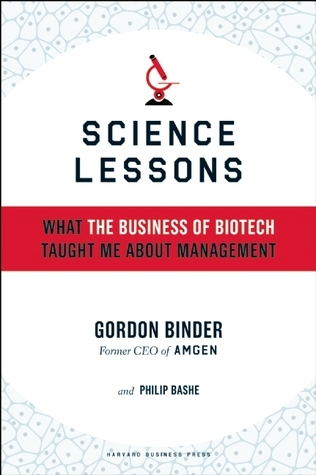
Science Lessons

A recommendation from a trusted person is a different kind of book discovery. When Susanna Harris told me to read this one, I picked it up already predisposed to pay attention, and it delivered on every page. Science Lessons is the kind of book that makes you wish more people who have built extraordinary things would sit down and write honestly about how they actually did it.

What This Book Is Actually About

Science Lessons is the autobiography of Gordon Binder, former CEO of Amgen, a company widely regarded as one of the most successful and innovative biotechnology companies ever built. But calling it just an autobiography undersells what it actually is: a behind-the-scenes look at what it genuinely takes to build a biotechnology company from the ground up, told by someone who lived through every stage of it.

Binder writes at the intersection of science and business with the authority of someone who has navigated both, and the book is useful far beyond the narrow audience of people who want to start their own biotech firm. Anyone who wants to understand how biotechnology actually operates, the economics, the culture, the decision-making, the values, will find something here. The specifics of Amgen’s story are fascinating on their own terms. The principles Binder pulls from that story are the kind that transfer across industries, career stages, and organizational scales.

What Got Me Thinking

The numbers Binder opens with set the stakes immediately: roughly 500 promising agents for every one that makes it to market. Nine to twelve years of development. An industry that hemorrhages money for most of that time before a single product generates revenue. Understanding that math, really sitting with it, reframes every conversation about drug pricing, biotech investment, and the pace of medical progress. It doesn’t make the outcomes of that system always defensible, but it makes them comprehensible in a way that matters for having honest conversations about it.

The management philosophy woven through the book is where I found myself underlining the most. The argument that large companies work best with decentralized management and genuine trust in employees and local decision-making runs counter to the instinct many leaders have to maintain control as an organization scales. Binder makes the case convincingly, and Amgen’s history is the evidence. The point about surveying employees for the values they want in the company, rather than handing down values that leadership wrote and asking employees to embody them, is one I’d put in front of every organization that has ever laminated a list of core values and stuck it on a wall without asking anyone who works there what they actually believe.

The hiring principle is equally sharp: a great scientist who doesn’t believe in the company’s values will be a bad employee. That sounds obvious until you’re in the room where the hiring decision is happening and the candidate has an extraordinary CV. And then there’s the one that I think about beyond just biotech: an A+ management team with an average B plan will outperform an A+ plan with an average management team. Every time. The people executing the plan matter more than the plan itself. That’s a truth that good science communication, good research, and good organizations all share.

The emphasis on PhDs throughout the book also resonated in a specific way. Binder argues clearly that science businesses should not undervalue the skills of researchers, experiment design, troubleshooting, comfort with uncertainty, the ability to ask the right question before committing to an answer. Those skills are directly applicable to business decision-making, and organizations that treat their scientists as technical operators rather than strategic thinkers leave an enormous amount on the table.

Why I Think You Should Read This

A full 5/5, and a genuine thank you to Susanna Harris for putting this in my hands. Whether you’re a scientist thinking about industry, someone building or working inside a biotech company, or simply curious about how one of the most extraordinary companies in the history of the field actually got built, this book is worth your time. Binder writes with clarity and without self-congratulation, which is rarer in CEO memoirs than it should be. The honesty about what was hard, what failed, and what had to be rebuilt is what makes the success story actually instructive rather than just impressive.

My Takeaway

The principle I keep coming back to is the one about being science-based and people-based simultaneously, and specifically the advice that if a team believes in a product, that belief should factor into the decision about whether to continue pursuing it. That’s not anti-scientific. It’s a recognition that the people closest to the work often have information the data alone doesn’t capture, intuitions built from deep familiarity, pattern recognition developed over years of working a specific problem. Good science and good management both require knowing when to trust the numbers and when to trust the people reading them. Binder’s book is one of the most practical explorations of that balance I’ve found.

Come Read Along

Have you read Science Lessons, or do you have a biotech memoir or business book that changed how you think about the intersection of science and industry? Drop it in the comments or find me on Instagram. And a special thank you again to Susanna Harris for this recommendation, this is exactly the kind of book this series exists to find. 🫢

September’s Science Read is The Code Breaker by Walter Isaacson, the story of Jennifer Doudna, CRISPR, and the race to rewrite the code of life. It is one of the most consequential scientific stories of our time, and I have been saving it for the right moment. See you there. πŸ“š

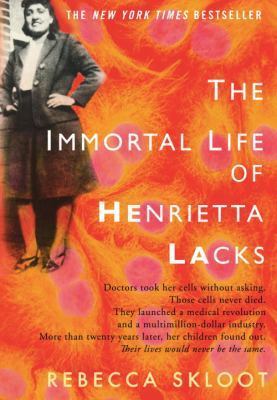
The Immortal Life of Henrietta Lacks

If you have ever worked with cells in a lab, you have almost certainly encountered HeLa cells. They are everywhere in cell biology, in textbooks, in protocols, in research papers spanning seven decades of scientific discovery. I have worked with them. I have cited studies that used them. And until I read this book, I knew almost nothing about the woman they came from, or what their existence cost her family. That gap, between how much science owes Henrietta Lacks and how little it gave back, is what The Immortal Life of Henrietta Lacks is about. And it is a gap that every scientist needs to sit with.

What This Book Is Actually About

In 1951, Henrietta Lacks was being treated for cervical cancer at Johns Hopkins University when cells were scraped from her tumor, without her knowledge or consent, in an era before informed consent was a legal or ethical requirement in medical research. Those cells, now known universally as HeLa cells, turned out to be extraordinary: robust enough to survive outside the body, to replicate, to thrive in culture in a way no human cells had managed before. They became the first successfully cultured human cell line in history.

The scientific impact of HeLa cells is almost impossible to overstate. They were critical to the development of the polio vaccine. They were used in nuclear bomb testing research. They have contributed to breakthroughs in cancer biology, genetics, virology, and cell culture methodology that have shaped the entire trajectory of modern biomedical science. And for most of that time, the Lacks family had no idea their wife and mother’s cells were still alive, still multiplying in labs around the world, still generating scientific discoveries and commercial products, decades after her death. Rebecca Skloot spent years building the trust of the Lacks family to tell this story, and the care she brought to that relationship is present on every page.

What Got Me Thinking

The detail that I cannot move past is how many times the Lacks family encountered the scientific and medical establishment, and how consistently they were ignored, used for additional testing, or given explanations so incomplete as to be meaningless. Scientists and doctors who knew exactly what HeLa cells were and what they had produced had decades of opportunities to sit down with this family and explain it honestly. Almost none of them did. Rebecca Skloot, a science writer, not a scientist, was eventually the one who did that work. That says something uncomfortable about the culture of science that I think we need to keep saying out loud.

The ethics of what happened are complicated by the historical context, informed consent as we understand it today didn’t exist in 1951, and the cells were taken in a way that was legally and medically standard at the time. But “standard at the time” is not the same as right, and the decades that followed, during which the Lacks family remained uncompensated, unnamed, and uninformed while HeLa cells generated enormous scientific and commercial value, cannot be explained away by historical context. Those were choices. Made by people who knew what the cells were and chose, repeatedly, not to have a harder conversation.

The quote that opens her story, “Education is everything,” from Deborah Lacks, lands with particular weight in that context. The Lacks family was denied the education about their own family’s place in scientific history for decades. Not because the information didn’t exist. Because no one who had it felt sufficiently obligated to share it.

Why I Think You Should Read This

A 4/5 from me, and a genuine must-read for any cell biologist, any scientist who has ever used HeLa cells, and honestly any person who wants to understand why informed consent and scientific transparency aren’t bureaucratic formalities. They are the difference between science that serves humanity and science that extracts from it.

Skloot’s writing is warm and careful and deeply respectful of the Lacks family’s complexity, their grief, their confusion, their pride, and their ongoing struggle to understand and reckon with what Henrietta’s cells have meant for the world. She earns the trust the family placed in her, and it shows.

My Takeaway

The thing I carry from this book every time I work with cell lines is a sharper awareness of where biological material comes from and what it represents. Cells in a culture flask are not abstract scientific tools. They came from a person. And the person they came from, and the family that person left behind, deserve to be part of the story of what those cells made possible. Science has a long history of separating the discovery from the human cost of making it. The Immortal Life of Henrietta Lacks is a direct, humane argument for why that separation is not a neutral choice, and why science communication, the work of explaining science to the people it affects, is not optional. It is an obligation. Henrietta Lacks deserved that explanation. Her family deserved it. And the scientific community is still, in many ways, working out what it owes them.

Come Read Along

Have you read this one, and did it change how you think about the cell lines and biological materials you work with? I’d genuinely love to hear from other cell biologists in particular. Drop it in the comments or find me on Instagram.

August’s Science Read is Science Lessons by Gordon Binder, a look at science, business, and what happens when the two collide at the highest possible stakes. See you there. πŸ“š

Bad Blood

If you watched Hulu’s The Dropout and found yourself oscillating between fascination and fury, first of all, same. Second of all, put this book at the top of your list immediately, because the full story is even more staggering than the show had time to tell. Bad Blood is where it started, and it is one of the most important books about science, ethics, and institutional failure I have read in this entire series.

What This Book Is Actually About

Bad Blood is Wall Street Journal investigative journalist John Carreyrou’s account of Elizabeth Holmes and Theranos, the company she founded at nineteen after dropping out of Stanford, built on a single audacious claim: that a drop of human blood could be used to diagnose hundreds of different diseases and medical markers, faster and cheaper than any existing technology.

Theranos raised over $700 million dollars on that claim. It attracted some of the most powerful names in American business and politics to its board. It secured partnerships with major companies including Walgreens, who deployed Theranos testing centers in their stores across the country. And the technology, it turned out, didn’t work. The machines were error-prone and nowhere near market-ready. The company regularly diluted blood samples and ran them on other manufacturers’ equipment while telling patients and partners they were using their own proprietary technology. The results were wildly inaccurate. And thousands of patients made real, life-altering medical decisions based on those results.

Carreyrou broke the story after a series of whistleblowers came to him at enormous personal and professional risk, employees who had watched what was happening inside Theranos and couldn’t stay silent any longer. This book is the full account of what they told him, and what he found when he kept pulling the thread.

What Got Me Thinking

The science fraud at the center of this story is enraging on its own terms, as a scientist, there is something viscerally wrong about watching fabricated data presented as breakthrough research to investors, regulators, and clinicians who had no reason to doubt it. But what makes Bad Blood more than just a fraud story is the patient dimension. This wasn’t a company misleading investors about future profits. It was a company providing inaccurate diagnostic results to real people making decisions about cancer treatment, medication dosages, pregnancy, and other irreversible health choices. The gap between what Theranos claimed and what it delivered wasn’t an inconvenience. It was a direct threat to human health.

The dilution problem is the detail that has stayed with me longest. When you dilute a blood sample to run it through an assay, you lower the concentration of every analyte you’re measuring. Every result comes back artificially low. A patient with dangerously elevated levels of something might receive a result that looks normal. A patient who needs intervention might be told everything is fine. And none of them had any reason to know the test they just received was built on a methodology that made accurate results almost impossible.

What allowed this to continue for over a decade is the question Carreyrou keeps returning to, and the answer involves a failure at every level of the system that was supposed to catch exactly this kind of fraud. Investors who were dazzled by the story and didn’t ask hard enough questions about the data. Regulators who were navigated around through a combination of legal maneuvering and aggressive intimidation of anyone who raised concerns. Board members with enormous prestige and almost no scientific background. And a culture, Silicon Valley’s specific brand of “fake it till you make it”, that treated overpromising not as fraud but as vision.

Why I Think You Should Read This

A full 5/5, and not just as a gripping true crime story, which it absolutely is. This book is a case study in why understanding the science behind a discovery is not optional for the people making decisions about it. Holmes was able to operate for as long as she did in part because the people around her, investors, partners, board members, didn’t have the scientific literacy to evaluate her claims critically. That is not a personal failing. It is a systemic one, and it is one that science communication has a direct role in addressing.

If you haven’t watched The Dropout, read this first. If you have, read this anyway, the book goes places the show doesn’t have time to, and Carreyrou’s reporting is meticulous in a way that makes the whole story feel even more extraordinary.

My Takeaway

What I keep sitting with is the whistleblowers. The people who saw what was happening inside Theranos, understood what it meant for patients, and chose to come forward despite knowing exactly what it would cost them professionally and personally, those are the people this story ultimately belongs to. Science integrity doesn’t maintain itself. It is maintained by individual people making difficult choices, often without institutional support, to say out loud that something is wrong. That is not a comfortable truth. It is also one of the most important ones. And every scientist who reads this book should ask themselves what they would do in the same position, because the circumstances that produced Theranos were not unique to one company or one industry. The pressures that bent the science there exist everywhere science and money intersect.

Come Read Along

Have you read Bad Blood or watched The Dropout, and did one change how you saw the other? I’d love to hear your take in the comments or on Instagram. This is one of those stories that sparks a different reaction depending on whether you’re coming to it as a scientist, an investor, a patient, or just a person who finds institutional failure endlessly fascinating.

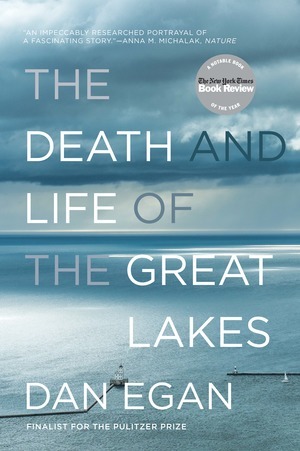
The Death and Life of the Great Lakes

Growing up in Minnesota, Lake Superior was just, there. One of more than 10,000 lakes in the state, enormous and freezing and always present. My family would go camping by it, and we’d see who could last the longest walking into the water. I always lost. I was also, I can see now, completely taking for granted one of the most extraordinary freshwater systems on the planet. This book fixed that. It also made me a little angry, which I think was entirely the point.

What This Book Is Actually About

The Great Lakes span five states and two Canadian territories, and together they contain over 20% of all the freshwater on Earth. Twenty percent. Of all the freshwater on the entire planet, sitting in these five lakes that generations of people who live near them have treated as a permanent, inexhaustible given. The Death and Life of the Great Lakes is investigative journalist Dan Egan’s account of what we have done to them, and what we are not doing nearly enough of to protect what remains.

Egan spent years reporting on the Great Lakes for the Milwaukee Journal Sentinel, and that depth of reporting shows in the book. This isn’t an overview. It’s a granular, specific, sometimes infuriating examination of the decisions, policy, economic, ecological, that have accelerated the degradation of these lakes over the past century. He moves through the history, the current crisis, and the measures that exist or could exist to address it, with the precision of someone who has spent a long time understanding exactly where the system is failing and why.

What Got Me Thinking

The scale of the ecological damage Egan documents is staggering, and what makes it particularly hard to sit with is how much of it was entirely preventable, the result of specific human choices made for specific short-term reasons, without serious consideration of long-term consequence.

We built unnatural seaways connecting the lakes to the ocean, which increased outflow and fundamentally altered the hydrology of the system. Cargo ships brought invasive species in their ballast water, reshaping ecosystems that had no defenses against them. And then, the one that genuinely stopped me, we deliberately introduced invasive species like Chinook Salmon to create better sport fishing, decimating the native fish populations in the process. We introduced the problem ourselves, for recreation. The Phosphorus runoff from agricultural fertilizer triggers massive toxic algae blooms annually, and rising lake temperatures from climate change are accelerating evaporation and causing water level fluctuations that cascade through every connected ecosystem.

The response to all of this has been, and Egan is unflinching about this, not enough. The EPA requires incoming sea freighters to wash their ballast chambers of potentially invasive ocean water, but many vessels are currently exempt. Electric fences exist to prevent some invasive species from entering the lakes, but fish still swim through. Phosphorus limits are in place but insufficiently enforced. The gap between what is being done and what the scale of the problem demands is enormous, and Egan doesn’t let the reader look away from it.

What could change things? Tighter regulations on sea freighters with no exemptions. Real restrictions on invasive fish pathways through connecting rivers. More aggressive prevention of toxin runoff. And breeding programs to reintroduce native fish species into lakes where they have effectively been displaced. The solutions exist. The political and economic will to implement them is the missing ingredient, which is, in some ways, the oldest story in environmental science.

Why I Think You Should Read This

A 4/5 from me, and the missing star is less about any flaw in the book and more about the fact that Egan’s thoroughness occasionally tips into density that slows the momentum. He is an investigative journalist at heart, and the book reads that way: comprehensive, well-sourced, and in some stretches more exhaustive than the narrative strictly requires.

But the subject matter is urgent in a way that I don’t think gets nearly enough mainstream attention. In a world where freshwater availability is decreasing globally and becoming one of the defining resource challenges of the coming century, the fact that 20% of the planet’s surface freshwater sits in five lakes that we are actively degrading should be front-page news every year. Egan makes that case better than anyone I’ve read.

My Takeaway

I grew up walking into Lake Superior and complaining about how cold it was. I had no idea what I was standing next to. That’s the thing about resources we inherit, we don’t tend to understand their value until we start to lose them. The Great Lakes aren’t lost yet. The science exists to protect them. The policy tools exist. What Egan’s book makes devastatingly clear is that existing isn’t the same as being used, and that the gap between what we know and what we do is where most environmental damage actually happens. Science communication, at its most important, is about closing that gap. Making people feel, as viscerally as possible, what is actually at stake. This book does that. I hope it reaches the people who need to read it most.

Come Read Along

Have you ever been to the Great Lakes, or grown up near a body of water you took for granted until you learned more about it? I’d love to hear about it in the comments or on Instagram. And if this one sparked any urgency around freshwater conservation for you, that’s exactly the reaction Egan was going for.

    Share Your Story