
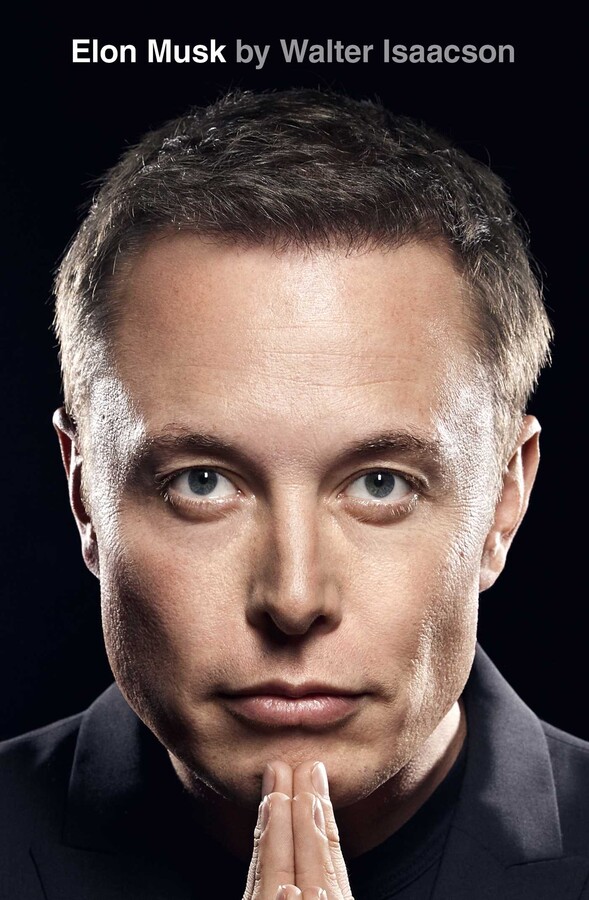
I’ll be upfront with you: I almost didn’t include this one. The name alone has become so loaded, so politically charged, that it’s hard to approach it without bringing a lot of noise into the room. But then I remembered it was a Walter Isaacson biography, and I have never, not once, put down a Walter Isaacson biography without feeling like I understood a human being more fully than I did before. So I read it. And I loved it. Genuinely, unexpectedly, top-reads-of-the-year loved it. Let me explain why.
What This Book Is Actually About
Elon Musk is Walter Isaacson’s attempt to answer one of the most genuinely interesting questions of our current moment: what actually makes this person tick? Not the Twitter version, not the meme version, not the political lightning rod, but the human being underneath all of it, and the extraordinary, strange, specific mind that has built more transformative companies than almost anyone in modern history.
Isaacson, who also wrote the definitive biography of Steve Jobs, spent two years shadowing Musk, attending meetings, watching decisions get made in real time, interviewing the people closest to him. The result is an unusually intimate portrait of someone who has simultaneously changed the world in measurable ways and made himself one of the most divisive figures alive. PayPal reimagined electronic payment. Tesla forced the automotive industry to take electric vehicles seriously. SpaceX made commercial space flight and reusable rockets a reality. Starlink brought internet access from space. Neuralink is working on implantable brain-computer interfaces. As Isaacson notes, even at his peak, Steve Jobs was CEO of two companies. Musk is CEO of six. Let that sink in.
What Got Me Thinking
The line that stopped me completely was from Musk’s brother, Kimbal, talking about Twitter: “It’s just a pimple on the ass of what should be your impact on the world.” I laughed. And then I sat with it, because he’s right, and the fact that Twitter has consumed so much of the public conversation about Musk is genuinely strange when you look at the full picture of what he’s built.
What Isaacson is really exploring is the question of what drives someone to operate at this scale. His answer, and it’s one that surprised me, is that for Musk, the mission has never been money, power, or fame. It’s something closer to a cosmic obligation. As Isaacson puts it, while other entrepreneurs develop a worldview, Musk developed a cosmic view. A multi-planetary, sustainable, free-speech humanity, the kind you’d find in his favorite science fiction novels, The Hitchhiker’s Guide to the Galaxy among them. That framing made a lot of his decisions, including some of his most baffling ones, suddenly make a different kind of sense.
The operational philosophy Isaacson lays out is equally fascinating and exhausting in equal measure: question every rule, learn by failing, maintain a constant maniacal sense of urgency, push until you find the actual limit because you genuinely don’t know what you’re capable of until you do. Musk needs to be in control of every project. He needs the urgency to be felt by everyone around him. Whether that approach is genius or destructive, or both simultaneously, depending on the day, is something the book doesn’t try to resolve. It just shows you, unflinchingly, and lets you draw your own conclusions.
And that’s what Isaacson does best. He makes clear throughout that Musk is just human. He makes mistakes. He has blind spots. He has trauma running through his story that shapes decisions in ways even he may not fully recognize. Some of his biggest mistakes, Isaacson argues, involve Twitter, and that thread gets its own space in Part 2.
Why I Think You Should Read This
Five out of five, and I say that knowing full well the subject is controversial. This book is not an endorsement of every decision Musk has made or will make. It is a masterclass in biography writing, and a genuinely useful lens on how visionary thinking and destructive behavior can exist in the same person at the same time. Isaacson never lets Musk off the hook, but he never reduces him to a villain or a hero either. That balance is rare, and it’s what makes this book worth your time regardless of where you stand on the man himself.
If you’ve been avoiding this one because of the noise around his name right now, I’d gently push back. Understanding how transformative, and complicated, human beings operate is part of what science communication is all about.
My Takeaway
The question I keep sitting with is one Isaacson never quite answers directly: do we need a bit of crazy to change the world? The history of science is full of people who were considered unreasonable, obsessive, impossible to work with, until suddenly they weren’t, because the thing they wouldn’t stop believing in turned out to be real. That doesn’t excuse everything. But it does complicate the clean story we sometimes tell about what visionary science and innovation are supposed to look like. Musk’s story, at minimum, is a reminder that the people reshaping the world are rarely the ones who fit neatly into any box we build for them.
Come Read Along
I want to know, did you read this one? Did it change your mind about him, in either direction? Drop it in the comments or find me on Instagram. And stay tuned for Part 2, where we get into the Twitter chapters and the parts of this book that are harder to sit with. 📚