
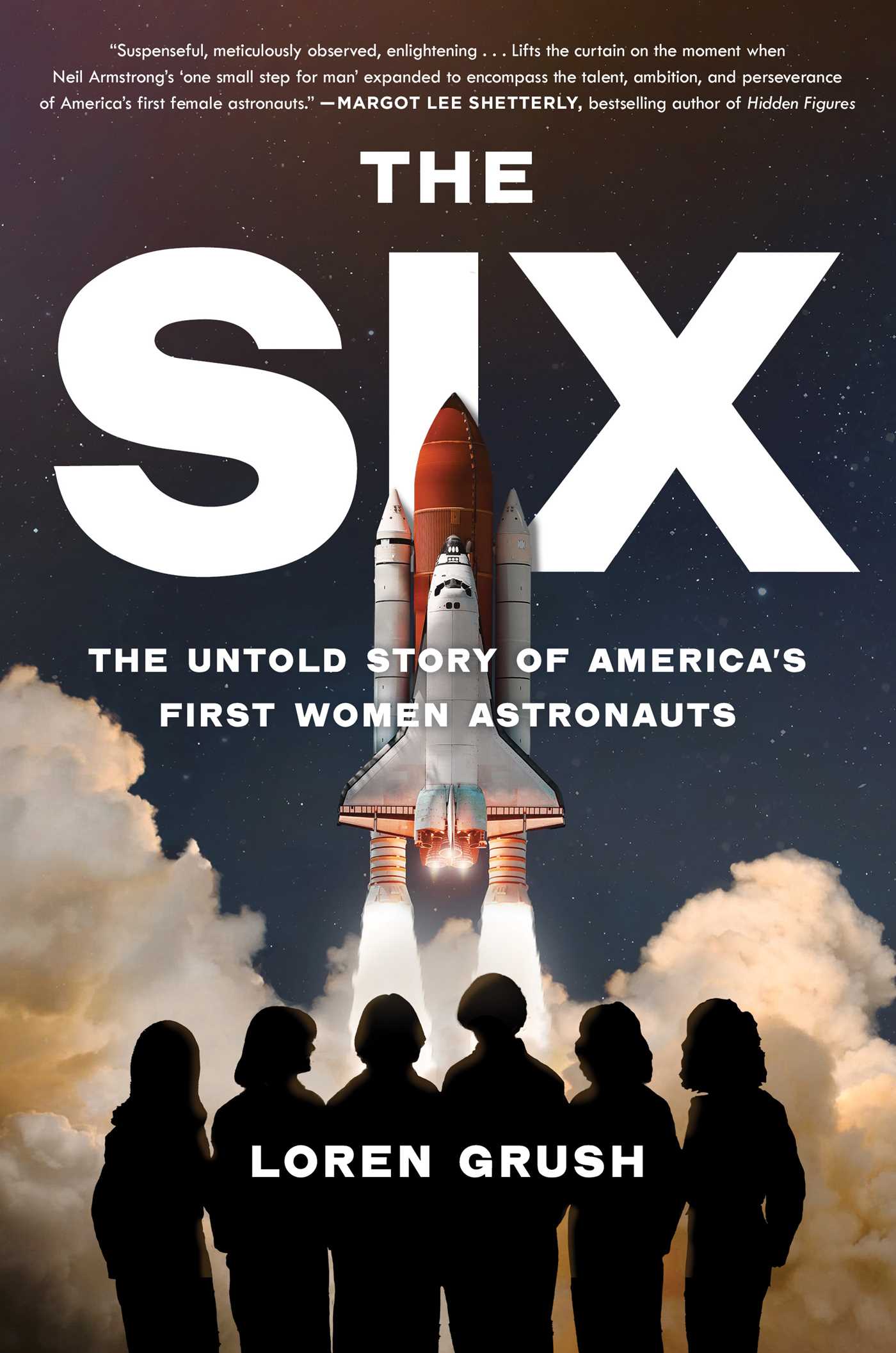
Judy. Sally. Rhea. Anna. Shannon. Kathy. Six names that should be as instantly recognizable as any in the history of American space exploration, and yet somehow aren’t, at least not the way they deserve to be. The Six is Loren Grush’s attempt to change that, and it could not have landed on my reading list at a better moment. It was World Space Week when I picked this up, which felt exactly right for a book about the women who looked at a program that had never considered them and decided to go anyway.
What This Book Is Actually About
The Six was released just last month, and science journalist Loren Grush, who covers the space industry for Bloomberg and has spent years reporting on NASA, documents the stories of the first six American women selected as astronauts: Sally Ride, Judy Resnik, Rhea Seddon, Anna Fisher, Shannon Lucid, and Kathy Sullivan. Together, they formed NASA’s class of 1978, the first class to include women after decades of lobbying just to get the agency to consider it.
Grush weaves their individual narratives into a single, propulsive story, covering the selection process, the training, the institutional resistance, the cultural scrutiny, and ultimately the flights that made history. She writes with the instincts of a journalist who has clearly spent a long time with this material and genuinely cares about getting it right. The result is a book that is as much about what these women had to navigate on the ground as it is about what they achieved above it.
What Got Me Thinking
I love a good story about women firsts in STEM, it’s a genre I return to again and again, and for good reason. But The Six got under my skin in ways that even I didn’t anticipate, because the specific texture of what these women navigated was so vivid and so infuriating and so familiar all at once.
Some of them hid their pregnancies until the four-month mark. Not because they were ashamed, but because more training meant a higher likelihood of being selected for a flight, and they were not willing to let a pregnancy become a reason to be sidelined. Think about that for a moment. The calculus these women had to run, constantly, just to stay in the room.
And then there were the moments that almost read as satire, except they weren’t. Being questioned by the media about why they weren’t home with their children. Being told they couldn’t wear shorts in space because their legs would be too revealing. Constantly having to perform at a standard higher than their male peers just to be seen as equally qualified. The barriers weren’t abstract. They were specific, daily, and relentless, and these women cleared them anyway, with a kind of focused, determined grace that the book captures beautifully.
The firsts they accumulated speak for themselves: Sally Ride became the first American woman in space. Judy Resnik was the second, and the first Jewish American astronaut. Kathy Sullivan became the first American woman to spacewalk. Anna Fisher was the first mother to go to space, followed by Rhea Seddon and Shannon Lucid, who also logged the longest spaceflight time of the six. Each of these milestones was hard-won in ways the milestone alone doesn’t convey.
And then the book winds toward the Challenger. Judy Resnik was on board. The way Grush handles that ending, the weight of it, the way it recontextualizes everything that came before, is quietly devastating and deeply respectful. It doesn’t overshadow the joy of what these women achieved. It honors it.
Why I Think You Should Read This
A 4/5 from me, and my only genuine critique is that the first half carries some extra detail that slows the momentum in places. Grush is thorough, sometimes to the point where the pacing feels like it’s working against the story. But the second half more than earns it back, and by the final chapters I was fully absorbed.
If you’ve read The Exceptions earlier in this series, about Nancy Hopkins and the women who fought for equity at MIT, The Six is a natural and powerful companion read. Both books are ultimately about the same thing: women in STEM refusing to accept the limits placed on them, and what it actually cost them to push back. The settings are different. The fight is the same.
My Takeaway
What I keep coming back to is this: these six women didn’t just open a door for the women astronauts who came after them. They built the argument, with their bodies and their careers and their tireless, brilliant persistence, that the door should exist at all. And the fact that we still live in a world where that argument has to be made, in different rooms, about different doors, in different fields, is something The Six quietly refuses to let you forget. The path these women cleared is real. It is also not finished. Every generation of women in STEM inherits both the progress and the remaining work.
Come Read Along
Are you a space person? Did you grow up knowing these names, or did this book introduce them to you for the first time? I’d genuinely love to know, drop it in the comments or find me on Instagram.
October’s Science Read is The Song of the Cell by Siddhartha Mukherjee, back to the bench, and back to a story about how science really works, told by one of the finest science writers alive. See you there. 📚