
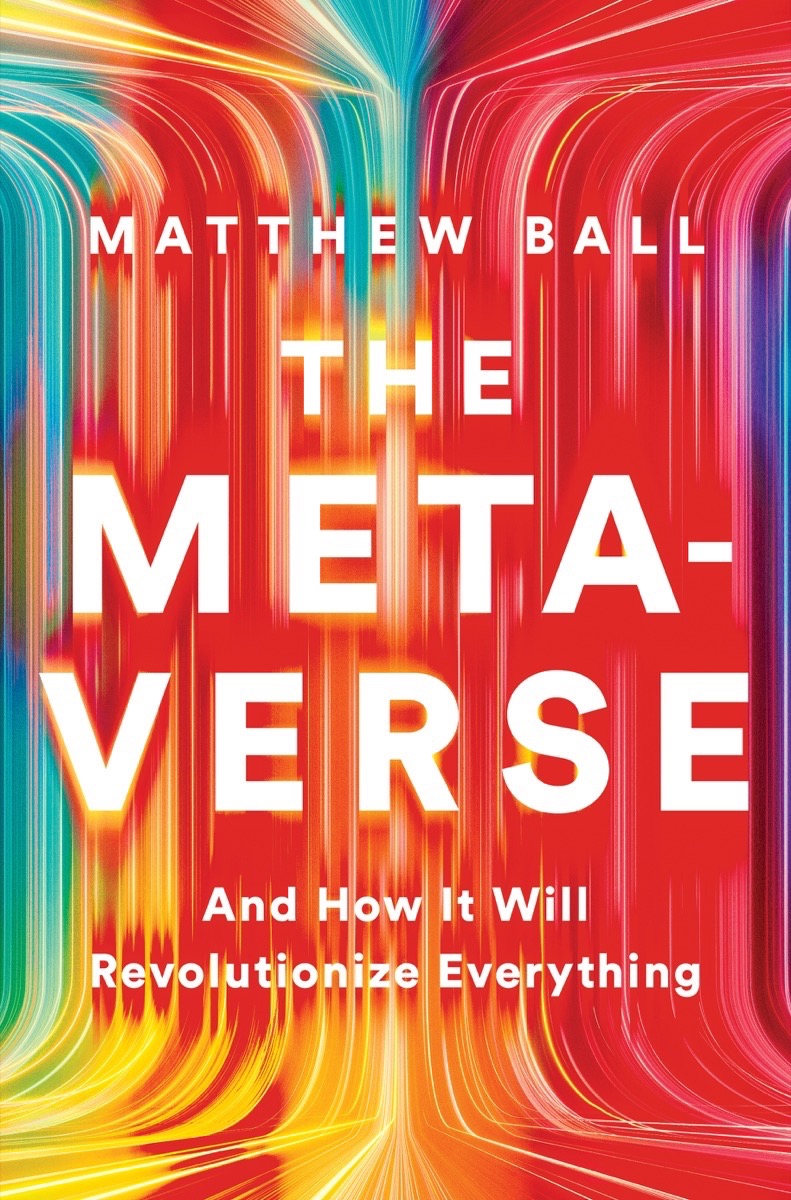
I checked this book out of the library three times in physical form. I also downloaded the audiobook twice. Five separate attempts before I finally made it through, not because the book isn’t worth it, but because the first third is genuinely dense and I kept getting stuck in the definitions and the setup and putting it down with good intentions to return. I’m telling you this upfront because if you pick this up and feel the same way in the first fifty pages, I want you to know: keep going. Because once the foundation is laid, the rest of it completely changed how I think about technology. And that is not a small thing to say about the last Science Read of 2022.
What This Book Is Actually About
The Metaverse is Matthew Ball’s attempt to define, explain, and map the future of what he argues will be the next major evolution of the internet, a single, large, interconnected virtual world in which people can play, work, pay, and essentially live. Not a collection of separate virtual experiences like Fortnite or Roblox or Instagram, but one persistent, interoperable digital environment that exists continuously, whether or not you’re logged in.
Ball is a venture capitalist and tech strategist who has been writing about the Metaverse longer than almost anyone, and the book reflects that depth. He is careful, deliberately, almost stubbornly careful, not to assign a timeline to when this becomes reality, because the honest answer is that we are further from it than the current cultural conversation suggests. The infrastructure doesn’t exist yet. The computing power isn’t there. The network requirements haven’t been solved. But Ball’s argument is that all of those barriers are engineering problems rather than fundamental impossibilities, and understanding what they are is the first step toward understanding where technology is actually going.
What Got Me Thinking
The section that finally cracked the book open for me was the breakdown of the specific hurdles standing between where we are and where the Metaverse needs to be. Computing power is the most obvious, the scale of what a persistent, fully realized virtual world requires makes current hardware look like a starting point rather than an almost-there. Network limitations follow closely: latency and bandwidth constraints that feel acceptable in today’s online experiences would become catastrophic in an environment requiring real-time, seamless interaction across millions of simultaneous users. Interoperability, the ability to carry your identity, your purchases, your data across different platforms and experiences, is a problem that is as much political and economic as it is technical. Hardware needs to evolve dramatically, from VR headsets that are still too cumbersome for daily use to the clothing sensors and environmental tools that a truly immersive experience would require. And virtual payment infrastructure, the rails for transacting in a digital economy, needs to exist at a scale and accessibility we haven’t built yet.
What Ball is essentially describing is not a single technological breakthrough but a convergence, many different fields and industries solving their specific pieces of a much larger puzzle simultaneously, over an extended period, without any single company being able to control the outcome. Which leads to the future battles he identifies: the fight over centralization, ensuring that no single company like Apple or Google ends up dictating the terms of the entire Metaverse the way platform monopolies have shaped the current internet; and the hardware race, which Zuckerberg has framed with characteristic bluntness as “fitting a supercomputer into the frame of normal looking glasses.”
The sectors where the Metaverse will develop first, education, lifestyle and fitness businesses, entertainment, fashion and advertising, and eventually industrial applications, gave me a completely different framework for understanding decisions that tech companies are making right now that otherwise look inexplicable or premature. Once you have Ball’s map, a lot of things that seemed like expensive experiments start looking like infrastructure investments.
Why I Think You Should Read This
A 4/5 from me, and the missing star belongs entirely to that first third, which asks a lot of patience from readers who aren’t already fluent in tech infrastructure. If you are a beginner in the tech world, which I largely am, the payoff for pushing through is real and significant. Ball writes for a general audience and the complexity is earned rather than gratuitous, but it is genuinely there, and I want to be honest about that rather than set you up to feel like you’re missing something.
Once you’re through it, this is one of the most useful frameworks I’ve found for understanding where technology is going and why, and for a scientist thinking about how research, education, and science communication will exist in a world where the line between physical and virtual experience is increasingly blurred, those questions feel increasingly urgent.
My Takeaway
The thing I keep sitting with as I close out this year of Science Reads is how much the Metaverse, as Ball describes it, is fundamentally a question about interoperability, about whether the systems we build can talk to each other, share information, and create something larger than any of them could produce alone. That is also, I keep thinking, a description of how the best science works. Not isolated breakthroughs in sealed silos, but fields in conversation, sharing data, building on each other’s foundations toward something none of them could have reached independently. The engineering problems standing between us and the Metaverse are real. So are the ones standing between us and the next generation of scientific discovery. In both cases, the answer is the same: build better connections, and see what becomes possible.
Come Read Along
Have you read The Metaverse, or do you have thoughts about where virtual technology is actually heading versus where the hype says it is? I’d love to hear a range of perspectives on this one. Drop it in the comments or find me on Instagram.
And that’s a wrap on Science Reads 2022. What a year of books it has been, from gene patenting to the Great Lakes to bad blood to the beginnings of biotechnology. Thank you for reading along. I cannot wait to see what 2023 brings. 📚