
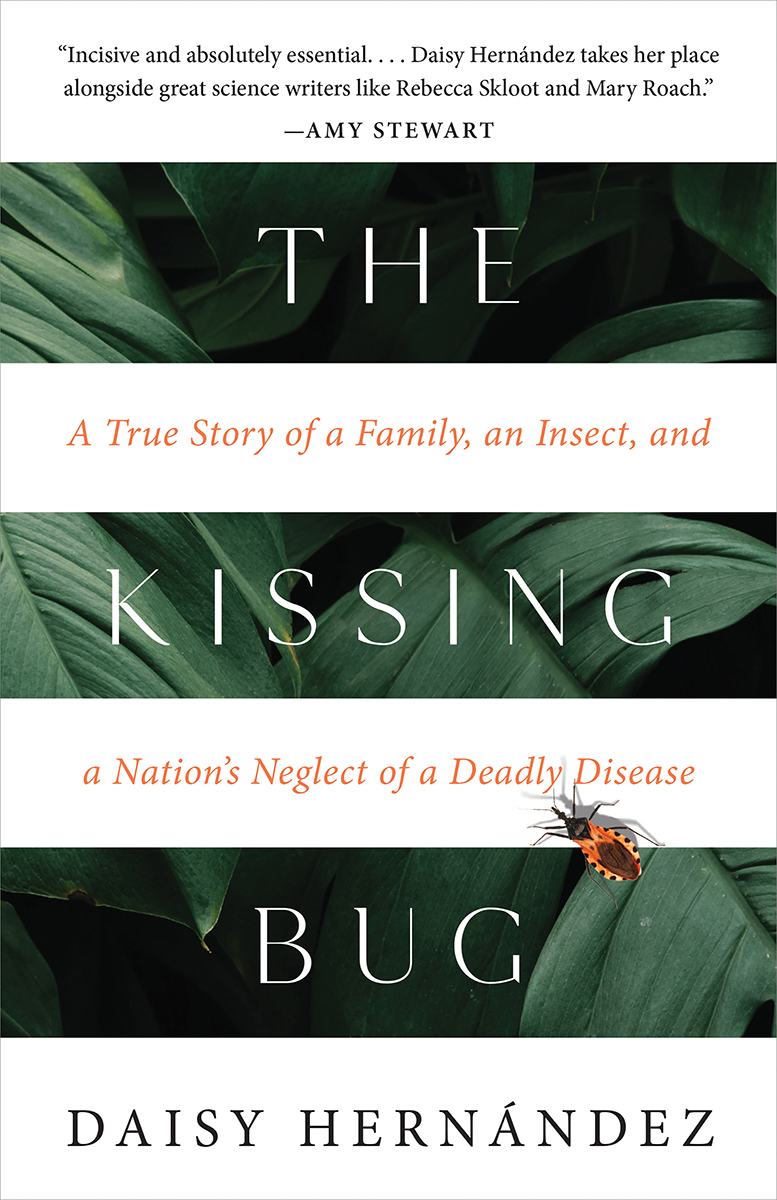
I have never read a science book quite like this one. And I mean that as both a compliment and, ultimately, the source of my frustration, because The Kissing Bug does something I haven’t seen another book in this series come close to doing, and then stops just short of the finish line in a way that left me genuinely unsettled. I finished it wanting more in the best possible way, and also in the most maddening possible way. Let me explain.
What This Book Is Actually About
Chagas disease, also known as the Kissing Bug disease, is an infectious disease caused by a parasite found in the feces of the triatomine bug. It is endemic across Central and South America, largely invisible to the medical establishment in wealthier countries, and if left untreated it causes congestive heart failure by slowly destroying the walls of the heart. The parasite, in the most literal sense, eats you from the inside.
Daisy Hernandez came to this subject personally, Chagas affected her own family, and The Kissing Bug is her attempt to tell the story of this disease not through data and clinical literature but through the people living inside it. She moves chapter by chapter through individuals whose lives have been shaped by Chagas, patients, families, researchers, advocates, weaving their stories into a portrait of a disease that has been systematically overlooked, underfunded, and stigmatized as a disease of poverty in the regions where it does the most damage. Hernandez is a gifted writer, and that gift is present on every page. The first-person storytelling pulls you in and keeps you there. I found myself genuinely rooting for each person she introduced, which is not something I say lightly about a science book.
What Got Me Thinking
The writing here does something genuinely important that I hope more science nonfiction takes note of. Most books in this genre lead with the science and bring in human stories to illustrate it. Hernandez inverts that entirely, she leads with the humans and lets the disease emerge through them. For most of the book, that inversion is a revelation. It adds depth and urgency to a subject that most readers will know nothing about, and it makes you care about Chagas in a way that a clinical overview simply wouldn’t.
The stories running through each chapter made this a genuine page-turner, which is not a phrase I use often about books on infectious disease. There isn’t one cohesive plot in the traditional sense, but the momentum never dropped because Hernandez keeps finding new angles, new people, new ways to show you the same disease from a different human vantage point. Each chapter opens a new window.
And then the book ends.
I sat with it for a moment, genuinely expecting the next chapter to load. It didn’t. There was no closing synthesis of the science. No small chapter walking through what we actually know about Chagas at the cellular or immunological level. No call to action, no concrete guidance for how to learn more, advocate for funding, or support the people working on poorly understood tropical diseases. The ending just, stopped. After spending the entire book making me care intensely about this disease and the people it affects, Hernandez leaves you with nowhere to put that caring. It felt like an unresolved story. It felt, if I’m being completely honest, like finishing Game of Thrones. I looked up from the last page and thought: that was the ending?
Why I Think You Should Read This
Three out of five, and every point of that rating is earned by Hernandez’s writing, which is undeniably brilliant and which I genuinely hope influences how science nonfiction is written going forward. The human-first approach to telling a disease story is powerful and underused, and she executes it with real skill.
But Daisy Hernandez, you clearly know this disease intimately. You spent years studying it, following its patients, documenting its impact. You had the knowledge to give readers the scientific grounding they needed at the end. The choice not to feels like the one place the book lets both the science and the reader down. We needed that resolution. We needed something to do with everything the book made us feel.
Read it for the storytelling. Just know going in that the ending will leave you wanting, and have a follow-up resource ready for when it does.
My Takeaway
What I keep thinking about is the responsibility that comes with making a reader care. Hernandez does the hardest part, she makes Chagas feel urgent and human and impossible to look away from. And then the book ends without telling you what to do with that urgency. In science communication, I think about this constantly: it is not enough to make people feel something. You have to give them somewhere to go with the feeling. Awareness without agency is just frustration. The best science communication, the kind that actually moves the needle on underfunded, overlooked diseases like Chagas, closes the loop. It shows people the problem, makes them care about it, and then hands them a thread to pull. This book gets two out of three. That last one matters.
Come Read Along
Have you read The Kissing Bug, and did the ending land differently for you than it did for me? I genuinely want to know if I missed something. Drop it in the comments or find me on Instagram.
July’s Science Read is The Catalyst by Thomas R. Cech, Nobel Prize winner in Chemistry and the scientist who discovered that RNA itself can act as a catalyst. A book about the molecule that is quietly running more of the show than most people realize, and one I have been looking forward to for a long time. See you there. 📚