Categories
@ChloetheScientist

Protein Misfolding in the Brain: The Core Mechanism of Neurodegeneration 

If there is one concept that sits at the heart of almost everything I spent my PhD years thinking about, it is this: proteins fold, and sometimes they fold wrong, and when that happens in the brain, the consequences can be devastating.

Protein misfolding is the unifying mechanism behind some of the most common and most devastating neurodegenerative diseases we know, Alzheimer’s disease, Parkinson’s disease, Huntington’s disease, ALS, and others. Understanding it is not just intellectually fascinating (although it absolutely is, I promise). It is one of the most important frontiers in biomedical research, and I think everyone deserves a real explanation of what is actually happening, not just the vague “protein clumps cause brain damage” summary that usually makes it into mainstream science coverage.

So let’s actually get into it.

Proteins: A Quick Foundation

Before we talk about misfolding, we need to talk about folding, what it is, why it happens, and why it matters so much.

A protein begins as a linear chain of amino acids, assembled by ribosomes in your cells according to instructions encoded in your DNA. That chain is called a polypeptide. But a linear chain of amino acids is not yet a functional protein. To do its job, whether that’s catalysing a chemical reaction, providing structural support, signalling between cells, or any of the thousands of other tasks proteins perform, the chain has to fold into a precise three-dimensional shape.

This folding is not random. It is driven by the physical and chemical properties of the amino acids themselves, particularly their attraction to or repulsion from water, and the various bonds that can form between them. The final folded shape of a protein is generally the lowest-energy conformation available to it, which is why proteins tend to fold consistently and reproducibly into the same shape. That shape is everything. A protein that is folded correctly does its job. A protein that folds incorrectly, or unfolds under stress, cannot.

Helper proteins called chaperones assist with folding and can sometimes refold a misfolded protein back to its correct shape. Your cells also have quality control systems, including the proteasome, which degrades misfolded proteins, and autophagy, which I have talked about before, specifically dedicated to catching and clearing proteins that aren’t right. Under normal circumstances, these systems keep misfolding under control.

In neurodegeneration, they fail to keep up.

What Is Protein Misfolding and Why Does It Happen?

Misfolding occurs when a protein adopts an incorrect three-dimensional conformation, a shape that is stable enough to persist but wrong enough to be non-functional or, worse, actively harmful.

There are several reasons this can happen. Genetic mutations can alter the amino acid sequence in ways that destabilise the normal fold. Oxidative stress, the accumulation of reactive oxygen species that damage cellular components, can chemically modify proteins in ways that disrupt their structure. Simply aging reduces the efficiency of the cellular quality control machinery that normally catches and clears misfolded proteins before they accumulate. And some proteins are just intrinsically prone to misfolding under certain conditions.

What makes misfolded proteins particularly dangerous in the context of neurodegeneration is what happens next: they aggregate.

The Aggregation Problem

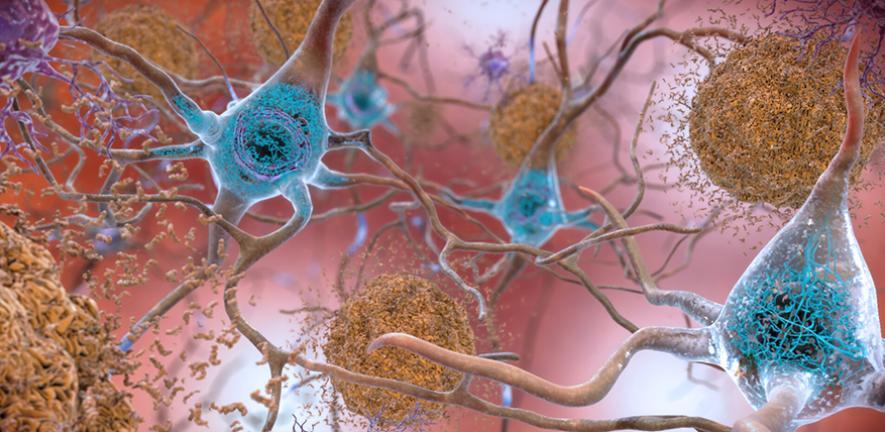
When a protein misfolds, it often exposes hydrophobic regions, parts of the molecule that are normally tucked away in the interior of the correctly folded structure, away from the water-based environment of the cell, because they are repelled by water. Once these hydrophobic patches are exposed, the misfolded protein has a strong tendency to stick to other misfolded proteins that are exposing similar patches. One misfolded protein becomes two stuck together. Two becomes four. The aggregate grows.

These aggregates can take various forms. Some are relatively small and soluble, oligomers, containing just a handful of proteins stuck together. Others grow into larger, more structured deposits called amyloid fibrils, which have a characteristic cross-beta sheet structure: long, ordered fibers made of beta-strand elements from multiple proteins stacking against each other in a ladder-like arrangement. This beta-sheet structure is extraordinarily stable, amyloid fibrils are resistant to most of the cellular machinery that would normally degrade them, and it is a common end state for many different aggregating proteins.

The protein involved differs between diseases. In Alzheimer’s disease, the primary culprits are amyloid-beta peptides (which form the plaques described in the classic disease pathology) and tau protein (which forms the neurofibrillary tangles found inside neurons). In Parkinson’s disease and Lewy body dementia, it is alpha-synuclein that misfolds and aggregates into structures called Lewy bodies. In Huntington’s disease, it is the mutant huntingtin protein. In ALS and frontotemporal dementia, TDP-43 and FUS are among the proteins involved.

Different proteins, different diseases, but the same fundamental story: misfolding, aggregation, cellular dysfunction, and death of neurons.

Why Neurons Are Particularly Vulnerable

You might reasonably wonder: don’t all cells have to deal with misfolded proteins? Why are neurons the ones that suffer so catastrophically in these diseases?

Several reasons, and they compound each other in unfortunate ways.

Neurons are post-mitotic, which means they do not divide. Most cells in your body can dilute the burden of misfolded protein aggregates simply by dividing: when a cell splits, the aggregates are distributed between daughter cells and effectively halved. Neurons cannot do this. Whatever accumulates in a neuron stays there for the life of that neuron, which, in the central nervous system, is intended to be the entire life of the organism.

Neurons are also extraordinarily metabolically demanding. They consume large amounts of energy and produce large amounts of reactive oxygen species as a byproduct. This creates a high-oxidative-stress environment that is particularly hard on proteins, increasing the likelihood of modification and misfolding. At the same time, neurons are large and structurally complex cells with long axons that can extend enormous distances, which places particular demands on the transport and quality control systems that need to function properly throughout the whole cell.

And neurons depend on each other. When one neuron in a circuit dies, it places stress on the others it was connected to. Neurodegeneration tends to spread through connected brain regions, which is why these diseases are progressive.

The Prion-Like Spreading Hypothesis

One of the most significant, and frankly startling, developments in neuroscience research over the last two decades has been the growing evidence that misfolded protein aggregates can spread between cells in a manner that resembles, mechanistically, the behaviour of prions.

Prions are famously the cause of diseases like Creutzfeldt-Jakob disease and bovine spongiform encephalopathy (mad cow disease), and their defining characteristic is that a misfolded protein can act as a template, converting normally folded proteins it contacts into the same misfolded conformation. One misfolded protein, in other words, can seed the misfolding of others around it.

Research now suggests that alpha-synuclein, tau, and amyloid-beta aggregates can behave similarly, that aggregates released from one cell can be taken up by a neighbouring cell and seed new aggregation there. This would explain the characteristic spreading patterns of neurodegenerative diseases through the brain, which tend to follow anatomically connected pathways rather than appearing randomly.

This does not mean Alzheimer’s or Parkinson’s is infectious in the way a cold is infectious. The mechanism is similar but the epidemiology is completely different. However, it has profound implications for thinking about how these diseases progress and how they might be interrupted.

Why This Matters for Treatment

If protein misfolding and aggregation are the root of the problem, then the logical therapeutic strategies are to prevent misfolding, prevent aggregation, promote clearance of aggregates, or interrupt the spread of aggregates between cells. And in fact, most current and emerging therapeutic approaches in neurodegeneration are targeting one or more of these steps.

Immunotherapy approaches, using antibodies to target amyloid-beta or tau aggregates, have been the subject of enormous investment and, recently, some cautious clinical progress. Strategies to boost autophagy or proteasomal clearance are being explored. Small molecules that stabilise the correctly folded form of a protein or prevent the nucleation step of aggregation are active areas of research.

Progress has been slow and humbling, because the brain is the most complex organ we have and because these diseases are often diagnosed long after the damage has already accumulated for years or decades. But the mechanistic understanding is deep and growing, and I remain genuinely optimistic about where the field is heading.

The fact that so many seemingly different diseases converge on the same fundamental mechanism, misfolding, aggregation, cell death, is both sobering and clarifying. It means that understanding one of these diseases deeply enough can illuminate all of them. And that feels worth the effort.
Categories
Science Communication

Why Science Communication Should Start with Storytelling, Not Facts

If you have ever tried explaining a scientific topic to someone outside your field, you probably know the feeling. You carefully explain the facts, define the terminology, and walk through the mechanisms step by step, only to realize a few moments later that the other person has completely checked out.

Not because they are unintelligent. Not because science is “too complicated.” But because facts alone rarely make people care.

And honestly, I think this is one of the biggest misconceptions in science communication: the belief that if we simply provide enough accurate information, people will naturally become interested, informed, and engaged.

That is not really how humans work.

People remember stories. We connect through emotion, curiosity, conflict, surprise, and personal experience long before we connect through data points or technical language. Science communication becomes far more powerful when we stop treating storytelling as separate from science and start recognizing it as one of the most important tools we have for making science meaningful.

Facts Tell You What Happened. Stories Tell You Why It Matters

One of the reasons storytelling matters so much is because facts without context can feel emotionally distant.

Take this sentence:

“Neurodegenerative diseases are associated with protein aggregation.”

Scientifically accurate? Absolutely.

Memorable? Probably not.

Now compare it to this:

“Inside the brain, proteins that are supposed to fold neatly can sometimes clump together in ways that slowly interfere with how neurons function over time.”

Both explanations communicate science. But one creates a mental image. It gives the audience something visual and human to hold onto. It transforms an abstract concept into something people can actually imagine.

Good science communication is not about removing complexity. It is about creating connection first, so people want to keep learning.

Most People Do Not Fall in Love with Science Through Data

Scientists sometimes forget how they themselves became interested in science in the first place.

Very few people fell in love with science because they memorized textbook definitions as children. Most people were drawn in through a story:

  • a documentary that made space feel awe-inspiring
  • a teacher who explained evolution like a mystery unfolding over millions of years
  • a medical experience that suddenly made biology feel personal
  • a scientist they admired
  • a science fiction film that sparked curiosity about the future

Curiosity usually comes before understanding.

Emotion usually comes before expertise.

That does not make science less rigorous. It simply makes us human.

Storytelling Is Not the Opposite of Accuracy

I think some scientists are hesitant about storytelling because they associate it with oversimplification or sensationalism. And to be fair, science communication can absolutely cross that line sometimes.

But storytelling is not the enemy of accuracy.

The best science communicators are often the people who understand the science deeply enough to explain it clearly without stripping away its nuance. Storytelling is simply the structure that helps audiences stay engaged long enough to absorb the information.

A good story gives scientific ideas:

  • context
  • emotional relevance
  • stakes
  • human perspective

It helps people understand not just what researchers discovered, but why anyone cared enough to study the question in the first place.

Science Is Already Full of Stories

This is the interesting part: science is naturally full of storytelling. Researchers just do not always recognize it that way.

Every research project already contains:

  • uncertainty
  • setbacks
  • curiosity
  • failure
  • revision
  • persistence
  • unexpected discoveries

That is a story.

Research is not a perfectly linear march toward truth. It is messy, collaborative, frustrating, creative, and deeply human. And honestly, that is often the part people connect with most.

Some of the most meaningful conversations I have had about science were not about the final results of an experiment. They were about the process behind it, the failed attempts, the unexpected findings, the questions that kept evolving along the way.

Those moments make science feel real.

Why This Matters More Than Ever

We live in a time where scientific information is constantly competing for attention online. People are overwhelmed with headlines, misinformation, conflicting opinions, and endless streams of content fighting to be noticed.

Simply presenting correct information is often not enough.

If we want people to engage with science, trust scientific processes, and feel included in scientific conversations, communication has to feel accessible and emotionally resonant. Storytelling helps bridge that gap.

It reminds people that science is not just a collection of facts produced by distant experts in lab coats. It is a process carried out by real humans trying to better understand the world.

And importantly, storytelling helps people see themselves in science.

The stories we tell about scientists shape who feels welcome in STEM spaces. When science communication only focuses on expertise and authority, science can start to feel exclusive or intimidating. But when we share the curiosity, uncertainty, creativity, and humanity behind research, science becomes something people can connect to rather than simply observe from a distance.

The Goal Is Not Just Understanding. It Is Connection.

At its best, science communication is not simply about transferring information from experts to the public. It is about building curiosity, trust, and connection.

Facts matter deeply. Accuracy matters deeply. But facts alone rarely inspire people to care.

Stories do.

And maybe that is not a weakness in science communication. Maybe it is exactly what makes science feel human in the first place.

Categories
@ChloetheScientist

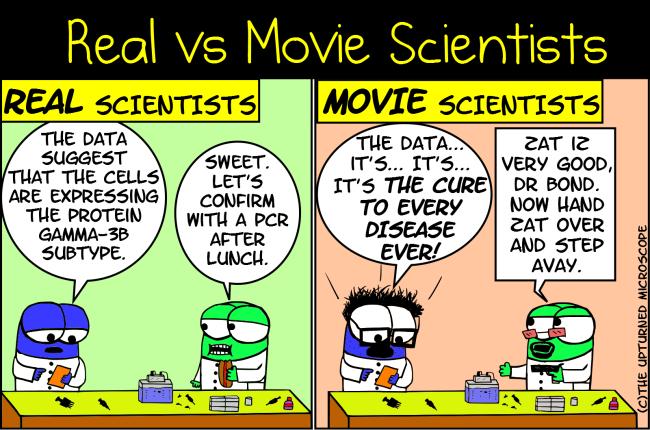
What Popular Movies and TV Get Wrong About Scientists

Okay, I have to be honest with you. Every time I sit down to watch a science-heavy movie or TV show, I go in with the best intentions. I tell myself I’m going to enjoy it as fiction, suspend my disbelief, and have a good time like a normal person. And then approximately four minutes in, a character will do something in a lab that makes absolutely no sense, and I will spend the rest of the film quietly spiraling.

I know I’m not alone in this. Ask any scientist about their experience watching science on screen and you will get a very specific kind of tired smile. We have all been there. We have all sat through it.

But I don’t want this post to just be a list of complaints, because I think the tropes Hollywood reaches for again and again actually reveal something interesting, about how the public perceives scientists, about the stories we’re told about who belongs in science, and about why those stories matter more than they might seem. So let’s get into it.

The “Lone Genius” Problem

This is probably the biggest and most pervasive myth in science on screen, and it does real damage.

In the movies, science is done by one brilliant, tortured, slightly unhinged individual who works alone in a dramatic setting, usually at night, usually with some kind of eureka moment that changes everything, while the rest of the world fails to understand them. Think of nearly any famous scientist biopic. Think of the archetypal movie researcher scrawling equations on a window at 2am while their personal life falls apart in dramatically lit scenes around them.

Real science is collaborative. Almost entirely. The papers I published during my PhD had multiple authors on them, because that is how science actually works, you build on other people’s ideas, you work with a team, you depend on the expertise of people whose skills complement your own. Science is one of the most collective human endeavours there is, and yet on screen it is almost always framed as a solo sport.

Why does this matter? Because when young people, especially young people who don’t see themselves as “lone genius” types, watch these representations, they can get the message that science is not for them. That you have to be some kind of singular, exceptional, isolated visionary to belong in a lab. You don’t. You really, really don’t.

Scientists Are Always Working on Something World-Ending (Or World-Saving)

In TV and film, scientists are almost exclusively working on either something that is about to destroy civilization or something that will single-handedly save it. There is very little middle ground. Nobody is making incremental progress on a moderately important question about cellular recycling mechanisms in a cancer context, which is, you know, what I was actually doing for several years.

The reality of most scientific research is that it is slow, specific, and builds on a mountain of previous work in tiny, meaningful steps. A single paper rarely changes everything. A career is made of dozens of papers, each one nudging the needle a little further in a direction that may not pay off for decades, if ever. That is not dramatic. It is also genuinely beautiful if you understand what it means for the long arc of human knowledge, but it doesn’t make for easy two-hour storytelling.

The consequence of always showing world-scale stakes is that it sets an impossible standard for what counts as meaningful science. Students come into PhD programs expecting to cure cancer by year three, and when the reality of slow, methodical, frequently failing research sets in, it can feel like they’re doing something wrong. They’re not. They’re just doing actual science.

The Lab Aesthetics Are Unhinged

I say this with great affection and also genuine bafflement: real labs are usually much less cinematic than what we see on screen. .

Real labs are, depending on the day, somewhat cluttered, fluorescently lit, and smell faintly of ethanol and someone’s lunch from three hours ago. There are sticky notes everywhere. There is always a centrifuge making a concerning noise that everyone has agreed to ignore. The whiteboard has a half-erased figure from a meeting that happened six weeks ago. Someone’s western blot is drying near the sink.

Movie labs are full of glowing blue liquids in beautifully shaped glassware, enormous holographic displays showing three-dimensional molecular models, and inexplicably dramatic lighting. Everything is either blindingly white and futuristic or dramatically dark and gothic. Nobody is wearing the correct PPE. The PI appears to have the entire lab to themselves and also possibly lives there.

I will say, the holographic molecular displays are getting closer to reality with some of the visualisation tools coming out of computational biology, so maybe Hollywood was slightly ahead on that one. But the glowing liquids? Please. No.

Women Scientists Are Always Having to Prove Themselves to a Skeptical Man

This one is getting better, slowly, but it is still a remarkably common story structure: brilliant woman scientist, dismissive male colleagues who don’t believe her, dramatic moment where she is vindicated. Sometimes she gets to be the hero. Sometimes she gets fridged to motivate the male protagonist. Either way, her gender is almost always a plot point rather than just a fact about her character.

What’s frustrating about this, beyond the obvious, is that it takes a real and ongoing structural issue in science and turns it into a narrative device. The challenges women face in STEM are real and worth talking about seriously. But reducing them to a dramatic conflict to be overcome in act two doesn’t really serve that conversation. It turns a systemic issue into a personal one, and it implicitly suggests that proving yourself to one skeptical man is the solution, rather than examining the broader structures that create the problem in the first place.

What Gets It Right

It would be unfair to end here without acknowledging the things that screen science gets genuinely right, or at least interestingly right.

The emotional experience of research, the obsession, the sleeplessness, the way a problem can take over your brain completely, that part is often well-captured. The grief of a failed experiment, the sudden electric excitement of a result coming together, the complicated relationship between a mentor and a trainee, these are real, and some films and shows do portray them with real nuance.

And increasingly, there are creators making science content on screen that are genuinely trying to get it right, shows that consult with scientists, that portray collaborative lab environments, that show female and non-white scientists as whole complex people rather than symbols. That’s worth celebrating.

Why It All Matters

You might be wondering why any of this is worth caring about. It’s just entertainment, right?

I’d push back on that. The stories we tell about who scientists are shape who feels welcome in science. They shape what the public expects from science, what they’re willing to fund, who they trust. They shape what a twelve-year-old watching TV decides is possible for them.

We can enjoy the drama and still want it to be better. We should want it to be better.

Categories
@ChloetheScientist

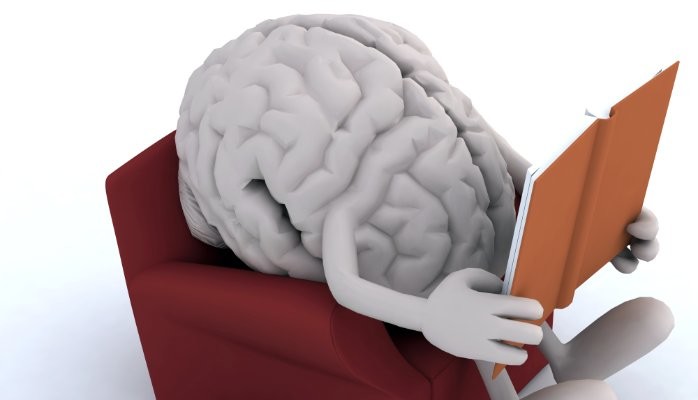
The Neurobiology of Reading: How Books Impact Brain Connectivity

Hello! If you have spent any time on my website or social media, you probably know that when I am not talking about molecular biology or working in the lab, I almost always have a book in my hand.

I read across a lot of genres, and I love the feeling of getting completely absorbed in a narrative. But lately, I have been thinking about reading from a different perspective, not as a reader, but as a scientist.

When you read a book, it feels like a purely mental or emotional experience. You visualize characters, you process the plot, and you react to the story. However, beneath that subjective experience, reading is an incredibly intense, physical biological process.

Unlike spoken language, which is hardwired into human biology, reading is a relatively recent human invention. We are not born with a dedicated “reading center” in our brains. Instead, reading forces the brain to rapidly rewire itself, repurposing different neural networks to process written text.

Let’s look at exactly what happens to your brain architecture and connectivity when you sit down with a good book.

Hijacking the Brain: The Visual Word Form Area

Spoken language developed hundreds of thousands of years ago, and the human brain has specialized regions, like Broca’s area and Wernicke’s area, dedicated to producing and understanding speech. Reading and writing, however, were only invented about 5,000 years ago. In evolutionary terms, this is not nearly enough time for the brain to evolve a specific, genetically coded reading network.

To read, the brain must exhibit neuroplasticity. It has to hijack and rewire existing structures.

When you look at a word on a page, the visual information enters the occipital lobe at the back of your brain, which processes basic shapes, lines, and curves. From there, the information travels to a region in the left hemisphere called the Visual Word Form Area (VWFA).

The VWFA is fascinating. In illiterate individuals, this area of the brain is primarily used for recognizing faces and objects. But when a person learns to read, the brain physically reallocates a portion of this tissue to recognize letters and whole words. The VWFA acts as a structural dictionary, instantly translating visual shapes into recognized language, which is then routed to Broca’s and Wernicke’s areas for auditory and meaning-based processing.

Reading literally changes the physical topography of your brain.

Embodied Semantics: Living the Action

One of the most profound neurobiological effects of reading involves the somatosensory cortex and the motor cortex.

When you read a sentence describing an action, your brain does not just process the words abstractly. It physically simulates the action. This concept is known in neuroscience as embodied semantics.

If you read the sentence, “She grasped the heavy rope and pulled,” functional magnetic resonance imaging (fMRI) scans show that the language centers of your brain activate. But simultaneously, the neurons in your motor cortex associated with hand movements and gripping also fire. If you read about someone running, the motor areas controlling the legs activate.

Your brain simulates the physical sensation of the actions described on the page. You are not just observing the story; on a neurobiological level, your brain is practicing the physical movements.

Building White Matter and Structural Connectivity

Reading does not just activate different regions of the brain simultaneously; it physically strengthens the connections between them.

The brain is composed of two main types of tissue: gray matter and white matter. Gray matter consists of the actual neuron cell bodies, where processing happens. White matter consists of axons, which are the nerve fibers that connect different gray matter regions together, allowing them to communicate. You can think of gray matter as the computers and white matter as the cables connecting them into a network.

Sustained, deep reading physically alters these white matter tracts. Studies involving reading intervention programs have shown that consistent reading increases the integrity and density of white matter in the language areas of the brain. The myelin, the fatty sheath that insulates the axons and allows signals to travel faster, thickens.

This means reading actively improves the brain’s structural connectivity, making communication between the visual, auditory, and cognitive centers faster and more efficient.

The “Shadow Activity” of a Good Novel

The neurological effects of reading a book do not stop the moment you put it down.

In a notable 2013 study conducted at Emory University, researchers placed participants in fMRI machines and scanned their resting-state brain connectivity over several consecutive days. The participants were assigned to read the historical thriller Pompeii by Robert Harris in the evenings.

The researchers found heightened connectivity in the left temporal cortex (associated with language comprehension) and the central sulcus (the primary sensory motor region of the brain).

Crucially, this heightened connectivity persisted the morning after the reading sessions, while the participants were at rest and not reading. The researchers termed this “shadow activity.” It demonstrated that getting engrossed in a novel induces measurable, lingering changes in resting-state brain connectivity that last for days. The neurological footprint of the story remained in the brain’s network.

Final Thoughts

We often view reading as a passive hobby, a way to unwind or escape at the end of the day. But from a biological standpoint, deep reading is one of the most complex cognitive workouts a human being can undertake. It requires the rapid coordination of the visual, auditory, motor, and cognitive networks, forcing the brain to physically rewire its white matter tracts and repurpose its tissue.

Every time you read, you are actively altering your brain’s architecture.

If you are a fellow reader, I would love to hear what is currently on your reading list, whether it is a dense science non-fiction book or a fast-paced thriller. Send me a message through my contact page or reach out on my social channels to share your recommendations!

Until next time,

Chloe

Categories
@ChloetheScientist

The Biochemistry of Baking: Cellular Reactions in the Kitchen

There’s something oddly magical about baking.

You combine a few simple ingredients, flour, butter, sugar, eggs, yeast, salt, and somehow they transform into bread, cookies, cakes, pastries, or entire cultural traditions. The process feels comforting and creative, but also strangely precise. A little too much flour changes the texture completely. Forget the baking soda and your cake becomes dense. Overmix the dough and suddenly everything is chewy instead of soft.

For something that feels so cozy and familiar, baking is actually an incredibly sophisticated series of biochemical reactions.

Your kitchen is basically a tiny laboratory.

And honestly, once you start looking at baking through the lens of biochemistry, it becomes even more fascinating.

Baking Is Controlled Chemistry

One of the reasons baking feels different from cooking is because it depends heavily on chemical precision.

Cooking allows for improvisation. Baking is less forgiving.

That’s because baking relies on molecular interactions happening in a very specific order. Ingredients are not just ingredients, they are chemical components with distinct biological and structural functions.

Flour provides proteins and starches.
Eggs act as emulsifiers and structural stabilizers.
Butter contributes fat molecules that affect texture and moisture.
Sugar impacts not only sweetness, but also browning, water retention, and protein stability.

Even temperature changes everything.

Every recipe is essentially a carefully balanced biochemical system.

Which sounds intimidating, but I actually think it makes baking more beautiful.

Because beneath the cozy aesthetics and delicious smells, there’s an entire microscopic world transforming in real time.

Yeast Is Alive — Which Is Slightly Incredible

One of my favorite examples of biology in baking is yeast.

Because yeast is not just an ingredient. It’s a living organism.

Specifically, yeast consists of single-celled fungi that metabolize sugars through fermentation. When yeast consumes sugar, it produces carbon dioxide and ethanol as byproducts.

That carbon dioxide gets trapped inside dough, creating air pockets that allow bread to rise.

So when you watch dough slowly expand on your kitchen counter, you are literally observing cellular metabolism happening in real time.

Which is honestly kind of amazing.

Humans have been using yeast for thousands of years, long before we fully understood microbiology. Entire civilizations relied on fermentation without knowing the molecular mechanisms behind it.

And now we casually buy tiny packets of living microorganisms at the grocery store to make cinnamon rolls.

Science is weird in the best way.

Gluten: The Protein Everyone Loves to Debate

Gluten has become one of the most talked-about molecules in food culture, but from a biochemical perspective, it’s genuinely fascinating.

When flour mixes with water, two proteins called glutenin and gliadin interact to form gluten networks. These protein structures create elasticity and strength within dough.

That stretchy texture in bread dough? That’s protein architecture.

Kneading strengthens these gluten networks further, helping dough trap gas produced by yeast fermentation. Without gluten development, bread would struggle to hold its structure.

This is why different flours produce different textures.

Bread flour has a higher protein content, creating stronger gluten networks and chewier textures. Cake flour contains less protein, leading to softer, lighter baked goods.

Biochemistry directly influences whether your dessert becomes fluffy or dense.

No pressure.

The Maillard Reaction Is Responsible for So Much Flavor

If you’ve ever wondered why freshly baked bread smells so good, you can thank the Maillard reaction.

This reaction occurs when amino acids and sugars interact under heat, creating hundreds of new flavor and aroma compounds.

It’s responsible for:

  • the golden crust on bread
  • the flavor of toasted marshmallows
  • the smell of cookies baking
  • the browning on pastries
  • even the complexity of roasted coffee

Essentially, heat transforms molecules into entirely new combinations that our brains interpret as rich, comforting flavors.

And the wildest part is that this reaction is happening constantly while we bake, usually without us thinking about it at all.

Your oven is basically orchestrating molecular transformations at high speed.

Eggs Are Tiny Biochemical Powerhouses

Eggs are one of the most multifunctional ingredients in baking, which makes them scientifically impressive.

They provide:

  • proteins
  • fats
  • emulsifiers
  • moisture
  • structure

Egg proteins denature when heated, meaning their structures unfold and reorganize into stable networks. This helps cakes and pastries solidify as they bake.

Meanwhile, lecithin in egg yolks acts as an emulsifier, helping fat and water mix together more smoothly.

Without emulsification, many batters would separate completely.

So the next time you crack an egg into brownie batter, you’re participating in an incredibly elegant biochemical balancing act.

Again: kitchen laboratory.

Sugar Does Much More Than Sweeten

Sugar tends to get simplified into “the ingredient that makes desserts sweet,” but chemically, it has a surprisingly large role in baking.

Sugar affects:

  • moisture retention
  • texture
  • browning
  • crystallization
  • protein coagulation

It also interferes with gluten formation, which is why cookies stay tender instead of becoming bread-like.

In ice cream, sugar lowers the freezing point, helping maintain a smoother texture.

In meringues, sugar stabilizes whipped egg whites.

In caramel, heat transforms sugar molecules into entirely new flavor compounds through caramelization.

The chemistry of sugar is far more complex than most people realize.

Baking Connects Science and Creativity

One of the reasons I love the science of baking is because it sits at the intersection of precision and creativity.

Biochemistry explains why recipes work, but creativity shapes what we make with that knowledge.

You can understand protein denaturation and still bake something deeply nostalgic. You can appreciate fermentation pathways while making bread with your family. Science does not remove beauty from everyday experiences — if anything, it often adds another layer to them.

I think people sometimes imagine science as something confined to laboratories, universities, or research institutions.

But science exists in ordinary places too.

In kitchens.
In gardens.
In coffee shops.
In bread dough rising quietly on a countertop.

The world is constantly shaped by chemistry and biology whether we notice it or not.

The Kitchen Might Be the Most Relatable Science Lab

What I love most about baking is that it makes science feel tangible.

You don’t need expensive equipment to observe biochemical reactions. You can see proteins change texture in a mixing bowl. You can smell the products of the Maillard reaction in your oven. You can watch fermentation inflate dough over time.

Science becomes sensory.

And I think that matters.

Because sometimes science feels distant or intimidating to people. But baking reminds us that chemistry is not just something hidden inside textbooks. It’s part of everyday life.

Every loaf of bread, every cake, every cookie is evidence of molecular interactions happening at an astonishing level of complexity.

Which means that the next time you bake something, you’re not just following a recipe.

You’re conducting a biochemical experiment.

Hopefully a delicious one.

Categories
Research Advice

Picking the Right Lab for your PhD

I’m going to start this by making two big disclaimers:

  1. An amazing lab for one person will be the worst lab for someone else. So I’m not about to list a bunch of ‘musts’ you should look for, but instead factors you need to think about what fits you best & to ask about during interviews and rotations!
  2. The perfect lab may not exist. If you have a lot of requirements, pick your few that you can’t compromise.

Okay, and with that out of the way, this is what I recommend keeping in mind when choosing a PI and lab for grad school!

Mentorship: how hands-on and supportive is the PI

Do you want a PI who you meet with regularly, someone who is very involved in your day-to-day work? Or do you prefer someone who gives you more space and checks in less frequently?

This is one of those things that seems small at first but ends up shaping your entire PhD experience. Some people do really well with close guidance — having frequent feedback, structured meetings, and a clear sense of direction. Others prefer more independence, where they can explore ideas and manage their own timelines.

Neither is better, but it’s important to be honest about what works for you. A mismatch here can make even a strong research project feel frustrating.

Future: Where the lab’s previous grad students have gone

Take a look at where previous students ended up after leaving the lab. Are most of them in academia? Industry? Something else entirely?

This can give you a sense of what the lab tends to prepare students for, even if it’s not intentional. If you already have an idea of what you might want to do after your PhD, it’s helpful to see whether that aligns.

If you’re not sure yet, then a lab with a range of outcomes might give you more flexibility. It often reflects a PI who supports different career paths rather than pushing everyone in the same direction.

Lab working hours

Is the expectation closer to a standard schedule, or is it more open-ended? Are weekends part of the norm, or more occasional?

This isn’t just about how many hours you’re willing to work — it’s also about how those hours are structured. Some labs are very flexible, while others have more defined expectations.

It’s worth thinking about what kind of routine you want. Some people are fine with longer hours if it means finishing sooner, while others prefer consistency and balance over speed. Knowing where you fall on that spectrum makes it easier to evaluate whether a lab is a good fit.

Lab size

Do you want a larger lab with multiple projects and more people around, or a smaller lab with fewer members?

Bigger labs can offer more collaboration and exposure to different projects, but they can also feel less personal. Smaller labs often provide more direct interaction with the PI, but may have fewer resources or less variety in ongoing work.

There’s also the question of how visible your work will be. In a larger group, it can be easier to blend in, while in a smaller setting, your contributions may feel more central.

Funding situation

Is the lab well-funded, or will you need to apply for your own grants?

Funding affects more than just financial stability — it can influence what projects are possible, how quickly things move, and what resources are available. A well-funded lab may offer more flexibility in terms of experiments and materials, while limited funding might require more planning and constraints.

It’s not necessarily a dealbreaker either way, but it’s something that impacts your day-to-day work more than you might expect.

Graduation & publication rate of current and past grad students

Are students finishing within a reasonable timeframe, or are there consistent delays?

Looking at publication records can also give insight into how productive the lab is and what kind of output is expected. It’s not just about quantity, but also how projects progress and whether students are able to complete their work.

If timelines seem longer than expected, it’s worth asking why. Sometimes there are valid reasons, but it’s still important to understand what you’re walking into.

Lab Techniques

What kinds of techniques are used in the lab? Will you be working with models or methods that you’re interested in learning?

This can shape your skillset in a big way. While projects can evolve, the general approach of a lab often stays consistent. If there are specific techniques you want to gain experience with, this is something to consider early.

At the same time, being open to learning new methods can also be valuable, especially if it broadens your experience.

Lab social life

How often do people in the lab interact outside of work? Is there a sense of community, or is it more independent?

This doesn’t matter equally to everyone, but it can influence how comfortable you feel in the environment. Some people enjoy a more social lab where interactions extend beyond work, while others prefer to keep things separate.

Neither is right or wrong — it just depends on what makes you feel supported and productive.

How lab maintenance happens in the lab

Is there a lab manager, or are responsibilities shared among members?

This can affect how much time you spend on tasks outside of your research. In some labs, there’s a structured system for managing responsibilities, while in others, it’s more informal.

Understanding how this works helps set expectations for your day-to-day routine and how responsibilities are divided.

At the end of the day, choosing a lab is less about finding a “perfect” environment and more about finding one where you can realistically grow, work well, and stay motivated for several years.

Research interests matter, but so do communication style, expectations, work culture, and mentorship. The people and environment around you will shape your PhD experience just as much as the project itself.

And if possible, talk to current students honestly before making a decision. Their day-to-day experience will often tell you more than any interview can.

Categories
Media Highlights Podcats

Break the Cycle Podcast – Women in STEM and the Challenges of Academia

In this episode, we break the cycle of societal pressures as we speak with scientist and STEMinist, Chloe Kirk! We chat about finding your place in STEM, choosing a grad school and a lab in grad school, non-traditional STEM careers, the importance of science communication to show everyone belongs in science.

https://open.spotify.com/episode/4Ki5ScFOgHi15gLaLX0FfN?si=b7zOT1-ESdeGr0S7_u7W_w

Categories
Media Highlights Podcats

A Moment of Science – Please! Podcast interview with Chloe Kirk

Listen to our interview with Chloe Kirk, a recent PhD graduate in Biochemistry and Molecular Biology who is now working as a patent law clerk. Chloe also has an amazing Instagram account (@chloe.the.scientist), and blog where she talks about grad life, post-grad life, and so much more. Brought to you by our host, Parmin, and our editor & graphic designer, Katie.

https://open.spotify.com/episode/4dtn4kJElIOI0oOOcMGmbL?si=11eb7df6825e4fa5&nd=1&dlsi=8c84e4882a7a466e

Categories
Media Highlights Podcats

Riana’s Lens Podcast Ep40: Discussing Biochemistry with Chloe Kirk

Hey guys welcome to Riana’s lens where I interact with you about the components in the STEM fields and introduce you to fascinating people who passionately inhabit the scientific and technical frontiers of our society.

https://podcasts.apple.com/us/podcast/ep40-discussing-biochemistry-with-chloe-kirk/id1559564206?i=1000546040758

Categories
Research Advice

Exploring Biology Conference 2022: What I Learned from my First In-Person Conference

I had the pleasure of going to the Exploring Biology Conference 2022 in Philadelphia, Pennsylvania!

Exploring Biology is a huge conference made up of multiple large professional societies coming together. The society I came with was the American Association of Biochemistry and Molecular Biology (ASBMB).

This conference is a huge 5 day non-stop networking and learning experience. It’s both exciting and, honestly, pretty exhausting. There’s so much happening at once that it’s impossible to attend everything. I quickly realized that even with planning, you’ll still have to miss sessions simply because multiple talks are scheduled at the same time.

That was one of the first things I had to adjust to, accepting that you won’t be able to do everything. Instead, it becomes more about choosing what matters most to you and being okay with that.

Here are some of the things I learned attending my first in-person conference!

Dress Professionally

At the end of the day, bringing thousands of researchers together means you’ll see a wide range of outfits, everything from full suits to flip flops and cargo shorts (I am not kidding!).

What I found worked best for me was leaning slightly more toward the professional side. You never really know who you’re going to run into, whether it’s someone in your field, a potential collaborator, or even someone connected to future opportunities.

At the same time, comfort matters more than you might expect. Conferences involve a lot of walking, standing, and long days, so finding a balance between professional and practical makes a big difference. Dress shoes, comfortable flats, or even dress sneakers can go a long way in making the day more manageable.

Bring Water and a Notebook

A notebook ended up being one of the most useful things I brought. It’s helpful for writing down names of people you meet, ideas from talks, or even small details you don’t want to forget later.

There’s a lot of information coming at you throughout the day, and it’s easy to assume you’ll remember things, but you probably won’t. Having a place to quickly jot things down makes it easier to go back later and actually process what you learned.

And a water bottle is just as important. The days are long, often 10+ hours, and it’s easy to forget basic things like staying hydrated. I realized this the hard way when I forgot mine one day and ended up feeling so tired that I had to leave early.

Print Posters

From my experience, printed posters look much cleaner than cloth posters.

Cloth posters seem convenient at first because they’re easier to travel with, you can just fold them and pack them in your luggage. But in reality, they tend to wrinkle easily, and even after trying to fix them, they don’t always look as polished.

Another issue is that they can sag over time, which can distort the layout and make it harder for people to read. After seeing both types at the conference, printed posters consistently looked more structured and easier to engage with.

Overall, while cloth posters might seem like the easier option, printed posters tend to make a stronger impression.

It’s Just a Conversation

If you’re presenting a poster, it helps to prepare what you want to say. But some of the best interactions I had came from treating it less like a presentation and more like a conversation.

Instead of trying to go through everything in a fixed way, I focused on engaging with the person in front of me, asking questions, adjusting based on their interest, and letting the discussion flow more naturally.

That shift made a big difference. It felt less formal and more like a genuine exchange, which made the experience more enjoyable and, honestly, more memorable.

Network

Ask for LinkedIn connections, poster numbers, and what people do when you talk to them.

This is one of the best opportunities to meet people from different backgrounds and learn about paths you might not have considered before. Conversations don’t have to be long or perfect, even short interactions can lead to useful connections later.

What stood out to me was how open people were to talking. Most people are there for the same reason, to learn and connect, which makes it easier than it might initially feel.

Business Cards & QR Codes

Printing business cards and including a LinkedIn QR code at my poster made networking feel much easier.

Instead of trying to remember names or exchange information verbally, it gave people a quick way to connect. It also made interactions feel more seamless, especially when things were busy.

It’s a small detail, but it adds a level of preparation that can make a difference in how easily you stay in touch with people after the conference.

Be Okay Taking Breaks

You won’t be able to make every talk you want to, and you also won’t have the energy to go non-stop all day, and that’s okay.

Taking breaks actually helps you get more out of the experience. It gives you time to process what you’ve learned, recharge, and come back more focused.

Trying to do everything can end up making the whole experience feel overwhelming, so pacing yourself becomes part of making the conference enjoyable.

Plan to Sight-See

Don’t forget to explore a little while you’re there.

Conferences are often held in cities with a lot to offer, and taking some time to step outside the conference environment can make the overall experience more balanced. Even a short walk, a good meal, or visiting a local spot can give you a mental reset.

It also makes the trip feel like more than just a series of sessions, it becomes something you actually remember beyond the conference itself.

    Share Your Story