There’s something oddly magical about baking.
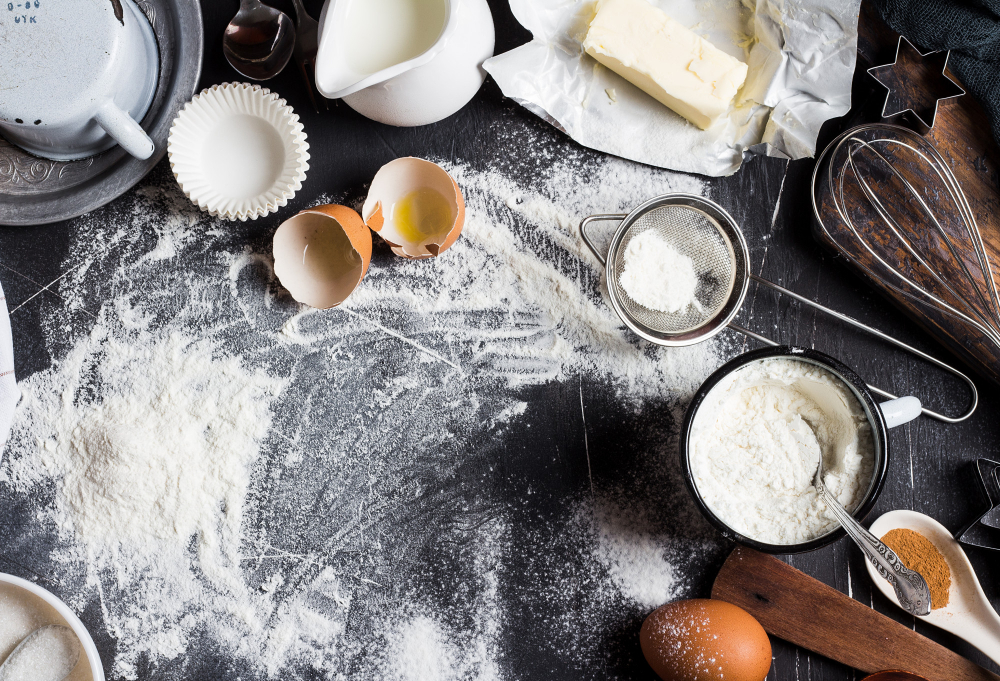
You combine a few simple ingredients, flour, butter, sugar, eggs, yeast, salt, and somehow they transform into bread, cookies, cakes, pastries, or entire cultural traditions. The process feels comforting and creative, but also strangely precise. A little too much flour changes the texture completely. Forget the baking soda and your cake becomes dense. Overmix the dough and suddenly everything is chewy instead of soft.
For something that feels so cozy and familiar, baking is actually an incredibly sophisticated series of biochemical reactions.
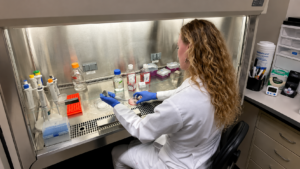
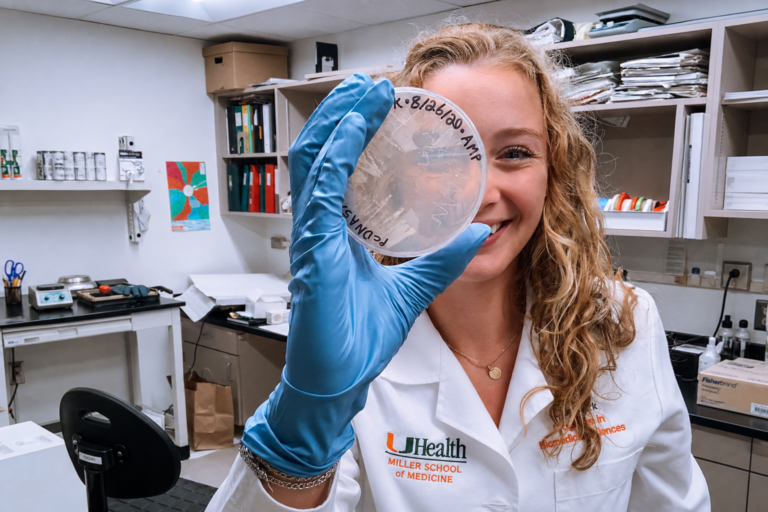
Your kitchen is basically a tiny laboratory.
And honestly, once you start looking at baking through the lens of biochemistry, it becomes even more fascinating.
Baking Is Controlled Chemistry
One of the reasons baking feels different from cooking is because it depends heavily on chemical precision.
Cooking allows for improvisation. Baking is less forgiving.
That’s because baking relies on molecular interactions happening in a very specific order. Ingredients are not just ingredients, they are chemical components with distinct biological and structural functions.
Flour provides proteins and starches.
Eggs act as emulsifiers and structural stabilizers.
Butter contributes fat molecules that affect texture and moisture.
Sugar impacts not only sweetness, but also browning, water retention, and protein stability.
Even temperature changes everything.
Every recipe is essentially a carefully balanced biochemical system.
Which sounds intimidating, but I actually think it makes baking more beautiful.
Because beneath the cozy aesthetics and delicious smells, there’s an entire microscopic world transforming in real time.
Yeast Is Alive — Which Is Slightly Incredible
One of my favorite examples of biology in baking is yeast.
Because yeast is not just an ingredient. It’s a living organism.
Specifically, yeast consists of single-celled fungi that metabolize sugars through fermentation. When yeast consumes sugar, it produces carbon dioxide and ethanol as byproducts.
That carbon dioxide gets trapped inside dough, creating air pockets that allow bread to rise.
So when you watch dough slowly expand on your kitchen counter, you are literally observing cellular metabolism happening in real time.
Which is honestly kind of amazing.
Humans have been using yeast for thousands of years, long before we fully understood microbiology. Entire civilizations relied on fermentation without knowing the molecular mechanisms behind it.
And now we casually buy tiny packets of living microorganisms at the grocery store to make cinnamon rolls.
Science is weird in the best way.
Gluten: The Protein Everyone Loves to Debate
Gluten has become one of the most talked-about molecules in food culture, but from a biochemical perspective, it’s genuinely fascinating.
When flour mixes with water, two proteins called glutenin and gliadin interact to form gluten networks. These protein structures create elasticity and strength within dough.
That stretchy texture in bread dough? That’s protein architecture.
Kneading strengthens these gluten networks further, helping dough trap gas produced by yeast fermentation. Without gluten development, bread would struggle to hold its structure.
This is why different flours produce different textures.
Bread flour has a higher protein content, creating stronger gluten networks and chewier textures. Cake flour contains less protein, leading to softer, lighter baked goods.
Biochemistry directly influences whether your dessert becomes fluffy or dense.
No pressure.
The Maillard Reaction Is Responsible for So Much Flavor
If you’ve ever wondered why freshly baked bread smells so good, you can thank the Maillard reaction.
This reaction occurs when amino acids and sugars interact under heat, creating hundreds of new flavor and aroma compounds.
It’s responsible for:
- the golden crust on bread
- the flavor of toasted marshmallows
- the smell of cookies baking
- the browning on pastries
- even the complexity of roasted coffee
Essentially, heat transforms molecules into entirely new combinations that our brains interpret as rich, comforting flavors.
And the wildest part is that this reaction is happening constantly while we bake, usually without us thinking about it at all.
Your oven is basically orchestrating molecular transformations at high speed.
Eggs Are Tiny Biochemical Powerhouses
Eggs are one of the most multifunctional ingredients in baking, which makes them scientifically impressive.
They provide:
- proteins
- fats
- emulsifiers
- moisture
- structure
Egg proteins denature when heated, meaning their structures unfold and reorganize into stable networks. This helps cakes and pastries solidify as they bake.
Meanwhile, lecithin in egg yolks acts as an emulsifier, helping fat and water mix together more smoothly.
Without emulsification, many batters would separate completely.
So the next time you crack an egg into brownie batter, you’re participating in an incredibly elegant biochemical balancing act.
Again: kitchen laboratory.
Sugar Does Much More Than Sweeten
Sugar tends to get simplified into “the ingredient that makes desserts sweet,” but chemically, it has a surprisingly large role in baking.
Sugar affects:
- moisture retention
- texture
- browning
- crystallization
- protein coagulation
It also interferes with gluten formation, which is why cookies stay tender instead of becoming bread-like.
In ice cream, sugar lowers the freezing point, helping maintain a smoother texture.
In meringues, sugar stabilizes whipped egg whites.
In caramel, heat transforms sugar molecules into entirely new flavor compounds through caramelization.
The chemistry of sugar is far more complex than most people realize.
Baking Connects Science and Creativity
One of the reasons I love the science of baking is because it sits at the intersection of precision and creativity.
Biochemistry explains why recipes work, but creativity shapes what we make with that knowledge.
You can understand protein denaturation and still bake something deeply nostalgic. You can appreciate fermentation pathways while making bread with your family. Science does not remove beauty from everyday experiences — if anything, it often adds another layer to them.
I think people sometimes imagine science as something confined to laboratories, universities, or research institutions.
But science exists in ordinary places too.
In kitchens.
In gardens.
In coffee shops.
In bread dough rising quietly on a countertop.
The world is constantly shaped by chemistry and biology whether we notice it or not.
The Kitchen Might Be the Most Relatable Science Lab
What I love most about baking is that it makes science feel tangible.
You don’t need expensive equipment to observe biochemical reactions. You can see proteins change texture in a mixing bowl. You can smell the products of the Maillard reaction in your oven. You can watch fermentation inflate dough over time.
Science becomes sensory.
And I think that matters.
Because sometimes science feels distant or intimidating to people. But baking reminds us that chemistry is not just something hidden inside textbooks. It’s part of everyday life.
Every loaf of bread, every cake, every cookie is evidence of molecular interactions happening at an astonishing level of complexity.
Which means that the next time you bake something, you’re not just following a recipe.
You’re conducting a biochemical experiment.
Hopefully a delicious one.