While interning in Japan, I was lucky enough to have my family come visit me for 6 days! While it was initially exciting, the thought of seeing my family after 3 months, but quickly I realized the enormous task in front of me: showing them the best Japan can offer in less than a week. I had visited quite a few of Japan’s cities so far, and had recommendations from coworkers, so I was able to put together a pretty good list!
- Tokyo : 3 Days (obviously). Once we met in Osaka, we took the bullet train to Tokyo we headed to our Airbnb. There is so much to see in Tokyo, we took no time at all before we headed off to Asuka, the temples in Tokyo, followed by a walk around Akihabara, a huge shopping area known for its large collection of anime and manga stores.


The next morning we started the day at the Imperial Palace. Although you are not allowed inside the palace, it is free to walk around the gardens! Next stop: Harajuku! Shopping center of Tokyo! We battled the enormous crowds to walk through this unique street and stopped to get delicious crepes along the way.


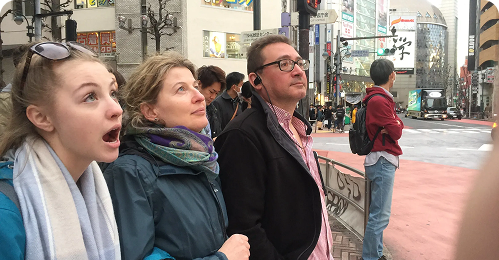
After crepes for lunch in Harajuku, we made our way to Ueno park, a massive park in the heart of Tokyo. The last stop of the whirlwind day before heading home for dinner was Shibuya and Shibuya crossing. You may remember this place from a previous blog, it is famous for its gigantic crossing area because it is so busy!

2. Hakone: 2 days. Just a couple hours outside of Tokyo by train is Hakone, famous for is onsens (hot springs) and picturesque views of Mount Fuji. Unfortunately, the couple days we were here it was cloudy and rainy which meant no views of Mount Fuji. Don’t get me wrong, we did try our hardest to see the views! We visited the edge of Lake Ashi and Fuji-Hakone-Izu National park, but it was cold and cloudy so the best we saw was Torii in the distance. The Airbnb we rented in Hakone though was spectacular with its own onsen inside! There my mother and I sat all night and drank Plum sake (like fruit juice but better). The trains in Hakone are very old fashioned but very cute and do their purpose to both be functional and an additional attractions of Hakone!
In the morning we forged through the wet weather and waited for the Hakone train back to the shinkansen station (Hakone is a bit out of the way from other cities and would be much more manageable by car, which many Japanese families do).


3. Kyoto: 4 days. Getting from Hakone to Kyoto was very easy by bullet train, and in just a few short hours we arrived at our Airbnb in Kyoto! This is one of my favorite cities; there are endless things to do. Our Airbnb was right next to the famous Fushimi Inari temple so we started off there! Depending on how much you want to climb, this temple can take hours, but most people only walk a little of the ways up before turning around. If you have time, I do recommend trying to walk to the top; besides some amazing views at the top, it also gets much quieter and it feels less touristy.


The following morning, on our way to the Kiyomizudera temple we passed through an enormous graveyard right next to the temple. Kiyomizudera temple is right at the edge of Higashiyama, a district of old streets in Kyoto lined with great trinket shops and food!


Continuing a long day of walking, we saw Ryozen kannon Buddha temple, Yasaka shrine, and the Sammon gate before proceeding to world heritage site Nijo Castle.

The next day we started off the morning with a walk down Philosopher’s path leading us to Heian Shrine and Honen temple. As a warning, the Philosopher’s path is a bit of a walk from the closest train station and you have to walk quite a bit on the path to get to the temples. There are buses but I have never been good at navigating buses.


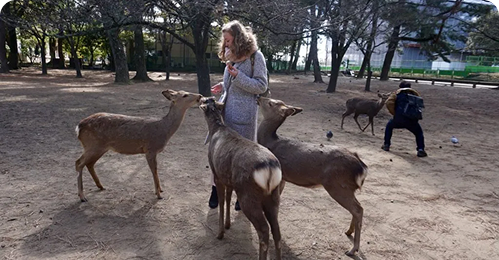
4. Nara: 1/2 day. In the afternoon, we took a train over to Nara which is just an hour away to visit the deer park and big buddha before returning to Kyoto for the evening. All the temples you want to see, Todai-ji and Kofuku-ji, are inside the Nara deer park so it makes it very easy to see everything in one swoop.


For our last day in Kyoto, we did one more trip up Fushimi Inari (my favorite temple) and then headed to Arashiyama district in Kyoto where there is the Arashiyama bamboo forest and monkey park! Pro tip: get to Arashiyama super early, like the crack of dawn, if you don’t want to deal with a huge amount of tourists and then you can snap cool photos! If you want to hear more about Arashiyama, please go see my blog post Bamboo Forest and Monkey Park. (I don’t want to make this blog too long.)


5. Hiroshima: 2 days. From Kyoto, we make the trek south where we arrive in Hiroshima. Since we had such a short time in Hiroshima, we thought it best to sign up for the Hiroshima Tourist bus that dropped us off at every sight much more conveniently than train and because it was a tourist bus they translated everything to English! We went first to Miyajima island, highly recommended by all my Japanese coworkers, which has the Itsukushima temple as well as lots of deer.

After, we obviously had to head to the Hiroshima Peace Memorial museum and surrounding park which documents the cause and effects of the Hiroshima atomic bomb. I don’t want to delve into all the parts of Hiroshima here, so if you are interested in reading more about this city please see my Hiroshima blog post.

6. Osaka: 2 days. Our last stop was Osaka because that’s where my internship was. We went to see Osaka castle and we were lucky because the cherry blossoms had just started blooming (only happens for a couple weeks every year) so it was a gorgeous walk. We also had Osaka’s Okinomiyaki.


The last night we went out for curry, and I’m sitting here right now writing as if they have already left, but their flight isn’t until tomorrow morning. But, I work tomorrow so I can’t see them off as I’d hoped. Despite the classic family arguments that are inevitable when travelling, I am feeling a loneliness creep back that I haven’t felt this strongly since the first few weeks of being here. Everything is great in Japan, but being with my family for the past week and then suddenly going back to my usual routine brought back some homesickness I thought I had left long behind. I guess it goes to show me that no matter how far or how long I am away from my family, that I’ll still miss them.