βœ•
Categories
@ChloetheScientist Featured Research Advice

Why I Chose a Science Major

Why choose a science major? Obviously this is an answer that varies a lot person-to-person, but I have been asked it enough now that I think it is time to address the elephant in the room once and for all.

I can’t take credit for navigating the overwhelming maze that is picking a major at university alone, and I sought a lot of advice from older friends, parents, high school and college advisors, and websites and blogs. This is everything I thought was helpful as I was choosing a major, so I hope you might find it useful as well!


Feeling out your interests early on

I was fortunate in the fact I was able to explore my interests in high school. I would strongly encourage you to try as many different sports/extracurriculars/classes as you can while still in high school to explore your interests for free (or a lot cheaper than paying by the class at university).

During my senior year of high school, I was divided between business, law, and science. (I know, EXTREMELY different fields, right?) I joined my school’s mock trial team to understand more about law, and sought out a volunteer internship at the University of Minnesota-Twin Cities laboratories to learn more about science. I also discovered business could be applied to law or science, later realizing all three can, in fact, blend together. I was still divided between law and science even as I went on to picking a university, but from seeking out experiences in both areas early on I knew this wasn’t just out of indifference and actually enjoyed both fields.


Picking the university that is right for you

I was still undecided on what my career path would be, as I am sure many of you are who are reading this. That’s OK! Lots of my friends didn’t even decide what they were truly passionate in until their first or second year at university.

To the best of my ability, I narrowed down potential schools using the criteria below:

  • Location
  • Scholarships/Grants
  • University’s specialization
  • Size
  • Campus
  • Networking Opportunities
  • Extra-Curricular / Volunteer / Job Opportunities

Everyone weighs different factors with varying levels of importance and there is a lot of overlap between them all. I cared most about the potential opportunities each school could give me in the fields I was interested in, in classes, extracurriculars, and career/networking. This led me to the University of Wisconsin-Madison, a school that is close to my parents (~4-hour drive), cheap tuition for Minnesota residents, a large research institution with many lab opportunities, and strong majors in science, law, and business.


Not sure your Freshman year? Branch out and take those intro classes

Now you have picked the university, but you are far from finished choosing your career. Even for those of you who think you know exactly what you want to do, a university can change so much of that by opening your eyes to infinite career possibilities!

Over the summer I did as much research as I could about professions in law, science, and business and was leaning towards a science major entering Freshman year. Because of this, I decided to apply to work in a lab straight away, to sort out once and for all whether lab life is for me. (Spoiler alert: Lab life is for me.)

To keep my options open, not only did I take the intro science classes but also the intro business and law classes. I am so thankful I did this and recommend everyone do the same, if possible! While yes, technically some of these classes may not end up counting for your final major you graduate with, but the information you learn will be enormously valuable to whether or not you are interested in the field enough to stick with it as a career and keeps avenues open you could explore post-university.

While getting a degree in a topic is important, a lot can be learned post-undergraduate education. For example, law schools actually prefer candidates to have studied something other than law in undergrad to ensure their students are able to think beyond one narrow range of “law” thought.

I took a couple economics classes and a psychology class to keep options open if I wanted to pursue a business major. I never did end up following through with the business major, as I learned a lot of the major can be learned just by experience after university, but I did stick with my intro law classes that fueled my passion to continue my education in that major.


Network and ask those hard questions

I don’t know anyone who enjoys networking, but it is a must-do for every single profession out there. I started my summer between high school and university, but I would recommend you try as early as possible, even in high school if you want! I met people through the internships and volunteer work I had done in high school, asking to meet them for coffee just to learn a bit about their career and how they got to where they are.

After my first and second year of university, who I spoke to and what I spoke to them about expanded beyond connections made in jobs and volunteer positions and into people I found on LinkedIn or a colleague’s friend. Instead of asking just about their life story, how they got to their career, I would begin to ask what experiences would be important for someone trying to go into your career and what internships would you recommend.

Slowly but surely it gets easier reaching out to people because as long as you aren’t trying to get a job or something from them, most people are very happy to sit and talk about how they got to where they are and offer advice! It will also help you a million times more than reading different blogs about different professions or taking “what is my dream career” quizzes. (But you still can, I did a lot of both myself.) By networking, you will get advice and knowledge directly from someone whose shoes you might want to be in 10-20 years.


Do what feels right for you, don’t try to fit a mold!

Finally, and most importantly, don’t think of any major you pick as limiting. Science majors don’t have to go on to be scientists, law majors don’t have to go on to be lawyers. Your degree doesn’t define you, rather your degree shows that you know how to learn quickly, your passions and interests.

As I learn more about every day, even with a Ph.D. in science there are endless possibilities beyond becoming a scientist in academia or industry. There is scientific writing, moving into the business sector, moving into law as a patent lawyer or agent, teaching, and more. Focus less on “I want to become a doctor of medicine so I need a biology degree” and more on “I want to become a doctor because I want to help people so I’m going to take healthcare classes.”

Follow your passions, not what some textbook outlines as the proper procedure for getting into law school or how to start your own business. No matter what you choose to do, you will always end up where you are supposed to be as long as you keep at it.


I ended up majoring in Molecular Biology and Legal Studies, with a minor in Leadership. I learned quickly how much I loved working in a lab, which I could only continue doing if I majored in science. A science major also shows employers you know how to think critically and face repeated challenges with the grueling science classes (especially lab classes). I love working in a lab, but I will always hold a soft spot for law, the righting of wrongs, and fixing injustice. That is why majoring in Legal Studies also seemed to fit so well. I took so many classes I enjoyed, learned so much I would have had difficulty learning alone, and the major provided me opportunities to volunteer places I wouldn’t have been able to otherwise such as law offices.

I’m still learning about all the different career opportunities so I can’t say for sure I have decided yet, but by following some of what I outlined above I have identified my interests and passions, and plan to find a job that aligns with these.

Good luck and I hope this helps! Feel free to contact me if you have any further questions or think of something that might help if I added it!

Categories
@ChloetheScientist Research Advice

Planning in Grad School

I’ve always loved planning and organization, and grad school puts everything I know about organization to the test! There’s so much always happening: experiments to plan, experiments happening, data to analyze, papers to read, meetings and classes to attend, and then still trying to have time to present at conferences and network.

It’s a lot for me to keep up with! Below are some of the ways I try to keep on track and plan my life in grad school.


Use a planner

I swear by this one so much, I even use two planners, a physical one and a virtual one (todoist.com)!

Take notes of everything during experiments

Take notes about your experiments, including methods, results and any problems. I have both a physical and virtual notebook and am constantly updating them. It sounds like a lot, but it comes in so useful when trying to remember an experiment I did months ago and why it didn’t work. It also helps when planning to redo the same experiment a month later and you can’t remember how long it took or when you could take breaks, but if you have it all written in notes you can easily refer back to it when planning!

Have multiple to-do lists

I use ToDoist, a free virtual planner, that allows me to categorize my lists by topic so I can stay on track of the paper reading, experiments, classes and more. It makes it so you don’t feel as overwhelmed being able to have the lists separated!

Write down all your protocols

Do it. You may think you’ve done an experiment so much you will never forget it, but fast forward two years to having to repeat an experiment for a paper and you will thank your former self.

Sticky notes are your best friend

Don’t use them as an official resource (like don’t use it as your notebook) but they are great as reminders of time course experiments or upcoming meetings! These have saved me a few too many times in almost forgetting important meeting times.

Keep a centralized document of all the information from your current project

I find it so useful to have everything for one project in one place, and that way if you move into a different project but come back to an old one later, you can pick up right where you left off! I include the rationale for the project, important related papers, methods, results, and all the analyzed data.

  • Title page with a description of the project and date it was last updated
  • Table of contents (if you do this in Word you can set up the Table of contents to link to the sections of your document)
  • List of key terms with definitions
  • Methods. Write the methods as if you would put it in a paper, but with additional detail so you could come back to this in a couple years and be able to redo the experiment!
  • Results with the appropriate figure referenced next to each conclusion. I also like to break the results up into smaller sections, as you would see in papers.
  • Data! I normally label each chronologically Fig1, Fig2, and so on by when I add the data to the document. Also include the date you performed these experiments to get the results and where you can find the data.
  • References (optional) with any papers you used for your methods or that were instrumental to you establishing this project.
Categories
@ChloetheScientist Featured Research Advice

Get Involved in Undergrad Research

Why should you do research in undergrad

You are here, so I imagine you must have already come to the conclusion that doing research during your undergradaute career would be at least SOMEWHAT intriguing. But let’s convince you why anyone in any STEM (Science, Technology, Engineering, and Mathematics) major should at least dabble their feet in the research pool.

  1. Learn if you love research. I wouldn’t have known graduate school was what I wanted to do unless I had known how much fun I found research!
  2. Hands on experience in your major’s field. A lot of us learn best from hands on experience, which is why so many STEM classes have lab components. But why not go one step further, and understand why all the concepts you learn in class are applicable.
  3. CV/Resume Booster. Even if you end up not liking research, showing you have research experience is great for future jobs and employers. It shows you are capable of putting your class knowledge to real world use.

What does research in undergrad look like?

Research in undergrad can look like anything you want it to be!

If this is your first time doing research, don’t be discouraged if you are first asked to wash dishes or help on multiple projects at once. Your contribution in a research lab can take many forms depending on how many hours a week you are available, what the research lab is looking for, and the area of research.

If you don’t have much time to perform research in undergrad, that is also okay! There are many different options to get involved in research from a few hours a week to full time summer lab opportunities.

Don’t be deterred by lack of experience in the research area, time constraints, knowledge gaps, or any other potential barriers you might be telling yourself are reasons not to get involved in research. Research can be for everyone, and I think any STEM major should at least test the research waters, if nothing else than to understand the research process.

Where to start looking for undergrad research?

There are three places I think you should look at when finding undergrad research opportunities:

1. College Advisors!

College advisors are a great place to start when looking for research opportunities. They will know all the current research job openings (often times professors will tell advisors they are looking for undergrad researchers), research internships and fellowships available, and have some great school specific advice on the best approaches to get into labs (like some schools have classes that are designed to help students get into a research lab). They also will keep you in mind if they hear of any future research opportunities! Without going to my college advisors, I would never have heard about a 5 month Biotechnology internship in Japan which I ended up being accepted for.

2. University Job Board

If having a paid research job is very important to you, don’t worry you aren’t completely out of luck! How I found my first university research job was actually through my own university’s job board. These research positions will tend to be more menial to start with (less of working on a project and perhaps more lab upkeep like dish washing), but many times these positions develop into getting your own project!

3. Directly Reach out to Professors

This step is likely going to happen even when going to the university job board and college advisors, you have to reach out to the professor. Many times, though, you can reach out to professors even when they don’t have active undergrad research positions! This is called “cold emailing”.

Reaching out to a Professor

This section is more geared towards “cold emailing” of directly reaching out to professors. Often times with the other two ways of getting into undergrad research, job boards and through advisors, they will have a more detailed approach of what and how to reach out.

Picking Who You Are Interested In

The first, arguably most important, part of reaching out to a professor is picking which professors you would be interested in doing research with! I’d recommend starting just looking by departments you are interested in. Say, you are interested in the cancer biology department at your school, go to that department’s website and just start scrolling through the faculty. Often times, each faculty will have a brief synopsis of their research, but if not you can also just give them a quick Google search to see the basis of their project!

As you are compiling your list of professors you’d be interested in working under, I’d recommend creating an excel sheet including the professor, their department, their research, why you are interested in them, contact email, and lab address (if available).

Forming the Email

When typing up the email, be clear, direct, and succinct. While keeping it short, you also want to mention their research specifically and why you are interested in working in their lab.

Below is an example of an email:

Dear Professor Bob, I am a sophomore student majoring in Molecular Biology who is currently taking Biology 151. I am very interested in your studies of Bob’s research. I have 10 hours a week available on Tuesdays from 1-5 and Thursdays from 10-3. I am very eager to start my research career and hope to hear from you regarding positions in your laboratory. Thank you for your time. Sincerely, Chloe

What else to Include with the Email

Beyond the body of the email, make sure to include your resume! Again, it’s okay if this isn’t very long they don’t expect you to have a lot of research experience in undergrad.

The golden number I’ve heard of how many emails to send out to professors at one time is 10. Now if you are dead-set on one or two professors, then feel free to just email those specific professors, but be open to emailing other professors in case they don’t get back to you.

Following Up

The biggest drawback to “cold emailing” is the low response rate. While some professors don’t actively search for undergrad researchers, others don’t have space for more at the time you are contacting them or simply are getting so many emails they miss yours. That’s why it is so important to follow up after you send your initial email!

Generally my rule of thumb is give it a week before you follow up. If you still don’t hear a response, you can go the extra step and stop by their lab and say hello! If you are still at a dead end, email the next ~10 professors on your list and try again.

The Interview

The first time meeting the professor can be very intimidating, and the vibe can vary from an acceptance formality welcome-to-the-lab to a first round competitive interview. Below are the biggest tips for meeting the professor for the first time:

  1. Dress like you would for any other interview: business to business-casual.
  2. Be honest about your research and class experience. It is alright if you don’t have any experience; just say you are excited to learn!
  3. Ask more about the professors’ research because all scientists LOVE talking about their research.
  4. Come with an extra copy of your resume and unofficial transcript (if you have one).
  5. If you are accepted, remind them again of your time commitments and ask what papers you should get started reading to understand their research better!

In preparation for starting in the lab

The biggest thing in preparation for starting in a new lab is get organized! Read about their research ahead of time and come ready with any questions you might have.

First week of being in the lab

You will get the feel of the lab as you continue to work there, but the first week of being in lab is scary no matter how many different labs you have worked in because every lab has a different dynamic!

Come prepared with questions, a notebook, and print out the papers you read on their research (if possible) to show your commitment to learning.

It will be a steep learning curve and you will feel tired, but it will also feel easier and more normal the longer you stick with it!


Goodluck and happy hunting!

The hardest part is just putting yourself out there, and once you rip that band-aid off everything will feel better.

As always, feel free to reach out to me with any questions or comments.

xx Chloe

Categories
@ChloetheScientist Research Advice

What I Learned my First Year of Grad School

Hello! This blog is a bit more of a heart to heart with myself, but I hope by sharing this it might help at least a couple prospective or first year PhD students like myself.

Take notes

Take notes all the time on everything, even when learning things like a new lab machine. You never know when you will need to reference something! Lab equipment is the one I forget about the most to write down because once you get use to using it everyday you don’t think twice about all the buttons you need to press, but what if you take a month hiatus or switch to another project for a while? You’ve forgotten everything!

Ask for help

Yes, do it. I know it seems scary, and you think you will be judged for looking dumb or asking stupid questions, but no one is going to think less of you for asking questions. You are just trying to learn, which is the whole point of graduate school!

Take breaks

Even if you love science and can’t think of anything else, not taking breaks and doing other things (such as hobbies or weekend plans) will eventually lead to burnout.

Science isn’t defined by your successes

Many more experiments (and projects) will fail than succeed. That’s just the reality of science. But don’t beat yourself up, because a failed experiment tells you information just like a successful experiment!

Find your community

Be it in lab, classmates, or non-work related at all, it’s important to have a support group to get you through the inevitable tough times of graduate school.

It’s okay not to know everything

Many people going into a graduate program think they must know everything before starting, but that is not the point at all. Going into a graduate program, you just have to have the excitement to learn! No one expects a first year to know everything about your topic so don’t put that kind of pressure on yourself.

Learn how to take care of your mental health

Anxiety and depression are, unfortunately, so common among graduate students because of the mountain of things we are supposed to accomplish at any one time. While we can’t control the inevitability of tasks in graduate school, we can control how WE handle it. Whether it be meditating in the morning or having a set lunch time each day with friends, take time for what makes you feel better.

Pick the mentor/advisor that is right for you

The biggest thing I hear many of my fellow graduate students saying looking back on their first year is that they wish they had focused less on the project they would get in lab and more on how they interacted with their advisor. Having a mentor that understands you, how to motivate you and make you into a better scientist, leads to a successful graduate school experience regardless of the project. Different people mesh with different mentors, but take your time to find the mentor that you click with!

Find a junior mentor

Another piece of advice many students mention is having an older graduate student so you can ask for advice and opinions from someone who has already been through the process you are going through.

Don’t compare yourself to others

This is by far the hardest, but you will thank yourself if you learn how to separate your progress from other graduate students in your program. You all work at different paces, have different projects with different pitfalls. Only you can decide if you are doing the right amount of work.

Categories
@ChloetheScientist Research Advice

Graduate School Work-life Balance

The biggest question I get asked about graduate school, after asking about my research, is whether graduate school lives up to the “all work, no play” mantra many associate with a life in academia.

To answer this question: no, I strive to have a strong balance between my life in the lab and fun beyond the lab. But, as anyone in academia will readily admit, this isn’t easy.

“All work no play” stigma

There’s a stigma associated with graduate school in STEM, and academia more largely, that you have to be willing to sacrifice everything in order to meet your research demands. This stigma isn’t unwarranted; the path to becoming a full tenure professor in STEM is increasingly more difficult and demands more from its many applicants which fuel the notion all else must be sacrificed to thrive in research.

In addition to academia driving academic scientists to work hard, there is the added life logic from the baby boomer era that you live to work and make money. In Millennial and Gen Z times, there is a lot less emphasis on living to work and more on working to live your best lifestyle.

Graduate students now fall in the awkward between of these two worlds: the baby boomer generation who are now the professors and heads of our labs encouraging us to work hard, while we grow up surrounded by peers who believe we should be vocal asking for vacation time and more time to follow our passions.

Ultimately, how we are all told to cope with these conflicting ideologies is to find a work-life balance. Work-life balance is simply a way to balance the commitments of your personal life, professional life, and family life.

Work-life balance can be hard in graduate school. Our measure of success is based on the number of hours and experiments completed in lab along with the number and/or status of our journal publications. We don’t get bonus points for being a well-rounded person who plays soccer and raises two kids.

That all being said, however, work-life balance is possible in any job, including graduate school, as long as you are willing to put in the effort. For each person, it varies how it might look, but below is how I best try to keep a good work-life balance in graduate school.

Finding your work-life balance

1.Pick a university that respects work-life balance

This may seem intuitive, but some universities are better at prioritizing their students’ needs than other universities. When you are applying to graduate school, do you research! Talk to current graduate students in that school, professors, and online to see what kind of environment they cultivate. The location of the university is also important! Like I picked somewhere in a big city that is warm year-round, providing lots of activities when I’m not in the lab. I talk more about how to pick a graduate school here.

2.Choose a lab that respects work-life balance

Again, another “no duh” point but is worth writing out. Most heads of labs respect that you have duties and priorities outside of the lab but this is important to establish early on in your graduate school career. Yes, there will be times you inevitably work longer hours than 9-5 or have to come in on the weekend for an experiment, but strive to make this an exception rather than a rule. Make sure the head of your lab is open to hearing about your mental health, particularly because so many graduate students struggle with burning out and depression.

3.Join a community that is beyond your lab

For me, this took joining a number of different graduate student organizations at my university and making friends through these. For others, you may already have an established community where you are going to graduate school, in which case harness this community and give yourself time with them! If you are religious, finding a local place of worship, or if you take classes befriend some of your classmates.

4.Set boundaries

This, by far, is the hardest part of the work-life balance for me. Setting boundaries extends beyond not spending all your life in the lab, and also to not feeling pressured to always be socializing with your community or to do a million things at once. Be willing to listen to yourself and understand when you need rest, when you need fun, and when you just need to work. Set boundaries with friends and family members. Before graduate school, I would pick up the phone any time of day because I had that freedom. Now I explain I can’t talk during the day because I’m in the lab. These little boundaries may seem like nothing as I say them, but not establishing them they will fester until it feels beyond your control.

5.Focus on one thing at a time

Juggling your personal, professional, and family life can seem overwhelming and that’s why it’s so important to only focus on one thing at a time. Only focus on what you can control and then prioritize based on importance.

6.Decide what your values are and how you can incorporate those into your life

Do you value spending time with friends? Going to the beach? Riding your bike? What makes you excited and is something you look forward to? Whatever it may be, make sure to include it in your weekly or daily schedule. For me, I value being calm and focused. How I incorporate this into my life is by taking some time out every day to write what I am thankful for and meditating. I also value feeling healthy, which is why I incorporate eating balanced meals and going on runs.

Stay safe, Chloe xx

Categories
@ChloetheScientist Featured Research Advice

How to Read a Scientific Paper

Reading should be straight forward. Books draw the reader in and make you want to read more. News articles have catchy titles and cool images. Scientific papers, however, seem to do everything in their power to detract from an enjoyable reading experience.

The culture of science and scientific writing praises those who find more complex ways to say the otherwise mundane, to make up new words and acronyms that could more easily be explained in normal language, to formulate titles that are as convoluted as possible with equally complex figures. Why?


Why are scientific papers so difficult to read?

The scientific community agrees scientific writing is getting ever more complex and more difficult to read, even among experts in the field. Scientists have a duty not only to report the science they find but in a way that everyone can understand.

A 2017 study of over 700,000 scientific abstracts published between 1881 and 2015 from 123 journals identified the readability of science is steadily decreasing. One trend identified in the paper that may explain part of this decline in readability is due to the increased use of scientific jargon in papers.

Scientific Jargon

Part of the reason scientific jargon has increased is because there is more to explain today than there was 150 years ago, creating ever more specialized terms. However, this need for specialized terms alone cannot explain why scientific papers are increasingly more difficult to read.

Another reason scientific jargon has increased is because of the impact of positive “power” words such as “novel, amazing, innovative” which, when included in papers, are more likely to be read and cited. The word “novel” in a title now appears in over 7% of all the titles and abstracts of papers published on PubMed.

Tangled Sentence Structure

Not only has scientific jargon increased in scientific papers, but also normal words being used in tangled and roundabout ways. Readers expect a certain order of words and concepts, but often this is overlooked in scientific papers.

Assuming Knowledge

In addition, many papers leave large gaps in detail which they assume the reader should know because they have read the other 20 papers on the topic that preceded this one. Even experts in the field are unable to jump some of these leaps in reasoning, such as assuming everyone knows a specific acronym or the definition of the latest technical terminology.


The Main Tips: How to make the most of a scientific paper?

While scientific papers are universally accepted as difficult to read, it is also important that every scientist keeps up to date on reading scientific papers. This skill is just expected of you once you enter the field, rarely being taught. So, I’m here to give you a quick crash course on how to read a scientific paper!

  • Take Notes. I know so many professional scientists who didn’t start doing this when they first read papers and are now kicking themselves. It’s never too early to start! You never know when you may need to reference a paper you read years ago, and instead of hunting for that paper and re-reading it to make sure it is the right one, have a list of all the papers you read and the take-aways. I keep a Word Document of mine so I can quickly find something as I need. Below is how I organize it.
  • Keep a folder of all the papers you read. I keep both a physical and a virtual folder. The most commonly used virtual paper folders are on platforms such as Endnote (Subscription), Zotero (Free), or Mendeley (Free). Most universities and organizations will have free subscriptions for some of these paid services so check if your school/company provides access to any of these!
    • These reference management sites not only help keep all your papers in one place but are easy to use to make bibliographies.
  • Give yourself the right mind space to read a paper. Paper reading takes all of your concentration so try to give yourself the best chance at reading by having a quiet place to focus.
  • Read a hardcopy, printed paper when you can. It is easier for you to focus on and you can take notes directly on the paper.
  • Keep a list of all the terminology and acronyms you need to remember. Having a list of all the important scientific terms in one place makes it easy to reference when you forget what something means and don’t want to go look it up again. I keep a Word Document titled “Definitions” which I always have open and add to as I read papers.
  • Be Skeptical. Don’t take everything they say as fact and if you aren’t sure whether something is right, fact check it!
  • Modify your paper reading approach as needed. There is no one universal way to read a paper. Even the most senior professors go about reading in different ways. Sometimes you may care about the figures of the paper, other times the methods, or perhaps the introductory work of the field in the introduction. Be willing to adapt your strategy to get what you most need out of each paper.
  • Don’t feel discouraged if it seems difficult at first. It is difficult for everyone when they start, even the experts. The most important strategy to master reading scientific papers is practice, practice, PRACTICE.

10 Steps to Master Critical Paper Reading

  1. Start with the abstract
  2. Skim the introduction and conclusion
  3. Analyze the figures
  4. Critically read the discussion
  5. Identify the big question of the paper
  6. Research any terminology you didn’t understand
  7. Take another go, reading the paper from start to finish
  8. Try summarizing the paper in 1-2 sentences
  9. Go through the methods
  10. Research what other scientists have to say about this paper

1. Start with the abstract

Some people say don’t start with the abstract because it can bias you to the author’s interpretation of the data, which may or may not always be correct. I believe the whole point of the abstract is to summarize what the paper is going to be about, so you should start by reading the abstract. Even if you are worried it will bias you, I find that after you look at the figures closely (Step 3) you can make your own interpretation.

Just remember as you are reading, don’t take the abstract as solid fact, perhaps more of a synopsis of the story from how the author sees it!

2. Skim the introduction and conclusion

This is an important place to learn all the background in the field which led up to this paper. But, for your first go around, don’t get bogged down in all the details. Focus on the subheadings and if you see any words or acronyms you aren’t sure what they mean, jot them down in your notes so you can learn them later.

3. Move into analyzing the figures

To me, the figures are the most important part of any paper. This is where the author’s whole argument comes from, and it is very important to pick apart the figures and come to your own conclusions about what each figure shows.

Try first by looking at each figure and figuring out the basic technique, what they are showing. If you need help, look at the caption which should explain the basics of the figure without giving you their conclusions on the figure (that will be in the results and discussion).

Again, write down any term, technique, or acronym you aren’t familiar with. At first this may seem like all the words, but once you start reading a couple of papers you will realize most papers of a certain topic use the same techniques.

4. Critically read the results/discussion

Now is time for the fact-checking. Do the author’s conclusions line up with the conclusions you made? Most of the time, the answer will be yes. But scientific papers love to overstate conclusions, drawing them beyond the scope of what they actually proved. Be careful of this, and write down any place where you disagree with the author.

5. Identify the big question

Now you have read a big part of the paper. What is the big question they are trying to solve? The over-arching theme of their project?

6. Search online to learn about any terminology you don’t understand

Hopefully, you now have a list of terms and acronyms you have to look up to understand what they mean. (If you don’t, go back and do steps 1-5 again because even every time I read a new paper I have at least a handful of terms to look up.)

Start by scouring the introduction of the paper, looking for whether the paper explains any of the terms or acronyms on your list. (Don’t focus on understanding the introduction at this point; you are just looking for definitions.)

More often than not, you will be left wanting more information. This is where I turn to the handy-dandy internet! Google will almost always have an answer for you.

7. Take another go, reading the whole paper start to finish

Once you have answered your list of unknown words, it’s time to take a proper read of the whole paper, from abstract through conclusions!

8. Try summarizing the whole paper in 1-2 sentences

Now you have read through most of the paper twice, what are the main takeaways of the paper, as you see it? Don’t just summarize the conclusion but look through each figure and come to a decision about what these figures prove. This will be very useful to you later when looking back at the list of papers you read, trying to find a specific one, you can quickly look at the summaries you wrote in your notes.

9. Go through the methods

I always leave going through the methods to the end, partly because I think they are the most boring part, but also because I don’t see any use in them until I understand the rest of the paper.

I sequentially go through each part of the methods section and get a visual representation of the technique from the internet as I go. For more specific techniques used on a figure or a handful of figures, I will refer back to the figures as I read the methods so I can see the final product of the method.

I also find it useful for a technique I’m not familiar with to search online and see in other papers how a graph or image might look when doing that technique. This can help tell you whether what this paper did is what most labs do or not.

10. Research what other scientists have to say about this paper

Now you have a good grasp of the paper, but what does the scientific community think of this work? I often go to who cited this paper which is an easy way to check whether other experts of the field agree enough on the findings to cite it in their own research. The major red flags are either when the paper is cited to be proved wrong or there are not any citations (this only applies if it is an older paper as it should have citations).


How the next generation of scientists can improve scientific writing

It is crucial to learn how to read and, at times, decode scientific literature, but we can also be a part of the change. As the next generation of scientists, one of the most important skills we can learn is how to write effectively. Most people don’t think of scientists as great writers, but let’s fix this! Take a class on how to write clearly and concisely in high school or university, or maybe take up writing a blog (like me!).

As a good writer, one of the great skills you will learn is how to de-jargonify, aka adding fewer jargon words in your writing. (See what I did there, making up jargon words to explain how to use less jargon!) Don’t feel like you have to add jargon just to fit the mold of what scientific writing sounds like, and let’s be the positive change the science world needs to make science more accessible!

Goodluck and happy reading!


Other Resources

I’m not, by any means, the first person to write about how to read scientific papers and different people like to read scientific papers differently. If you want to learn more, check out some of my favorite articles for how to read a scientific paper below!

Categories
@ChloetheScientist Research Advice

The Realities of Impostor Syndrome

I hadn’t heard of impostor syndrome until a couple of months into graduate school. I felt out of my league and completely stupid compared to my colleagues and lab mates. After feeling this way for a while, I finally had the courage to bring it up with one of the older graduate students in my lab and she calmed me down by telling me everyone feels like that at points in academia. It’s called impostor syndrome.


What is Impostor Syndrome?

Impostor syndrome is defined as a state of doubting your own accomplishments to the point you are afraid you will be outed as a “fraud” to your colleagues. It’s scary; it affects all aspects of your life from work to friendships to hobbies. I’ve always been someone who pushes myself but joining graduate school I am introduced to many great like-minded people who also push themselves hard every day. This gets me to thinking about what gives me the right to be here compared to all these other smart, goal-oriented people?

There are 5 types of personalities that especially predisposed to the feelings of impostor syndrome:

  1. Perfectionists
  2. Superman/woman: Pushing yourself to work harder than everyone around you to prove your worth.
  3. Natural Genius: Used to having things come easily, anything that provides a challenge brings shame
  4. Soloists: Works independently best and believes asking for help shows weakness
  5. Expert: measure abilities on how much they know and fear being inexperienced compared to another person.

This is all a spectrum, but as I heard more about the impostor syndrome and read more about it, slowly it all started making sense. I saw the similarities in my personality to many of the above-mentioned types.


You are not alone

It is estimated 70% of people feel the effects of impostor syndrome at some point in their careers. In fact, research suggests that it is the people that don’t feel the effects of impostor syndrome throughout their career who are more likely to be actual “impostors”. Additionally, a lot of it comes down to your family upbringing and personality traits, with some also suggesting being a minority in the workplace affecting how often you feel this way.

Whatever the causes, you are not alone. This was one of the hardest things for me to accept (and I am still working on accepting it) but acceptance is the first step in making impostor syndrome go away, or at least lessen itself. It is great to be a go-getter, a natural genius, or want to work hard, however, we also don’t want to let this get the better of us when things get hard or we meet other people similarly predisposed.

I think that is why so many people feel the effects in graduate school because this is the first time we are truly experiencing a world of people that are all smart and dedicated to the same things we are. And you can’t help but think what makes me different from all these other people that seem to know so much more than me?


Facing the Feelings

Maybe some of this resonated with you as it did with me when I first learned about it all. If so, great! I hope this might help if nothing else to begin to accept it. If not though, don’t think this doesn’t make you an impostor. While there are some byproducts of impostor syndrome that are beneficial such as driving people to work harder, most of the impostor syndrome is negative and leads to high burnout rates if not properly managed.

Below are some of the tips I have learned to handle impostor syndrome. Everyone has their own way so feel free to modify as necessary, but these particularly resonate with me.

Acceptance

We talked about this earlier as well, but this really is the biggest first step to overcoming impostor syndrome. Before you can do anything else, you first have to admit to yourself everything isn’t okay and you feel less smart than everyone else around you.

Talk to your Mentor and Friends

After acceptance, one of the best things to do is just to bring this up with your mentor and friends. Your mentor can help you tackle these feelings and show you that you are not alone. You likely have at least one friend feeling a similar way and by reaching out to your support network not only will the reassure you of your abilities, but you may, in fact, be helping someone else realize their own impostor syndrome feelings.

Reframe your thoughts

Every time you have a feeling doubting your ability to succeed or feeling like you are a fraud, repeat “it’s not me, it’s impostor syndrome talking.” Every time you are trying to work on a draft of a paper, remember that even though that first draft may not be great, it is a work in progress that will improve. Try to take all those negative thoughts telling you that you aren’t good enough and reframe them into a positive outlook. When all of my experiments fail for the week, instead of thinking I am such a bad scientist, I think instead of all the ways I can adapt the experiments to try to work for next week. If you have a hard time with this, this is when it is useful to have a friend in the loop to remind you to reframe your thoughts (in my case it is my labmates who help me through).

Remind yourself of your expertise

Finally, and possibly the most challenging of them all, remember you are actually smart. I am by no means an expert of this one (pun intended), but what has been working for me is when I first start feeling overwhelmed and anxious about not being smart enough, I take a few deep breaths and physically write down in a journal three things you have done well. I have expanded on this by now ending my day writing down at least one accomplishment from the day.

One of the reasons I started this blog and my presence on social media is to remind others that scientists can take so many different shapes and sizes. In turn, the science friends I have made virtually on social media remind me that they go through these same exact impostor feeling problems, even though they look like they all have it sorted just like I must look to people.


All in all, the biggest thing to remember is that if you fail you are not a failure. Your smarts and accomplishments are not supposed to be ranked or compared to others. Find your own self worth and strive to prove to yourself more than others what you are capable of.

For those of us experiencing impostor syndrome, it is alright to be affected by these feelings once in a while. The goal isn’t to completely get rid of impostor syndrome as much as learning to use the moments you feel like an impostor to push you forward while not letting it take over your life. And by using some of these tips, I am on my way to using my impostor syndrome to help me during graduate school, and hopefully later in my career.

Categories
@ChloetheScientist Paths to STEM

Chloe’s Path to Science Communications

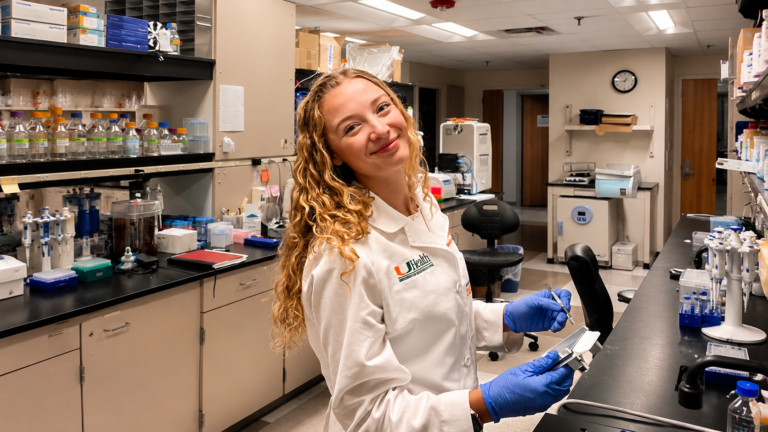
Hello! I’m Chloe, a first-year Ph.D. graduate student at the University of Miami, Miller School of Medicine, Department of Biochemistry and Molecular Biology. I graduated from the University of Wisconsin-Madison with majors in Molecular Biology and Legal Studies and my career goals are to become an advocate for science communication, bridging the gap between scientists and non-scientists. Some of my biggest priorities include improving STEM education in K-12 public schools across the country and increasing the diversity of people in STEM.

My goal for Paths to STEM is to highlight some of the many different career opportunities a major in STEM can provide and hopefully motivate some of you reading this to join us STEMinists! Science, Technology, Engineering, and Mathematics fields are typically dominated by white men. But I’m here to show you that there are many non-typical people in these careers, so don’t let it stop you from following your passion!


How I first became interested in Science

I first realized how much I loved science when I interned in a cancer biology lab at the University of Minnesota-Twin Cities my senior year of high school.

Before this point, all I associated science with was boring lectures and impossible to read textbooks. I vividly remember dreading high school science classes because I could never understand the reading from the textbooks assigned the night before and knew another day of dry lectures regurgitating the textbook information would not help me either. Because both of my parents are scientists, I felt additional pressure that I should just “know” science because my parents understand it all. But all science seemed to me was endless amounts of information to memorize in formats that made it incredibly difficult to comprehend.

Then I walked into the lab on my first day of the internship, and my whole concept of science was turned on its head. These people in the lab weren’t studying textbooks, reiterating what has been learned, but experimenting to learn more about the world. Science isn’t this constricting set of facts like we are taught in high school but an ever-expanding world of looking at what else is out there!

From there, I enrolled in undergraduate university where I immediately joined a lab so I could continue learning about science the best way I knew how.

What Sparked my Passion for Science Communication and Advocacy

While I understood my passion for science early on, I didn’t know much of what I could do in science except become what all the other older scientists I knew became: professors in academia or researchers in biotechnology.

At the start of my freshman year, I entered the University of Wisconsin-Madison through their STEM Immersion program, a multiple-day boot camp for incoming STEM majors to learn how to transition to a large research institution. This transformative program uses older college students as peer leaders during the boot camp to mentor the incoming students, and so the following year I became a peer leader for this program.

I learned from STEM Immersion and the other programs also run by the same department, WISCIENCE, about the value of science advocacy in K-12 schools to motivate young aspiring STEM majors to continue and graduate with STEM degrees.

To learn more about how I could help diversify STEM fields, I became a BioCommons Ambassador at the University of Wisconsin-Madison Steenbock Library. My jobs here included providing resources to incoming undergraduate students in STEM and organizing events to promote various STEM majors, extracurricular organizations, and career opportunities. We worked to promote STEM outreach opportunities at local schools and helped students interested in research get into their dream lab.

From these roles, I came to understand the powerful impact of science advocacy, showing kids and even college students science is more than dry lectures and wordy textbooks. I was lucky, in a lot of respects, having parents who are both scientists and the opportunity in high school to do research which provided me my love of science. However, many students don’t have these experiences and if students’ only view of science is boring and difficult then no wonder we are having a hard time getting more people into science careers!

This is why I believe science communication is so valuable because it changes the misconceptions about science taught in school and transforms it into a field many more students will want to join.

How I am Getting Involved to Follow my Passion

After college, I felt at a loss on how to continue science advocacy. It had been so easy to do as part of the WISCIENCE department programs but now I was on my own. At this point, I had started my Ph.D. at the University of Miami and was thrown into a completely separate world I didn’t know the first place to start to continue my science advocacy.

I began by joining the Graduate Student Association at the University of Miami, hoping to learn about more opportunities for science advocacy and to create a voice for current scientists who are located at a completely different campus from most graduate students.

After being involved with the Graduate Student Association for a while, I learned there really weren’t many current initiatives at the university for science advocacy, which could be done through science clubs or science outreach. This is why I co-founded my department’s student government with plans to bring the scientists of my department together as a cohesive, supportive unit and promote initiatives of science advocacy in the community. Since being established, we are working with the regional science fair of South Florida and a handful of local schools to show how much fun science can be!

Beyond science outreach, I have created my own platform, Chloe the Scientist, to show anyone can be a scientist. This gives me a voice for science communication in a completely new way and increases how many people I can impact.

Future Steps to my Dream Career

I am still in graduate school so I still have a ways to go before I can get to where I want to be. After I’m done with school, I hope to end up working with government officials to improve the science education curriculum in K-12 schools and overall improve the way STEM is funded in the government.

The road to this dream career is not laid out in stone and I will likely spend some time as a researcher for a biotechnology company to learn more about science and continue volunteer and outreach initiatives to better understand how I can bring more people into the wonderful world of science.

Advice to Anyone Who Wants to get Involved in Science Communication

The best place to start is by finding an organization, department, or company with already established science communications actions and volunteer with them! This is a great place to learn the basics of science advocacy and science communications while getting a better idea of more specifics of what you are interested in helping with science communication. I did exactly this when I joined the various science advocacy initiatives the WISCIENCE department offered at my undergraduate university.

If you have already volunteered at the science fairs, after school science clubs, or however else you decided to learn, the next step is creating your own initiatives. I did this by starting my own platform, Chloe the Scientist, and creating a science advocacy organization at my university.

Find your niche, the platform you want to share, by volunteering with already established science communication, and then go out to advocate for your own platform!

Thank you for reading! If you have any questions or want to learn more, don’t hesitate to contact me.

Categories
@ChloetheScientist Research Advice

How to Ace Graduate School Interviews

So you got through the applications and the excruciating waiting time, and you just received the email to schedule an interview with the graduate school program! Congratulations! We are going to quickly walk through how you can prepare yourself before to ace your graduate school interviews!

  • Search the school’s offer rate from the applicant pool
  • Research professors who you would be interested in joining their labs
  • What to bring with you for the interview
  • First day nerves and meeting your fellow applicants
  • The interview
  • Socializing

Search the School’s Offer Rate

It’s hard to know at this point how likely your chances are of getting accepted; some graduate schools only interview a small pool of students so if you are interviewed you are most likely getting an offer, while other schools will fly out tons of students even if they will only give an offer to 1/3 of those students. Either way, it will calm you down a little bit knowing your chances of getting into that school after the interview, so I always did a bit of research after getting the interview offer to see how likely my chances were of getting in at this point.

Research Professors who you are Interested in Joining their Labs

Most graduate school applications require you to mention at least one professor you are interested in, and I am hoping you researched the professors before applying and reached out to them! If you need help with the application, I wrote an earlier blog about it here.

If not, it’s alright. Perhaps now take this opportunity to reach out to professors, letting them know you have been accepted for an interview and you are interested in their research, perhaps scheduling a potential meeting with them while you are there for the interview.

If you did already research the professors before applying, way to go! Refresh your memory about these professors, especially if you mentioned them in your application. What I would recommend is writing down in a Legal Pad (or whatever writing notebook you are going to take in with you to the interviews) a page for each professor, summarizing their research and the big takeaways from their most recent 2-3 papers (you can find them on PubMed). I did this for 3 professors I was interested in for each interview.

When they send an itinerary, you may be meeting with professors not on your list, but still be prepared! Research each of those professors and even if you aren’t interested in working with them at least get a gist of their research. If you are feeling particularly like a go-getter, include takeaways from those professors’ one or two most recent papers.

Interview Packing List

Most graduate school interviews are Thursday-Saturday, with Friday being the interview day. One lucky thing almost all science graduate programs do is pay to fly their interviewees out and pay for their hotel costs. Because they are paying for your flight, try to only bring a carry-on. I always pack extra but below are what I would always travel with to interviews.

Personal

  • Makeup/cosmetics
  • Deodorant/hair products/personal hygiene products
  • Pajamas (you will likely have a roommate)

Interview Day

  • suit and dress shirt (suit coat optional, but I like to bring it with me in case I get cold inside or want to impress someone particularly)
  • spare dress shirt (you never know what might happen!)
  • legal pad in a padfolio, or some sort of notetaking notebook
  • 2 copies of your C.V. (in case you need to hand one out)
  • your notes about the professors you are meeting (preferably in your legal pad)
  • 2 pens
  • a printed version of your personal statement (so you can reference it if a professor is referring to it)
  • Dress shoes (go with flats if you are a woman just because you will likely be walking around all day)
  • slacks and a nice shirt (lots of interviews have dinner with the faculty where you want to dress nice but maybe not as formal as the interview)

Downtime

  • swimsuit and coverup (if the hotel has a pool you might want to go for a swim!)
  • jackets/outdoor attire
  • casual outfit (jeans and T-shirt and sneakers)
  • club outfit (some grad schools take their students out after interviews)

First Day Nerves and Meet Fellow Applicants

Now you have arrived for the interview and start meeting the other applicants. Don’t shy away from socializing because these may be your fellow classmates! This is also a good chance to see whether the people drawn to this school and this program are the right fit for you. Remember you are all in the same boat so don’t treat this like an interview as much as a getting to know you time.

The Interview

The scariest part of this whole graduate school application process is the interview, but you don’t need to be nervous as long as you have prepared in advance! For each professor you are going to be talking to, review your notes on them the night before your interview. Also, come up with some questions you want to ask. Below I have included some questions I asked, but also think of your own!

Generic Questions

  1. How did you choose to become a professor?
  2. How did you get into __ field?
  3. I thought ___ paper was very interesting in finding __, could you explain more about this?
  4. What do you expect from your graduate students?

Questions if you genuinely want to join this lab

  1. What is the lab environment like?
  2. What is the size of your lab? (undergrads, graduate students, post-docs, research techs, etc)
  3. How many years on average do your graduate students spend in your lab?
  4. What type of teaching style do you use with your graduate students?
  5. How often do you have lab meetings?
  6. What grants is your lab funded with? (you can find this out online as well but this is a good opportunity to see how well funded the lab is)
  7. What is your stance on graduates students writing their own grants?
  8. What foundational papers do you have incoming graduate students read?
  9. How often does your lab publish/how many papers do you expect a graduate student to publish during their time in your lab?

Socializing

The graduate school interview weekend will seem incredibly long because you are always trying to be on your best behavior. While you do want to be on your best behavior, don’t shut yourself off from enjoying the all expenses paid trip and getting a feel for the school. Make sure to talk with the current graduate students because they have the best idea of how you are feeling and can help answer most of your questions.

Also be mindful of what you say, even when you think it is just to a few other applicants, and NEVER say the school you are interviewing at isn’t one of your top choices. I’ve heard a few times of interviewees trash talking the school, bragging about getting into their top choice so none of these other interviews matter, or other things to sound like they are in high demand. No matter who you might be talking to, assume it will get back to the admissions. Needless to say, these people saying they don’t want to go to the school during interviews don’t get an acceptance.

You may also be offered to go out with current graduate students after the interview day, or to hang out with fellow applicants, and don’t waste these opportunities to start making connections right away! If you plan to join the school, great because you are making the first introduction for 4 or more years of knowing these people. Even if you don’t join the school, all these people will be your professional colleagues in some capacity who you may see in conferences or even collaborate with, so might as well start networking now.

Last, but not least, RELAX! You have already made it most of the way to getting into graduate school! Now let your personality and C.V. shine, and you will be getting those acceptance letters in no time.

Categories
@ChloetheScientist Featured Research Advice

How to Apply for Graduate School in the Sciences

Hi there! So many people are applying to Ph.D.s nowadays to get a leg ahead in their career, join academia, or simply because they don’t want to leave the lab. Whatever category you fall into, applying to a science graduate school is a beast in of itself and it’s hard to make heads or tails of the application process.

I am fresh out of the application process and, after having a number of my own struggles, want to help you get into your dream graduate school lab!

Below I am going to go through the whole application process and what to do and when, but the 4 major parts are here:

  1. How you know you are qualified enough to apply for graduate school
  2. Which schools to apply to
  3. How to get your application to stand out
  4. Submitting the Application and what to do while you wait

How do I know I am qualified enough to apply for graduate school?

Never doubt yourself! That being said, with the increasing number of applications for a Ph.D. in science, schools have become more restrictive in what they look for. Generally you want to have

  • at least 1 year lab experience (the more independent and longer the better)
  • good grades
  • superb Graduate Record Examinations (GRE) (less useful now, will get into below)
  • excellent recommendation letters

Lab Experience

As an undergraduate, it is difficult to get lab experience right away and typically it is by your junior year when labs are willing to take you on. In my experience, application committees like to see you have worked in at least one lab for over a year and had a significant, independent contribution. This could be an internship, senior thesis, masters program, or lab assistant work.

Now you don’t want to have worked in too many labs, as the committees might see this as someone who is flaky and cannot stick around. But more than one lab experience normally makes the applicant looks like someone who can step outside of their comfort zone.

I would argue this is the most important part of your application because no graduate school lab wants to teach you all the basic skills of how to make a solution or pipette correctly. But application committees use the other criteria (i.e. grades and GRE scores) to narrow down the applicant pool.

Grades

At first glance, this may seem obvious, but keep in mind the committees will look not just at your overall GPA combining your English major with your Science degree. No, they want to see that you excel in all your hard science classes, the Organic Chemistry, Analytical Chemistry, etc. Now do I think this is the most fair way to judge who gets into graduate school? Of course not! Most graduate school programs you barely take any classes and your only actual worth is the amount of data you can produce in the lab. BUT it is a way for the Principal Investigators (PIs) to narrow down applications.

If you want to be a competitive applicant for the top 25% of graduate schools, I would say at the minimum you should have a 3.3 GPA, but most graduate schools, especially the more prestigious universities, have cutoffs where no one will even read your application if it falls between a 3.5 or 3.7. Don’t have these grades? Don’t worry, I didn’t either! Your GRE score, recommendation letters, and research experience can also help you stand out from the pack.

However, if you are worried that still may not be enough, consider doing a Masters in Science before your Ph.D.. Normally, a Masters in Science is an easy way to boost that GPA, increase your research experience, and show those application committees you are dedicated to getting a Ph.D.. The biggest worry of application committees, and the Graduate schools as a whole, is that you may give up after only just starting your Ph.D.. They are weeding out the people who they think can cut it; after all they are giving you a stipend and for at least your first year you will be doing more learning from them than producing data for them.

GRE Scores

The Graduate Record Examination, or GRE for short, is a glorified version of the high school ACT or SAT. It tests you on your basic English, Science, and Math.

Is it a comprehensive assessment of how smart you are and your worth? NO!

Do Graduate school application committees judge your whole life based off the GRE score? They USED to.

More and more schools are switching to GRE optional or not accepting the GRE at all. The logic follows similarly to people against taking the ACT or SAT standardized testing scores: the test tests you on your ability to take multiple choice tests and nothing else and disproportionately favors those in higher socioeconomic backgrounds that can afford to take the test multiple times or hire a tutor.

I did take the GRE because some of the schools I wanted to apply to still required it, but check your schools before studying for the GRE because you very well may not need to take it at all!

If you do plan on taking the GRE (which you can take multiple times), only send your results if you meet at least the 75% percentile for all the subjects. Even then, think hard about whether your score shows you as a better or weaker candidate. For example, if you have a 3.9 GPA but get only 75% percentile overall and your top choices don’t require a GRE, I wouldn’t send it. But if you have only a 3.3 GPA but get 95% percentile overall, I would consider sharing the results.

Finally, if you are committed to taking the GRE, the best resource I used was magoosh.com! This was an amazing way to learn a lot of vocabulary on the test, freshen up my math, get practice exams included, and a free 7 day trial! They even have a mobile app which was great to use in my downtime in lab for flashcards.

Recommendation Letters

This was the most nerve-wracking part for me because recommendation letters can make or break everything else you have to offer. Great grades, GRE score, and lab experience but a “meh” letter of recommendation letter you may as well waive good bye to that application.

All that aside, most recommenders do want to write you a good letter of rec, but equally you have to do your part in making sure you pick people who will speak highly of you. Typically you are asked to send 2-3 recommendation letters. Of these, you want at least 2 if not all of them to be from the heads of the labs you have done research in. If you have only done research in one lab or only trust one Principal Investigator (PI) to write you a stellar letter of recommendation, don’t fret. Application committees also like to see recommendation letters from a professor you took a class with, as long as it is personal and shows you added special value to that class.

When asking recommenders, try to schedule a time to meet them in person when possible and give them at least 2 if not 3 months advanced notice for when you need the recommendation letter in by. If they accept, offer them your Curriculum Vitae (CV) and essays that you will be sending for your you graduate school application. Feel free to follow up with them when the deadline approaches and don’t forget to send them a follow up thank you afterwards.


Which schools should I apply to?

You are ready to begin, but the list of graduate schools is never ending. The biggest bit of advice was something I got from a senior graduate student in my undergraduate lab: don’t be afraid to narrow down before applying rather than deciding you don’t want to go to any of the schools after you have been accepted. There are a lot of factors to take into consideration when looking at schools; the most important in my mind are:

  • labs that interest you
  • location
  • funding
  • career opportunities

I am not going to break each one down because each intuitively makes sense, but basically don’t spend the money and the time applying to a school if you don’t see yourself happy there. Some may argue with me and say going to any school, even if it is in a place you hate in a lab you despise with no career opportunities except academia and you have to write all your own grants in order to get funding, at least you are getting your Ph.D.. But see graduate school is already stressful in itself, and we already have among the highest rate or burnout and depression among all jobs, so we don’t need to be putting ourselves in an even more stressful situation. Look after your own mental health in advance and don’t bother applying to places you wouldn’t consider being in for the next 5-X number of years.

As you are narrowing down your options, I would recommend making an excel sheet of what each school requires, the pros for you and the cons, whether they want the GRE, and any specific requirements for the personal statement for the school.


How do I get my application to stand out?

To get your application to stand out from the rest (beyond the above mentioned grades, lab experiences, GRE scores, and recommendation letters) focus on writing a great Personal Statement, include any science outreach on your CV/Resume, apply for fellowships to secure your own funding, and never underestimate the importance of networking.

Curriculum Vitae/Resume

There are tons of different ways to write a Curriculum Vitae (CV) and there is no right way. You can see my CV here, but I also recommend looking around on the web for other examples of a science CV and go to your college’s career center (if they have one).

Basically, most CVs for applying to graduate school are a maximum of 2 pages (1 page front and back). Don’t get rid of all the white space on the page but also don’t leave huge holes of white space. Most professionals that give advice on CVs also suggest to keep it rather simple; don’t add lots of color, your photo, more than two types of font (regular, bold, italics, underlined). This all being said, it is a personal reflection of you! Generally, I see CVs start with their education, then research experience followed by other work experience and community outreach/volunteer work. Most committees may not look past the research experience, so make sure this stands out! Use power verbs to make your experience stand out.

Personal Statement

This is the one part of the graduate school application you must personalize for each graduate school you are applying to. Often these essays are 1-2 pages addressing “What are your research goals and why would this program be the right fit for you?” I like to format it like so:

  1. catchy introduction paragraph about your introduction to science
  2. 1-2 paragraphs highlighting each of your research experiences in detail and how you know what you are doing in research.
  3. the personalized part: why you are interested in this graduate school program, and consider mentioning one lab you are interested in.
  4. thank you

The essay is the most time consuming part of the application, so consider starting it early. I started my generic template essay the summer before applying, asking for many revisions from anyone who was willing to help (graduate students in my lab, PI, career center, old class professors you kept in touch with). Look at the essay application requirements for the schools you want to apply to, and build your application around answering those requirements.

This is also the chance to explain any part of your application you think may be weak. Low GPA or GRE? Write about what affected this and how you learned and grew as a result.

Applying for Fellowships

Apply for fellowships early on. Some fellowships, like the National Science Foundation Graduate Research Fellowship Program (NSF GRFP), you can apply as an undergraduate, and comes with your own stipend funding and prestige if you win. This is a great draw for graduate programs because they don’t have to worry about funding for you.

Networking

I know many of us joined science in part because we thought we would never have to network; science is for the antisocial and as such networking doesn’t apply. Sadly, as much as I wish this were true, this is not the case. If your advisor or professor knows someone at another university, don’t be afraid to use this. I know quite a few friends who may not have even had a first glance from an application committee, but were picked out of a stack because their current PI told a PI at the university to take a look at their application.


Do I do anything after I apply but before I hear back?

The waiting game is excruciating, especially because a lot for graduate schools do a tiered system where they release interview times for their top tier before letting others know. Worse still, many graduate schools may simply never respond to you.

Immediately after applying, I emailed a couple of professors I was genuinely interested in joining their labs. I read some of their papers, and reached out stating my interest, that I applied to their graduate school, and asking whether they would be willing to talk about their research and any open projects. I also sent my CV along with the email. Many professors may never respond, but the handful that do know that you are very interested. This is actually how I got into my lab now, the professor I was interested in working with vouched for me so I could join the program!

If you aren’t hearing back from your top graduate schools and are hearing other people are, don’t feel bad about reaching out to their admissions office to ask about the status of your application. This is how I found out in a few cases I had been rejected or others that I was just about to get an interview offer.


Other Useful Sites

Wait! Before you go, remember you aren’t alone in the struggle applying to grad school. Below are some of my favorite sites that I used when I was applying.

Applying to Graduate School

Good luck and happy application writing!

Disclaimer: This is just my point of view while I was applying and is by no means meant to be a holistic view of the application process. Please check out some of the other sites I listed, and feel free to contact me if you feel like something should be changed or added!

    Share Your Story