Hello! If you have spent any time on my website or social media, you probably know that when I am not talking about molecular biology or working in the lab, I almost always have a book in my hand.
I read across a lot of genres, and I love the feeling of getting completely absorbed in a narrative. But lately, I have been thinking about reading from a different perspective, not as a reader, but as a scientist.
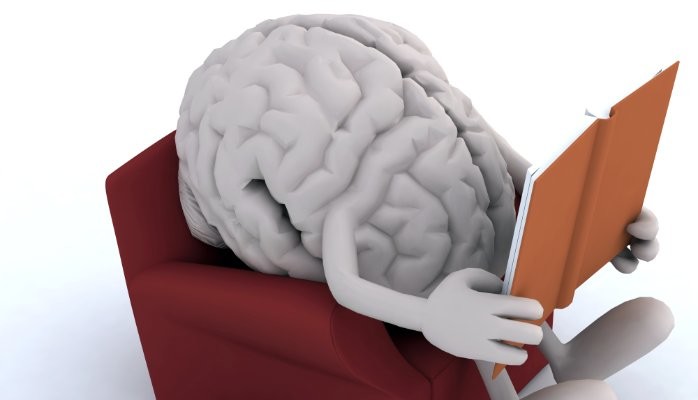
When you read a book, it feels like a purely mental or emotional experience. You visualize characters, you process the plot, and you react to the story. However, beneath that subjective experience, reading is an incredibly intense, physical biological process.
Unlike spoken language, which is hardwired into human biology, reading is a relatively recent human invention. We are not born with a dedicated “reading center” in our brains. Instead, reading forces the brain to rapidly rewire itself, repurposing different neural networks to process written text.
Let’s look at exactly what happens to your brain architecture and connectivity when you sit down with a good book.
Hijacking the Brain: The Visual Word Form Area
Spoken language developed hundreds of thousands of years ago, and the human brain has specialized regions, like Broca’s area and Wernicke’s area, dedicated to producing and understanding speech. Reading and writing, however, were only invented about 5,000 years ago. In evolutionary terms, this is not nearly enough time for the brain to evolve a specific, genetically coded reading network.
To read, the brain must exhibit neuroplasticity. It has to hijack and rewire existing structures.
When you look at a word on a page, the visual information enters the occipital lobe at the back of your brain, which processes basic shapes, lines, and curves. From there, the information travels to a region in the left hemisphere called the Visual Word Form Area (VWFA).
The VWFA is fascinating. In illiterate individuals, this area of the brain is primarily used for recognizing faces and objects. But when a person learns to read, the brain physically reallocates a portion of this tissue to recognize letters and whole words. The VWFA acts as a structural dictionary, instantly translating visual shapes into recognized language, which is then routed to Broca’s and Wernicke’s areas for auditory and meaning-based processing.
Reading literally changes the physical topography of your brain.
Embodied Semantics: Living the Action
One of the most profound neurobiological effects of reading involves the somatosensory cortex and the motor cortex.
When you read a sentence describing an action, your brain does not just process the words abstractly. It physically simulates the action. This concept is known in neuroscience as embodied semantics.
If you read the sentence, “She grasped the heavy rope and pulled,” functional magnetic resonance imaging (fMRI) scans show that the language centers of your brain activate. But simultaneously, the neurons in your motor cortex associated with hand movements and gripping also fire. If you read about someone running, the motor areas controlling the legs activate.
Your brain simulates the physical sensation of the actions described on the page. You are not just observing the story; on a neurobiological level, your brain is practicing the physical movements.
Building White Matter and Structural Connectivity
Reading does not just activate different regions of the brain simultaneously; it physically strengthens the connections between them.
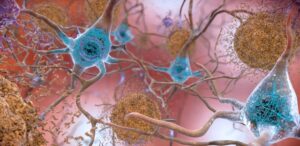
The brain is composed of two main types of tissue: gray matter and white matter. Gray matter consists of the actual neuron cell bodies, where processing happens. White matter consists of axons, which are the nerve fibers that connect different gray matter regions together, allowing them to communicate. You can think of gray matter as the computers and white matter as the cables connecting them into a network.
Sustained, deep reading physically alters these white matter tracts. Studies involving reading intervention programs have shown that consistent reading increases the integrity and density of white matter in the language areas of the brain. The myelin, the fatty sheath that insulates the axons and allows signals to travel faster, thickens.
This means reading actively improves the brain’s structural connectivity, making communication between the visual, auditory, and cognitive centers faster and more efficient.
The “Shadow Activity” of a Good Novel
The neurological effects of reading a book do not stop the moment you put it down.
In a notable 2013 study conducted at Emory University, researchers placed participants in fMRI machines and scanned their resting-state brain connectivity over several consecutive days. The participants were assigned to read the historical thriller Pompeii by Robert Harris in the evenings.
The researchers found heightened connectivity in the left temporal cortex (associated with language comprehension) and the central sulcus (the primary sensory motor region of the brain).
Crucially, this heightened connectivity persisted the morning after the reading sessions, while the participants were at rest and not reading. The researchers termed this “shadow activity.” It demonstrated that getting engrossed in a novel induces measurable, lingering changes in resting-state brain connectivity that last for days. The neurological footprint of the story remained in the brain’s network.
Final Thoughts
We often view reading as a passive hobby, a way to unwind or escape at the end of the day. But from a biological standpoint, deep reading is one of the most complex cognitive workouts a human being can undertake. It requires the rapid coordination of the visual, auditory, motor, and cognitive networks, forcing the brain to physically rewire its white matter tracts and repurpose its tissue.
Every time you read, you are actively altering your brain’s architecture.
If you are a fellow reader, I would love to hear what is currently on your reading list, whether it is a dense science non-fiction book or a fast-paced thriller. Send me a message through my contact page or reach out on my social channels to share your recommendations!
Until next time,
Chloe