One of the most fascinating things about the human body is that it is constantly protecting us without us even realizing it.
Every second, your immune system is scanning for threats.
Viruses.
Bacteria.
Damaged cells.
Potential infections.
Even abnormal cells that could eventually become cancerous.
Most of the time, this surveillance system works remarkably well. In fact, many scientists believe cancerous cells likely emerge in the body more often than we realize, but our immune system identifies and destroys them before they can become dangerous.
Which makes cancer particularly unsettling from a biological perspective.
Because cancer is not simply a foreign invader entering the body.
Cancer is made from our own cells.
And somehow, despite the immune system being incredibly sophisticated, cancer cells can learn how to hide, adapt, manipulate, and survive.
Honestly, it’s one of the most biologically complex “cat-and-mouse” games happening inside the human body.
Your Immune System Is Constantly Monitoring Cells
To understand how cancer evades the immune system, it helps to first understand how immune surveillance normally works.
Immune cells are constantly communicating with other cells in the body through molecular signals. Healthy cells display proteins on their surfaces that essentially act like identification markers, allowing immune cells to recognize them as part of the body.
When cells become infected or damaged, those surface signals can change.
Immune cells, particularly T cells and natural killer (NK) cells, are trained to recognize these abnormalities. If something appears dangerous or unusual, the immune system may trigger an attack.
It’s an incredibly coordinated system involving:
- cell signaling
- protein recognition
- inflammatory responses
- molecular checkpoints
- immune memory
And most of it happens completely outside our awareness.
The immune system is not just reacting to illness after it happens. It is constantly making microscopic decisions about what belongs in the body and what does not.
Cancer Begins with Mutation
Cancer starts when cells accumulate genetic mutations that disrupt normal growth regulation.
Normally, cells follow strict instructions:
- when to divide
- when to repair themselves
- when to stop growing
- when to die
Cancer cells ignore those instructions.
Mutations can activate oncogenes (genes that promote growth) or disable tumor suppressor genes (genes that normally prevent uncontrolled division). Over time, this allows cells to multiply uncontrollably.
But rapid growth alone is not enough to make cancer successful.
Cancer cells also need to survive immune detection.
And that’s where things become particularly fascinating.
Cancer Cells Are Masters of Adaptation
One of the reasons cancer is so difficult to treat is because cancer cells evolve.
Tumors are not static. They constantly change under selective pressure from the immune system, therapies, and their surrounding environment.
In many ways, cancer behaves like a highly adaptable ecosystem.
Cells that survive immune attacks continue dividing. Cells that cannot evade detection are eliminated. Over time, this creates populations of cancer cells that become increasingly skilled at avoiding immune responses.
Essentially, evolution is happening inside the body at a cellular level.
Which is both scientifically incredible and deeply terrifying.
Some Cancer Cells “Hide” from the Immune System
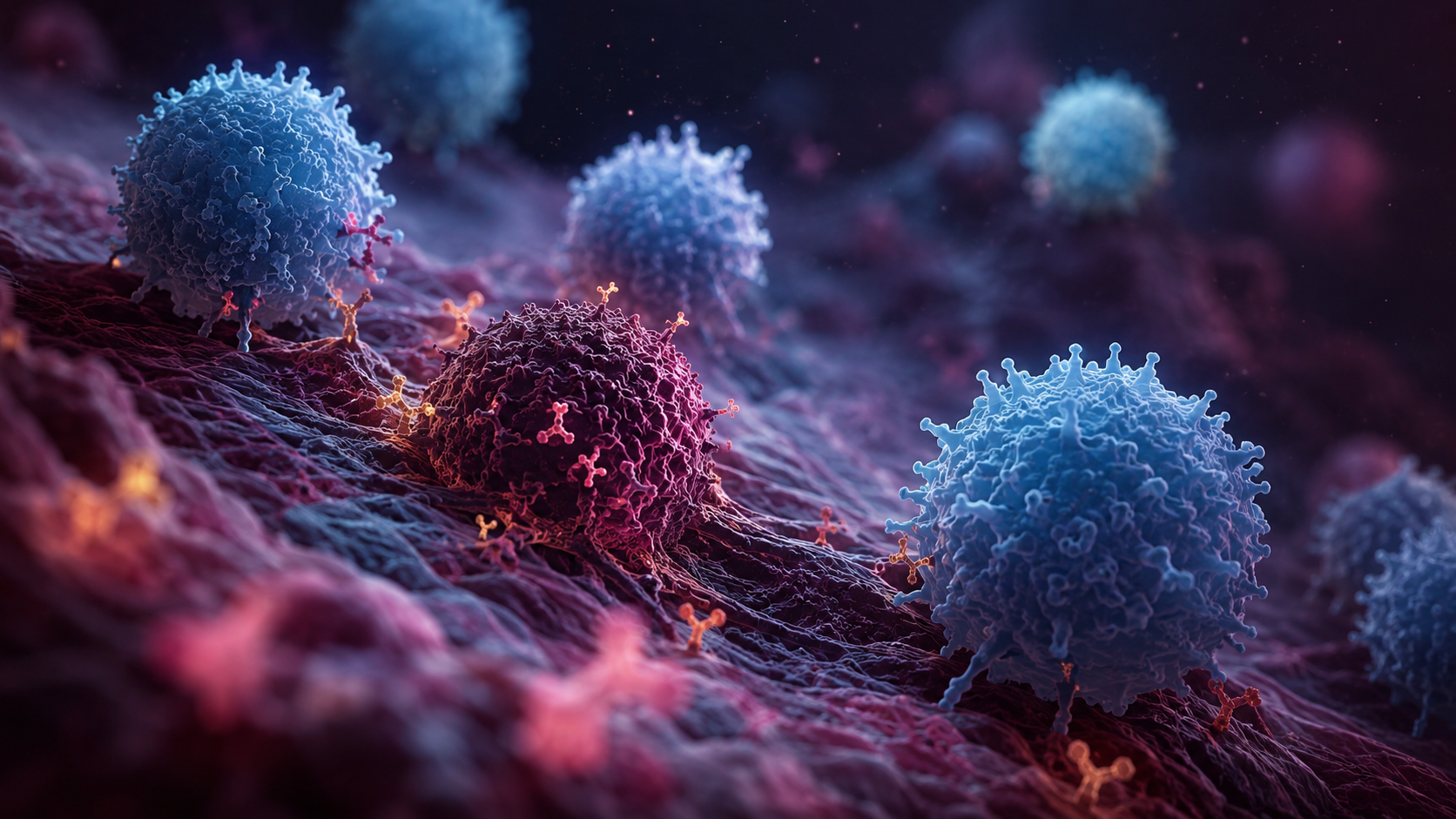
One strategy cancer cells use is reducing their visibility.
Immune cells often identify dangerous cells through molecules called MHC class I proteins displayed on the cell surface. These molecules help present fragments of internal proteins to T cells, allowing immune surveillance to occur.
Some cancer cells decrease the expression of these molecules.
In simple terms, they become harder for immune cells to recognize.
It’s almost like removing identifying information.
Without strong recognition signals, immune cells may fail to detect the abnormal cell entirely.
And because cancer originates from the body’s own tissues, immune cells already face a difficult challenge: distinguishing “self” from “danger.”
Cancer exploits that challenge.
Cancer Can Manipulate Immune Checkpoints
This is one of the most remarkable aspects of cancer biology.
The immune system includes built-in “checkpoint” proteins designed to prevent excessive immune reactions. These checkpoints are essential because an overactive immune system can damage healthy tissues.
Normally, these molecular brakes help maintain balance.
But cancer cells can manipulate these systems for protection.
Some tumors produce proteins like PD-L1, which bind to checkpoint receptors on T cells and essentially tell them:
“Do not attack.”
Even if the T cell recognizes the cancer as abnormal, the checkpoint signal suppresses immune activity.
The cancer cell effectively convinces the immune system to stand down.
This discovery completely transformed cancer research and eventually led to immunotherapy treatments called checkpoint inhibitors, which help block these deceptive signals and reactivate immune responses.
And honestly, I think this is one of the most extraordinary examples of modern medicine understanding biology deeply enough to intervene strategically.
Tumors Create Their Own Microenvironment
Another reason cancer can survive is because tumors influence the environment around them.
Tumors are not just clusters of rapidly dividing cells. They interact constantly with blood vessels, immune cells, signaling molecules, connective tissues, and surrounding structures.
This is called the tumor microenvironment.
Some tumors release chemicals that suppress immune activity locally. Others recruit regulatory immune cells that reduce inflammation and prevent aggressive immune responses nearby.
In some cases, tumors can even create physically difficult environments for immune cells to enter.
So cancer is not merely hiding.
It is actively reshaping its surroundings to improve survival.
The biology becomes incredibly complex very quickly.
Why Immunotherapy Changed Cancer Treatment
For decades, cancer treatment primarily relied on:
- surgery
- chemotherapy
- radiation
These treatments can be highly effective, but they often target cancer somewhat indirectly or damage healthy cells alongside cancerous ones.
Immunotherapy introduced a different approach:
help the immune system fight back more effectively.
Checkpoint inhibitors, CAR-T cell therapy, and other immunotherapies aim to enhance immune recognition or restore immune function against cancer cells.
And while immunotherapy does not work for every patient or every cancer type, it has fundamentally changed oncology.
Some patients with advanced cancers that were once considered nearly untreatable have experienced remarkable responses.
That does not mean cancer has been “solved.” Far from it.
But it demonstrates how understanding cellular communication at the molecular level can completely reshape medicine.
Cancer Biology Is Both Frightening and Remarkable
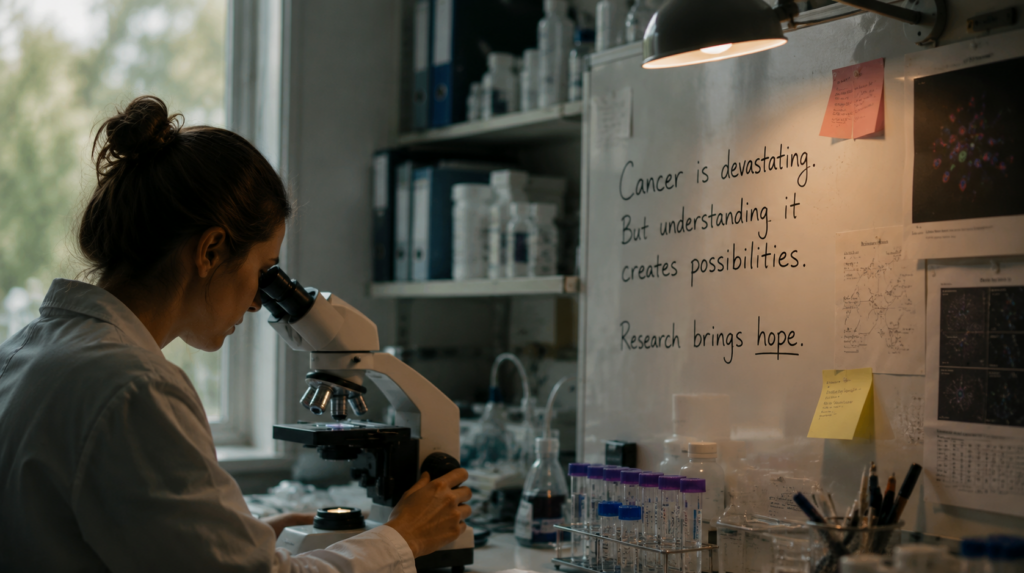
I think one of the strange emotional realities of studying cancer biology is holding two thoughts simultaneously:
Cancer is devastating.
And cancer is biologically astonishing.
The ability of cells to evolve survival mechanisms, manipulate signaling pathways, alter immune responses, and adapt under pressure reveals just how complex living systems truly are.
Of course, understanding that complexity does not make cancer less painful for patients or families.
But it does highlight why research matters so deeply.
Every discovery about immune checkpoints, signaling pathways, mutations, or tumor environments creates new opportunities for earlier detection and better therapies.
Science moves slowly sometimes. Frustratingly slowly.
But progress in cancer biology over the past few decades has been extraordinary.
The Immune System and Cancer Are Constantly Interacting
One thing I think is important to remember is that cancer and the immune system are not separate forces existing independently.
They are constantly interacting.
The immune system applies pressure.
Cancer adapts.
Researchers develop therapies.
Tumors evolve further.
It is an ongoing biological arms race happening at microscopic scales inside the human body.
And while that reality can feel unsettling, I also think it reveals something incredible about biology itself:
Cells are not passive.
The human body is dynamic, responsive, adaptive, and constantly communicating in ways we are still trying to fully understand.
Which means that every new breakthrough in immunology or cancer research is not just about medicine.
It’s about learning how life itself operates at its most fundamental level.