Here’s a career that doesn’t get nearly enough airtime in PhD programs, and honestly, it should. Because for scientists who love the bench work but are ready to step away from the pressure of publishing, grants, and academic timelines, the Applications Scientist role is one of the most satisfying pivots you can make.
Most people haven’t heard of it. And the ones who have often think it’s basically a sales job with a lab coat. It’s not. Let’s actually break it down.
What does an Applications Scientist do?
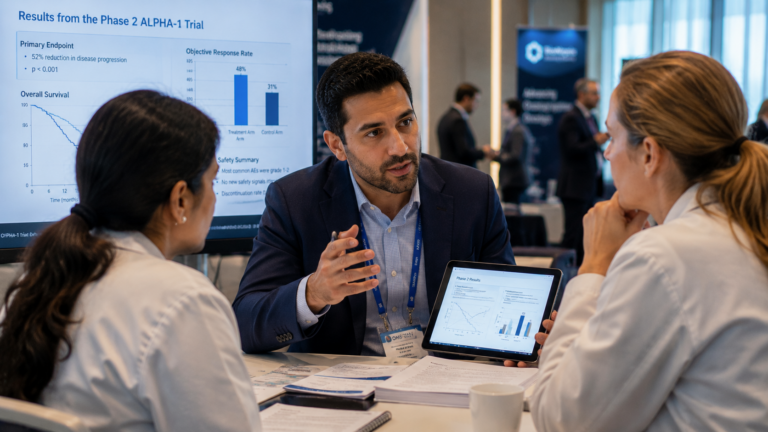
An Applications Scientist, sometimes called a Field Application Scientist (FAS) or Technical Application Scientist (TAS), is the scientific bridge between a company and its customers . Think of the companies that make the instruments, reagents, and tools researchers use every day: Thermo Fisher, Illumina, Bio-Rad, 10x Genomics, Nikon. These companies need people who can go into a customer’s lab, understand exactly what they’re trying to do scientifically, and make sure the technology actually works for them .
That’s your job.
You’re not selling a product. You’re making sure the scientist using it succeeds with it. You troubleshoot experiments, run demonstrations and training sessions, help customers design their workflows, and translate complex technical information into practical guidance . Internally, you’re also the person feeding customer insights back to the product and R&D teams, which means your scientific perspective genuinely shapes how products evolve.
It’s a role where your bench experience isn’t something you’re moving away from. It’s the entire reason you’re valuable.
This might be for you if you:
💡 Love troubleshooting, genuinely enjoy figuring out why an experiment isn’t working
💡 Are comfortable talking to scientists at all career stages, from PhD students to PIs
💡 Enjoy teaching and explaining, not just doing
💡 Want variety in your day-to-day, no two customer problems are the same
💡 Are ready to leave the pressure of publishing cycles and grant deadlines behind
💡 Like the idea of travel and working across different labs and institutions
💡 Want to stay close to cutting-edge research without being responsible for generating it
What does a typical day actually look like?
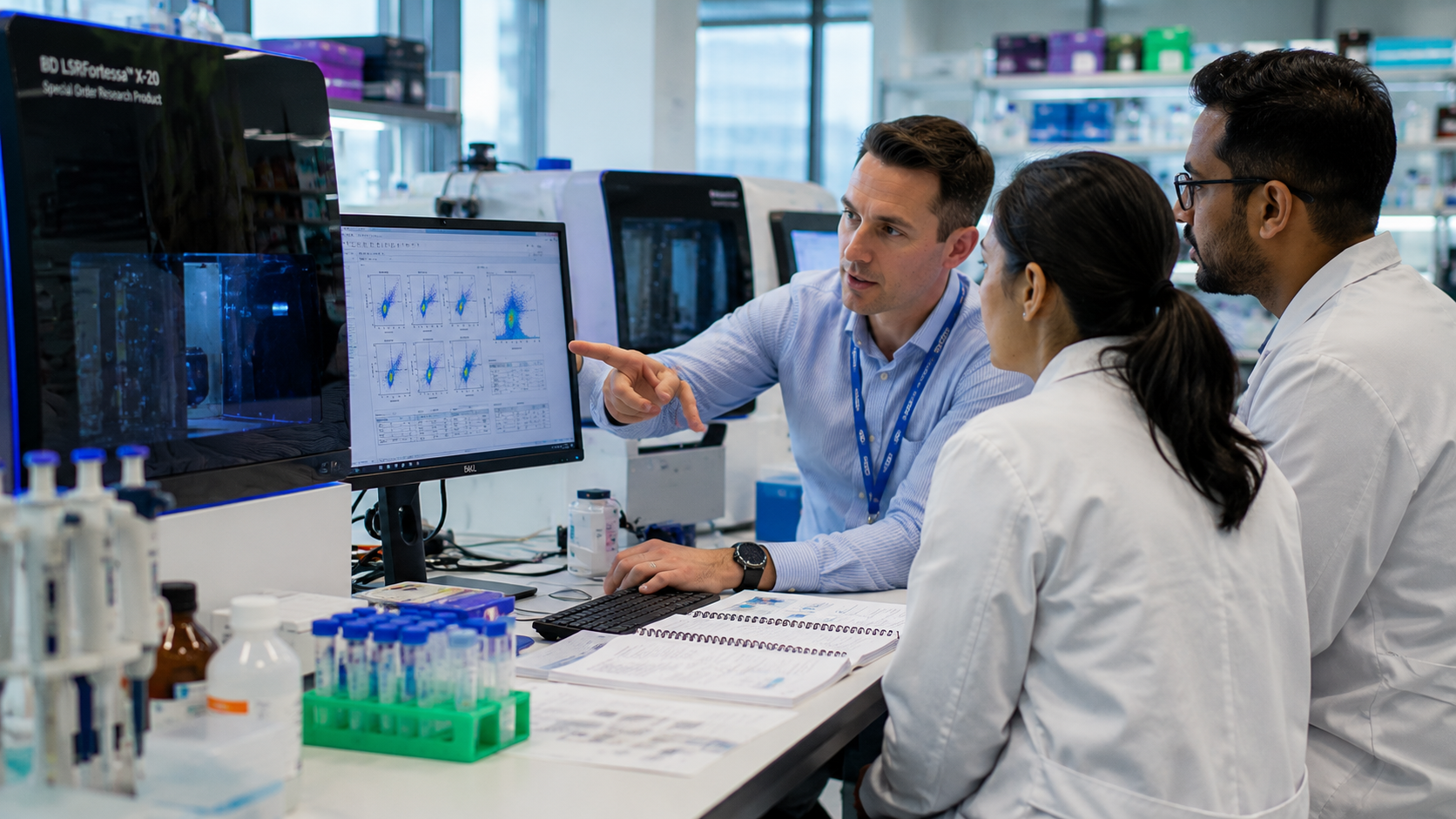
Depending on whether your role is lab-based or field-based, a day might look very different. A Field Application Scientist is typically territory-based and spends a significant amount of time on the road, visiting customer labs, running on-site demonstrations, delivering training sessions, and supporting new product rollouts .
An in-house or lab-based Applications Scientist spends more time at a company facility, running experiments, developing protocols, testing products pre-launch, and supporting the technical sales process remotely .
Both versions require the same core skill set: deep scientific knowledge, clear communication, and the ability to stay calm when something isn’t working and a customer is waiting on answers. It’s high-responsibility work, but it’s also the kind of work that makes you feel genuinely useful every single day.
Why do companies want scientists in this role?
Because there is no substitute for actually having done the work.
When a customer is troubleshooting a flow cytometry panel at 9pm before a grant deadline, they need to talk to someone who has been in that exact situation. Not someone who read about it. The credibility of an Applications Scientist comes entirely from their scientific background, and companies like Thermo Fisher, Illumina, and Corning know this . They’re not looking for generic industry experience. They’re looking for people who understand the science well enough to earn the trust of the researchers they’re supporting.
Your PhD or Master’s degree isn’t a detour into this role. It’s the job requirement.
Things to keep in mind:
📚 Field-based roles involve real, consistent travel. For some people, this is one of the best parts of the job, seeing different labs, meeting researchers across institutions, building relationships across a region . For others, it’s unsustainable long-term. Be honest with yourself about this before you apply.
📚 This role sits at the intersection of science and sales. You are not a salesperson, but you do support the commercial process. Some scientists find this uncomfortable at first. It gets easier, and most Applications Scientists say the commercial side ends up being genuinely interesting once they’re in it .
📚 Strong interpersonal skills matter here as much as scientific knowledge. You’re working with customers who are often stressed, time-pressured, and frustrated. Being calm, patient, and solutions-focused is not optional, it’s the core of what makes someone good at this job .
📚 Career progression is real and varied. After a few years as a FAS, many scientists move into product management, marketing, technical sales leadership, or even R&D roles within the company . The breadth of exposure you get, customer insights, product knowledge, commercial strategy, makes you genuinely versatile.
📚 The role can feel less research-forward over time. You’re supporting science, not conducting it. If you think you might want to return to research later, that’s worth thinking about now.
Job titles to look for:
💻 Field Application Scientist (FAS)
💻 Applications Scientist / Technical Application Scientist
💻 Technical Support Scientist
💻 Field Application Specialist
💻 Product Specialist (Science-focused)
How to explore this career:
🗣️ Use LinkedIn to find scientists in FAS roles and reach out. This community is notably open and generous, most Field Application Scientists are happy to talk about how they got there and what the day-to-day actually looks like.
🗣️ Pay attention to company-specific platforms. Thermo Fisher, Bio-Rad, and Danaher all post FAS roles regularly and have structured onboarding programs for scientists coming from academia.
🗣️ UCSF’s InterSECT Job Simulations platform has specific simulations for Field Application Scientist tasks, including giving a pre-sales seminar and troubleshooting customer questions. Worth doing before your first interview .
🗣️ Look at job descriptions from companies in your specific scientific area, genomics, proteomics, cell biology, imaging, and map your bench experience directly to the products they support. The more specific your match, the stronger your application.
🗣️ Want to read more about this career? Science.org has a piece on the Applications Scientist career track worth bookmarking: The Applications Scientist Career Track, Science.org
The Applications Scientist role is one of those careers that makes a lot of scientists say “I didn’t know this existed, and it’s exactly what I was looking for.” If you love science, love problem-solving, and are ready to use your expertise in a way that directly helps other researchers do their best work, this one is worth taking seriously.