
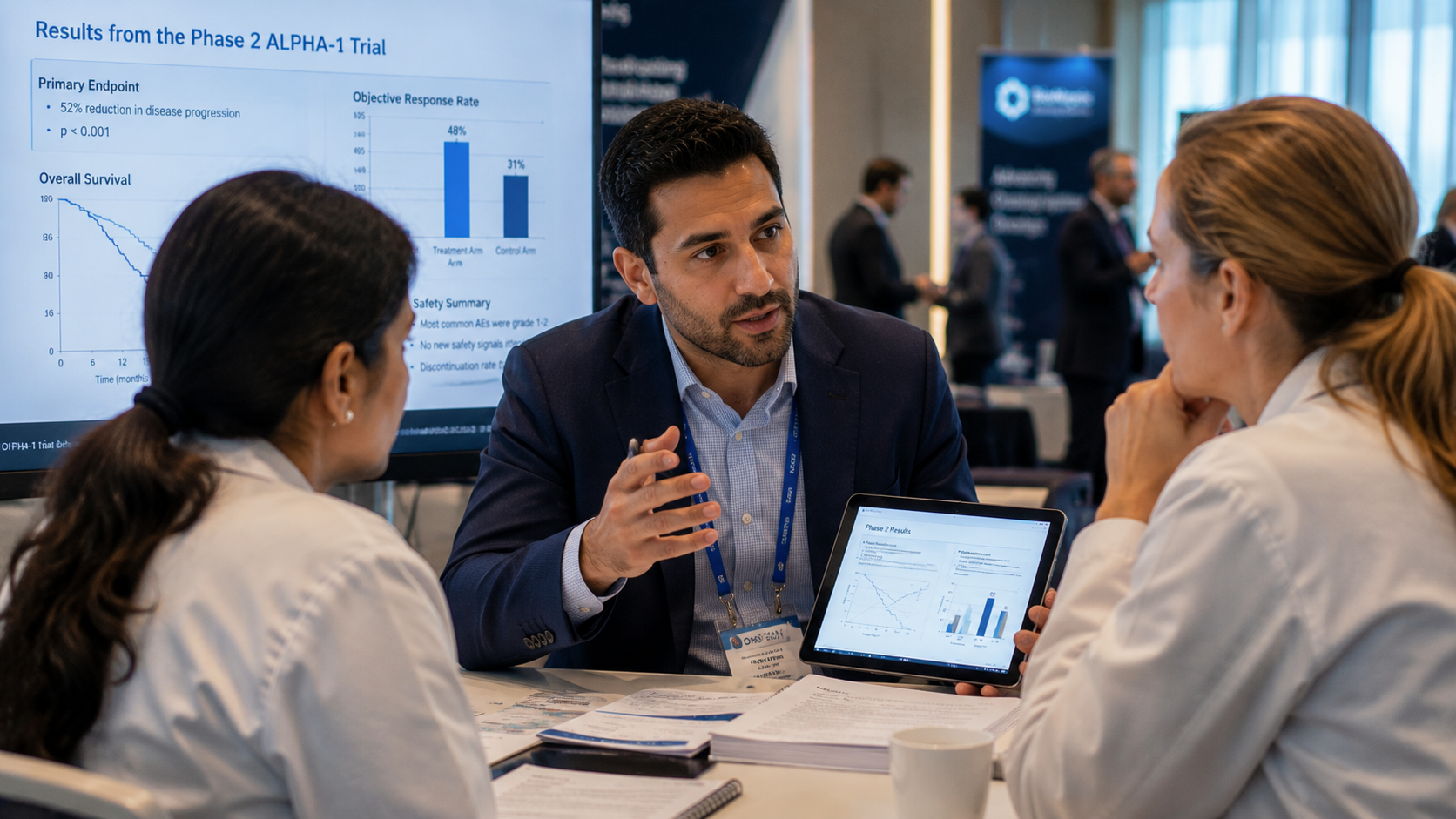
Picture this: you have a PhD, you understand the science deeply, but you don’t want to spend the next decade at a bench or chasing grant funding. You want to talk about science, to the people who use it every day to make decisions that affect patients.
That’s essentially what a Medical Science Liaison does. And it’s one of the most interesting non-traditional career paths a scientist can take.
What does a Medical Science Liaison do?
A Medical Science Liaison, or MSL, is a scientific expert who works for a pharmaceutical or biotech company but spends most of their time outside the office. Their job is to build and maintain relationships with Key Opinion Leaders (KOLs), the physicians, researchers, and healthcare professionals who are at the forefront of a particular disease area or treatment field.
In plain terms: you’re the bridge between the company and the clinic. You’re not a sales rep. You’re not pushing a product. You’re a trusted scientific resource, someone a cardiologist or oncologist can call when they have a question about a drug mechanism, a clinical trial design, or the latest data in their field.
It’s a role that blends science, communication, relationship-building, and strategy in a way that almost no other industry job does. And if you love talking science with smart people, it can feel less like work and more like doing what you love, with a much better salary.
This might be for you if you:
💡 Want to work in pharma or biotech while staying connected to the medical community
💡 Love translating complex science into clear, confident conversations
💡 Enjoy building long-term professional relationships, not just one-off interactions
💡 Are comfortable delivering scientific presentations to highly educated audiences
💡 Want to specialise deeply in a specific disease area or therapeutic field
💡 Like variety in your day, no two weeks look the same
💡 Are genuinely okay with being on the road, MSL roles typically involve 50%+ travel
That last point is worth sitting with. The travel is real. For some people, it’s one of the best parts of the job. For others, it’s a dealbreaker. Know which one you are before you pursue it.
What does a typical day look like?
There isn’t really a “typical” day, which is part of the appeal. One week you might be presenting clinical trial data to a group of oncologists at a hospital. The next, you’re attending a medical conference, connecting with researchers, and gathering insights on what questions are keeping clinicians up at night.
You’ll also spend time internally, collaborating with your company’s medical affairs, clinical, and commercial teams, reporting on field insights, and staying completely current on the literature in your therapeutic area. The expectation is that you know your disease space deeply, better than almost anyone you’re talking to.
It’s a high-responsibility role. But for scientists who thrive on staying sharp and being genuinely useful to the people they work with, it hits differently than anything else in industry.
Why do pharma and biotech companies want scientists?
Because the people MSLs talk to are doctors, researchers, and clinical specialists. These are highly educated, deeply experienced professionals who can tell within five minutes whether the person across from them actually understands the science, or is just presenting slides.
A scientist brings credibility that no amount of training can replicate. When a physician asks a hard question about a mechanism of action or a subgroup analysis from a trial, you can answer it, confidently and accurately. That trust is the entire foundation of what makes an MSL effective.
Your PhD isn’t just a qualification here. It’s what gets you taken seriously in the room.
Things to keep in mind:
📚 Getting your first MSL role is genuinely tough. This field runs almost entirely on relationships and internal referrals. Applying cold rarely works, who you know matters enormously here, more than in almost any other industry role.
📚 Be strategic with your applications. Only apply where you have an internal reference or a genuine connection. A warm introduction carries far more weight than a polished CV.
📚 Clinical experience is a strong differentiator. If you’ve worked in a clinical setting, even in a research-adjacent role like clinical research coordinator or regulatory affairs, that background will open doors faster.
📚 Most MSL positions require a doctoral degree, PhD, MD, or PharmD. It’s one of the few industry roles where a doctorate is genuinely expected, not just preferred.
📚 The role can feel isolating at times. You’re often working independently in the field, away from a team environment. If you draw energy from being around colleagues day-to-day, that’s worth factoring in.
Job titles to look for:
💻 Medical Science Liaison
💻 Field Medical Director
💻 Regional Medical Liaison
💻 Medical Affairs Associate (a common entry point)
How to explore this career before committing:
🗣️ Network, seriously, this is not optional in the MSL world. LinkedIn is your best starting point. Find MSLs with science backgrounds and ask for a conversation. Most will say yes.
🗣️ The MSL Society hosts an annual conference in the US, it’s one of the best places to meet people in the field, understand the landscape, and make the connections that actually lead to opportunities.
🗣️ Take a course on clinical trials. Understanding how trials are designed, run, and reported is foundational knowledge for any MSL, and it signals to hiring managers that you’re serious.
🗣️ If possible, get clinical exposure now. Ask your supervisor if you can join a project with a clinical component, or look for collaborations with clinical departments in your institution.
🗣️ Some companies offer MSL internships or structured training programs, especially for postdocs. These are worth actively hunting for.
The MSL path isn’t the easiest one to break into, but for scientists who want to stay close to the science, connect with the medical community, and build a career that actually takes them places (literally and figuratively), it’s one of the most rewarding options out there.