
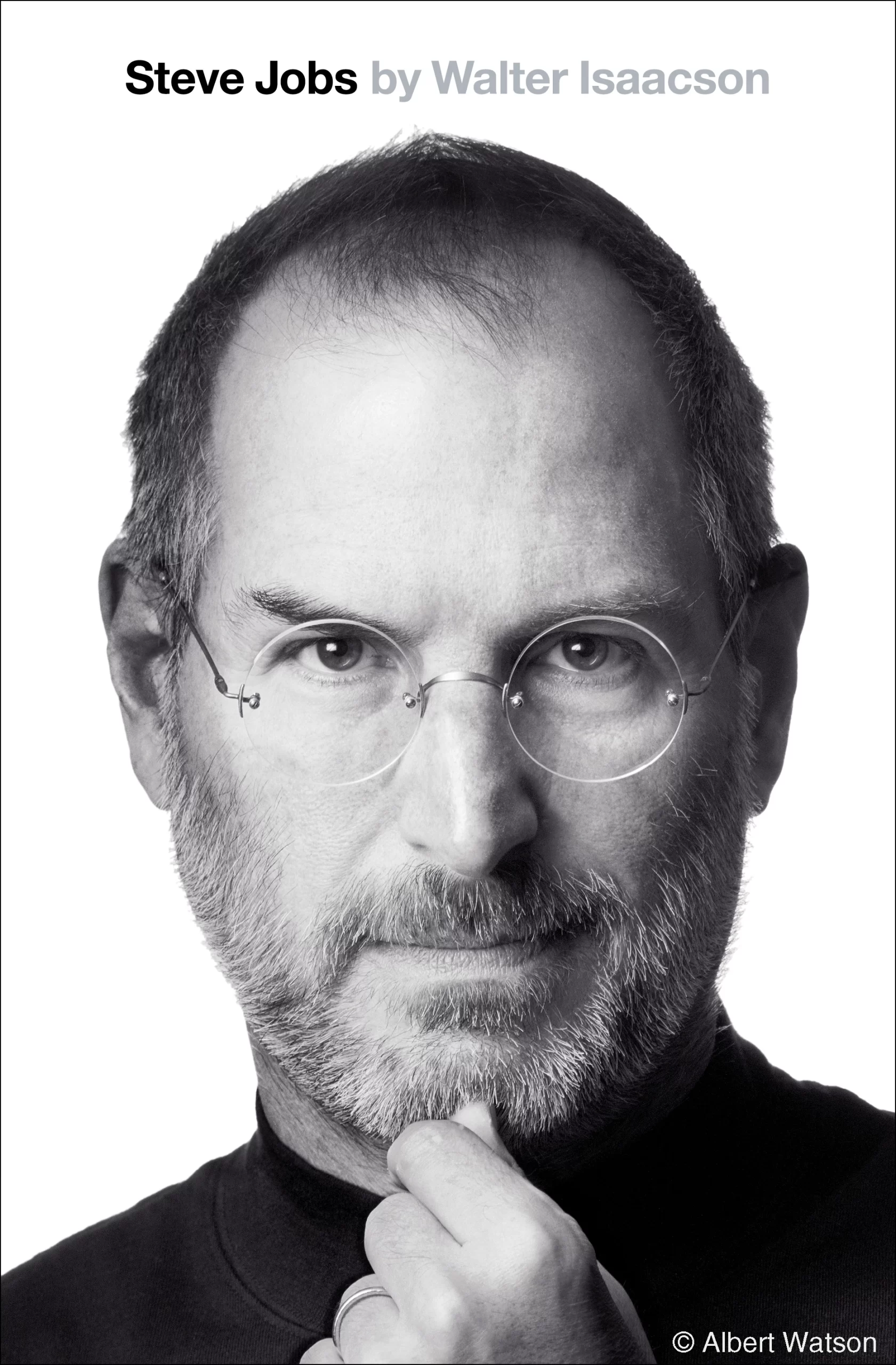
I don’t think I’ve ever finished a biography and felt so completely like I understood a person. Jobs was simultaneously a barefoot hippie who went on carrot-only diets until he turned orange, a man with a cruel streak who denied paternity of his own daughter and reduced engineers to tears in elevator rides, and one of the most visionary minds of the last century. Isaacson holds all three of those truths at once without flinching.
Rating ⭐️⭐️⭐️⭐️⭐️/5
What This Book Is Actually About
Steve Jobs is Walter Isaacson’s authorized biography of Apple’s co-founder, built on forty-plus interviews Jobs gave him in his final years, access Jobs himself initiated, on one condition: write all of it. The result is a warts-and-all portrait that even Apple executives hated. Tim Cook said it did Jobs “a tremendous disservice.” Jony Ive said his regard for it couldn’t be any lower. I’d argue that’s actually the highest compliment the book could receive. The people closest to him wanted a warmer version. Isaacson gave us a real one.
Isaacson is the best working biographer of scientists and technologists, his The Code Breaker on Jennifer Doudna and CRISPR is my all-time favorite from him, and this is him at his best, with his most complicated subject.
What Got Me Thinking
What I keep sitting with is how completely I felt I understood a person by the end. Not liked, that’s a different question, but understood. The early abandonment, the Zen Buddhism, the reality distortion field, the design obsession, the cruelty that was, in his own mind, inseparable from the standard he held everyone to. Isaacson never asks you to excuse any of it. He just shows you how it all fit together into someone who made objects that changed how billions of people move through the world.
My one genuine critique: he occasionally lets Jobs’s toxicity off the hook by circling back to remind you it produced great things. That starts to feel like an ends-justify-the-means argument by the final hundred pages, and I don’t think the book needs to make that move. The accomplishments speak for themselves.
Why I Think You Should Read This
5/5. I finished it in what I can only describe as the complicated middle, not admiring Jobs, not condemning him, just holding the full picture of someone who was genuinely difficult to look at directly and impossible to look away from. Read it and decide for yourself where you land on the man. Wherever that is, the book will have earned it.
My Takeaway
The question humming underneath every chapter is one Isaacson never quite asks directly: what do the people who build things that matter owe to everyone around them? Jobs seemed to believe the answer was nothing. I don’t believe that. But I came away genuinely uncertain about how to weigh what he built against how he built it, and that uncertainty felt honest, not like a failure to reach a verdict. The best biographies don’t resolve their subjects. They make them legible. This one does.
May’s Science Read is The Power of Life by Jessica Riskin about the life and discoveries of French biologist Jean-Baptiste Lamarck, and I have a feeling this one is going to spark some serious conversation. See you there. 📚