
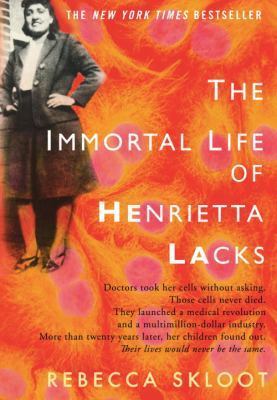
If you have ever worked with cells in a lab, you have almost certainly encountered HeLa cells. They are everywhere in cell biology, in textbooks, in protocols, in research papers spanning seven decades of scientific discovery. I have worked with them. I have cited studies that used them. And until I read this book, I knew almost nothing about the woman they came from, or what their existence cost her family. That gap, between how much science owes Henrietta Lacks and how little it gave back, is what The Immortal Life of Henrietta Lacks is about. And it is a gap that every scientist needs to sit with.
What This Book Is Actually About
In 1951, Henrietta Lacks was being treated for cervical cancer at Johns Hopkins University when cells were scraped from her tumor, without her knowledge or consent, in an era before informed consent was a legal or ethical requirement in medical research. Those cells, now known universally as HeLa cells, turned out to be extraordinary: robust enough to survive outside the body, to replicate, to thrive in culture in a way no human cells had managed before. They became the first successfully cultured human cell line in history.
The scientific impact of HeLa cells is almost impossible to overstate. They were critical to the development of the polio vaccine. They were used in nuclear bomb testing research. They have contributed to breakthroughs in cancer biology, genetics, virology, and cell culture methodology that have shaped the entire trajectory of modern biomedical science. And for most of that time, the Lacks family had no idea their wife and mother’s cells were still alive, still multiplying in labs around the world, still generating scientific discoveries and commercial products, decades after her death. Rebecca Skloot spent years building the trust of the Lacks family to tell this story, and the care she brought to that relationship is present on every page.
What Got Me Thinking
The detail that I cannot move past is how many times the Lacks family encountered the scientific and medical establishment, and how consistently they were ignored, used for additional testing, or given explanations so incomplete as to be meaningless. Scientists and doctors who knew exactly what HeLa cells were and what they had produced had decades of opportunities to sit down with this family and explain it honestly. Almost none of them did. Rebecca Skloot, a science writer, not a scientist, was eventually the one who did that work. That says something uncomfortable about the culture of science that I think we need to keep saying out loud.
The ethics of what happened are complicated by the historical context, informed consent as we understand it today didn’t exist in 1951, and the cells were taken in a way that was legally and medically standard at the time. But “standard at the time” is not the same as right, and the decades that followed, during which the Lacks family remained uncompensated, unnamed, and uninformed while HeLa cells generated enormous scientific and commercial value, cannot be explained away by historical context. Those were choices. Made by people who knew what the cells were and chose, repeatedly, not to have a harder conversation.
The quote that opens her story, “Education is everything,” from Deborah Lacks, lands with particular weight in that context. The Lacks family was denied the education about their own family’s place in scientific history for decades. Not because the information didn’t exist. Because no one who had it felt sufficiently obligated to share it.
Why I Think You Should Read This
A 4/5 from me, and a genuine must-read for any cell biologist, any scientist who has ever used HeLa cells, and honestly any person who wants to understand why informed consent and scientific transparency aren’t bureaucratic formalities. They are the difference between science that serves humanity and science that extracts from it.
Skloot’s writing is warm and careful and deeply respectful of the Lacks family’s complexity, their grief, their confusion, their pride, and their ongoing struggle to understand and reckon with what Henrietta’s cells have meant for the world. She earns the trust the family placed in her, and it shows.
My Takeaway
The thing I carry from this book every time I work with cell lines is a sharper awareness of where biological material comes from and what it represents. Cells in a culture flask are not abstract scientific tools. They came from a person. And the person they came from, and the family that person left behind, deserve to be part of the story of what those cells made possible. Science has a long history of separating the discovery from the human cost of making it. The Immortal Life of Henrietta Lacks is a direct, humane argument for why that separation is not a neutral choice, and why science communication, the work of explaining science to the people it affects, is not optional. It is an obligation. Henrietta Lacks deserved that explanation. Her family deserved it. And the scientific community is still, in many ways, working out what it owes them.
Come Read Along
Have you read this one, and did it change how you think about the cell lines and biological materials you work with? I’d genuinely love to hear from other cell biologists in particular. Drop it in the comments or find me on Instagram.
August’s Science Read is Science Lessons by Gordon Binder, a look at science, business, and what happens when the two collide at the highest possible stakes. See you there. 📚