
I have a new favorite hobby, and it has quietly transformed my relationship with books: listening to audiobooks while I’m on the microscope. Hours that used to disappear into the quiet hum of lab equipment are now filled with entire worlds, which is how I made it through three books this month. Three very different books, with three very different reactions. Let’s get into it.
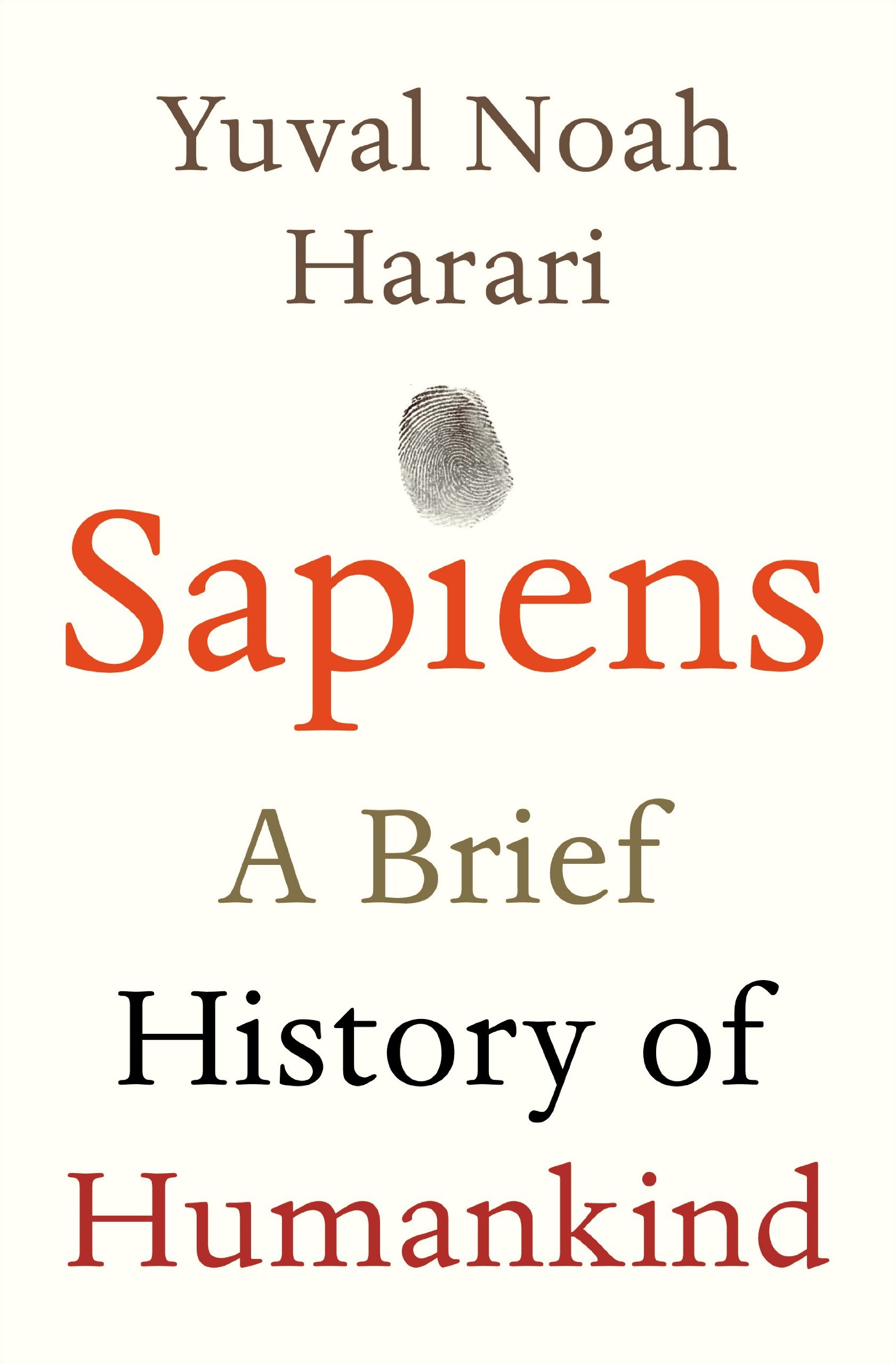
Sapiens: A Brief History of Humankind by Yuval Noah Harari ⭐️⭐️⭐️⭐️
Sapiens has one of the most ambitious premises of any book I’ve picked up: the entire history of humankind, from our earliest ancestors to the present, in a single volume. Harari pulls it off, mostly. The breadth is genuinely staggering, and somewhere around chapter three I started carrying a notebook with me specifically to capture all the ideas and arguments he raises that I wanted to sit with longer.
The ones that have stayed with me most: the argument that the agricultural revolution, far from being humanity’s greatest leap forward, was actually our biggest trap, trading freedom and variety for food security and hard labor. The observation that humans have never truly gotten over “us versus them” thinking, no matter how sophisticated our civilizations become. The idea that so much of what holds human society together, religion, nationality, currency, exists entirely in collective imagination, and works only because enough of us agree to believe in it. And perhaps most sobering: the success of a species does not guarantee the happiness of that species.
One honest note, and this matters, some of what Harari presents as fact is closer to opinion, and the book doesn’t always make that distinction clearly. Go into it with your critical thinking fully engaged, treat some of the broader assertions as ideas worth examining rather than conclusions worth accepting, and it’s a genuinely rewarding read. A solid 4/5.
The Hitchhiker’s Guide to the Galaxy (series) by Douglas Adams ⭐️⭐️⭐️⭐️⭐️
I loved this series completely and without reservation. Douglas Adams takes the infinite universe, the meaning of life, and the staggering smallness of human existence and turns them into something that manages to be simultaneously profound and absolutely hilarious. The absurdism is the point, and it lands.
What made this read particularly special was reading it in parallel with Sapiens. The two books are in an unexpected conversation with each other: Harari makes the case for how little humans actually understand about their own existence, and then Adams comes along and makes that same point, but funnier, through the lens of a galaxy that finds humans largely unremarkable. The sections about how little humans know hit differently when you’ve just finished a chapter in Sapiens about the collective fictions holding civilization together. I’d genuinely recommend reading them together, the combination is something else. A full 5/5.
The Love Hypothesis by Ali Hazelwood ⭐️
I want to be honest here, because I think it matters: this book rubbed me completely the wrong way, and I’ve thought carefully about whether that’s just personal preference or something worth naming out loud. I’ve decided it’s the latter.
The Love Hypothesis centers on a romantic relationship between a graduate student and a professor, a dynamic that, whatever the legal status, carries a significant and well-documented power imbalance that the book largely romanticizes rather than interrogates. Beyond that, the portrayal of graduate school as a uniformly toxic, hostile environment painted a picture I don’t think serves anyone who is curious about research careers or considering graduate school.
I’m not trying to tell anyone what to read. But if you’re a prospective graduate student who has encountered this book as a window into what academic life looks like, please talk to actual graduate students first. The real experience is more nuanced, more varied, and more human than this book suggests. For that reason, it’s a 1/5 from me.
My Takeaway
Three books, three completely different experiences, which is, honestly, exactly what a reading month should look like. Sapiens reminded me that the stories humans tell about themselves are simultaneously our greatest strength and a source of enormous collective self-deception. The Hitchhiker’s Guide reminded me that sometimes the most honest thing you can say about existence is something absurd. And The Love Hypothesis reminded me that the stories we tell about science and scientists matter, and that we have a responsibility to tell them carefully.
That last point feels close to the heart of what Science Reads is about. The books we read shape how we understand science, who belongs in it, and what it feels like from the inside. That’s not a small thing.
Come Read Along
Have you read any of these? I’d especially love to hear from fellow scientists about The Love Hypothesis, I’m curious whether it landed differently for people outside of academic research. Drop it in the comments or find me on Instagram. And as always, my full reviews are on Goodreads, link in bio. 📚
March’s Science Read is The Best American Science and Nature Writing 2021, edited by Ed Yong, a collection of the finest science journalism published during one of the most consequential years for science in recent memory. It has been sitting on my bedside table demanding attention, and I’m finally giving it. See you there.