
I was scrolling through the New York Times top 100 books of 2021 recently, and something stopped me cold. Great memoirs. Stunning fiction. Celebrated nonfiction. And not one, not a single book on the list, was about science. In the middle of a global pandemic that had been shaped, moment by moment, by science writing and science communication, the most prominent book list in American media had no room for a science book. Not one.
I sat with that for a while. And then I decided to do something about it.
What This Book Is Actually About
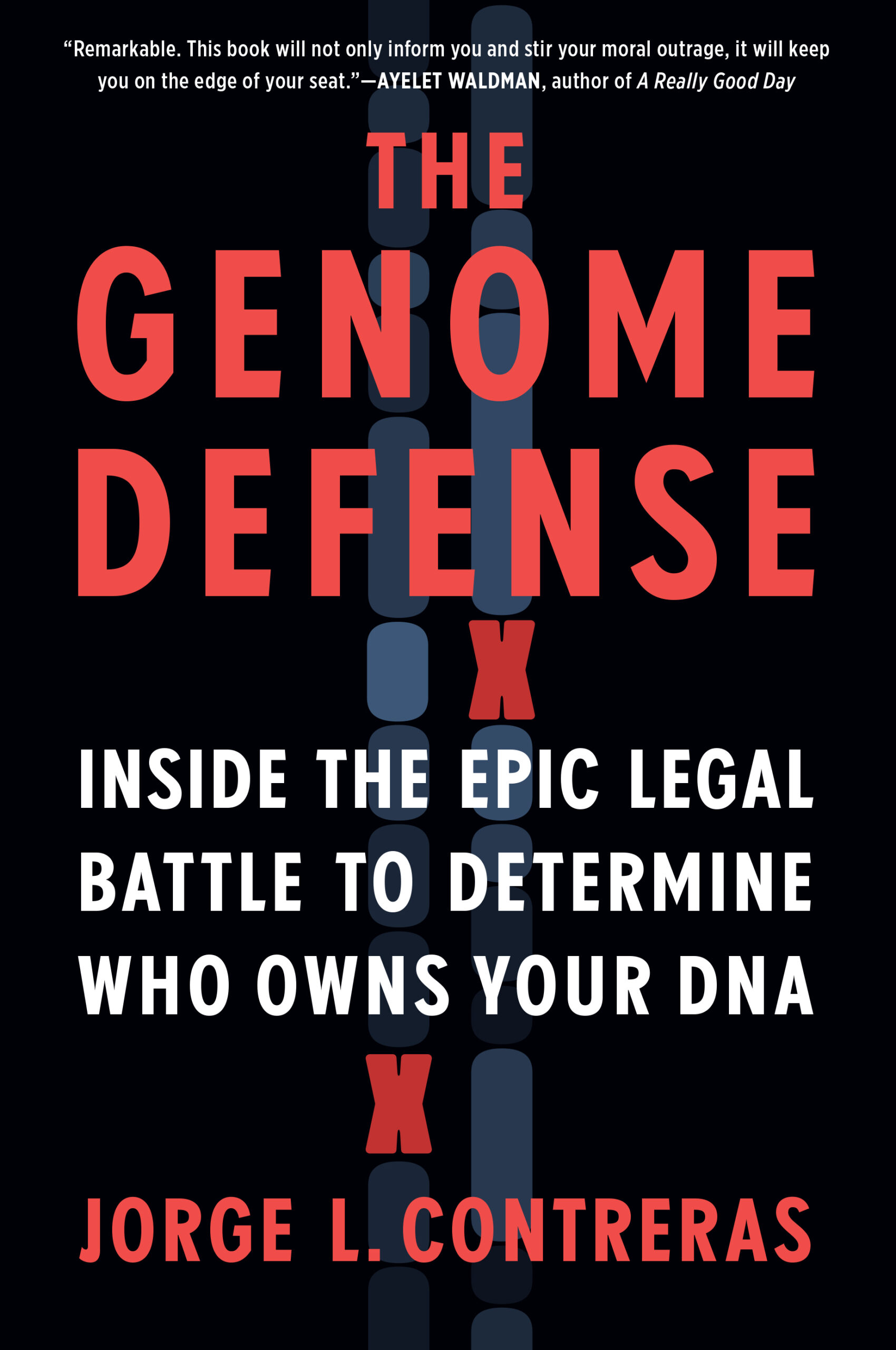
The Genome Defense is the true story of one of the most consequential legal battles in the history of modern science: the case that went all the way to the Supreme Court to answer a question that sounds almost philosophical until you realize how much money, power, and human health hangs on the answer, can a company patent a human gene?
Author Jorge Contreras is a legal scholar, not a scientist, and that turns out to be exactly the right background for this book. He has an outsider’s instinct for explaining the scientific and legal concepts clearly, without assuming prior knowledge, and an insider’s access to the people who fought this case from both sides. The result is a book that walks any reader, regardless of scientific background, through the full moral and ethical minefield of gene patenting: what it means for research, for patients, for access to diagnostics, and for the fundamental question of who gets to own the building blocks of human life.
What Got Me Thinking
I carried this book to multiple Christmas events over the holidays. My family can confirm. I was that person in the corner of a festive gathering, unable to put it down, because Contreras structures the whole thing like a legal thriller, except it’s real, and the stakes are ones that affect every person who has ever needed a genetic test or ever will.
The central case involves BRCA1 and BRCA2, the genes associated with hereditary breast and ovarian cancer, and the company that held patents on them, controlling who could test for mutations and at what price. What sounds like a dry intellectual property dispute becomes, in Contreras’s hands, a story about patients who couldn’t afford the tests that might have saved their lives, researchers who couldn’t study genes they weren’t licensed to touch, and a legal system trying to apply century-old frameworks to questions it was never designed to answer.
The moral complexity is real and the book doesn’t flatten it. There are genuine arguments on both sides, about incentivizing innovation, about the cost of drug and diagnostic development, about what it means to protect intellectual property in a field where the “invention” is something that existed in human cells long before any company discovered it. Contreras lays those arguments out honestly and lets you sit in the difficulty of them, which is exactly what the best science communication does.
Why I Think You Should Read This
A full 5/5, one of my favorite books, full stop. Whether you have a science background or none at all, this book will pull you in and hold you there. It is proof that science writing can be as gripping as any thriller, as morally rich as any literary fiction, and as urgently relevant as anything on any bestseller list.
Which brings me back to that New York Times list.
Science writing has shaped the world we live in. It explained a pandemic in real time. It has told us who we are, where we came from, and what we’re made of. It deserves a seat at every table where great books are discussed, and if the major lists aren’t going to make room for it, then we’re going to make room for it ourselves.
My Takeaway
The biggest thing The Genome Defense left me with is a question I think about constantly now: who does science belong to? The researchers who spend decades studying something? The companies that fund the translation of that research into products? The patients whose lives depend on access to what that research produces? The answer the Supreme Court eventually gave was important, but the book makes clear that the legal answer and the moral answer aren’t always the same thing. That tension lives at the heart of so much of what makes science policy complicated, and understanding it starts with stories exactly like this one.
Come Read Along
Have you read The Genome Defense? I’d love to know what you thought, and if you have suggestions for great science books I should add to the list, please drop them in the comments or find me on Instagram. This is the beginning of something I’m genuinely excited about.
Every month in 2022, I’ll be reading and sharing a science book, right here, in my stories, and on Goodreads. Because the best way to learn more about science is to read about it. And there are so many great books waiting. Let’s go. 📚
February’s Science Read is Sapiens: A Brief History of Humankind by Yuval Noah Harari, one of the most ambitious books I’ve picked up in a long time, and one I’ll be carrying a notebook alongside. See you there.