
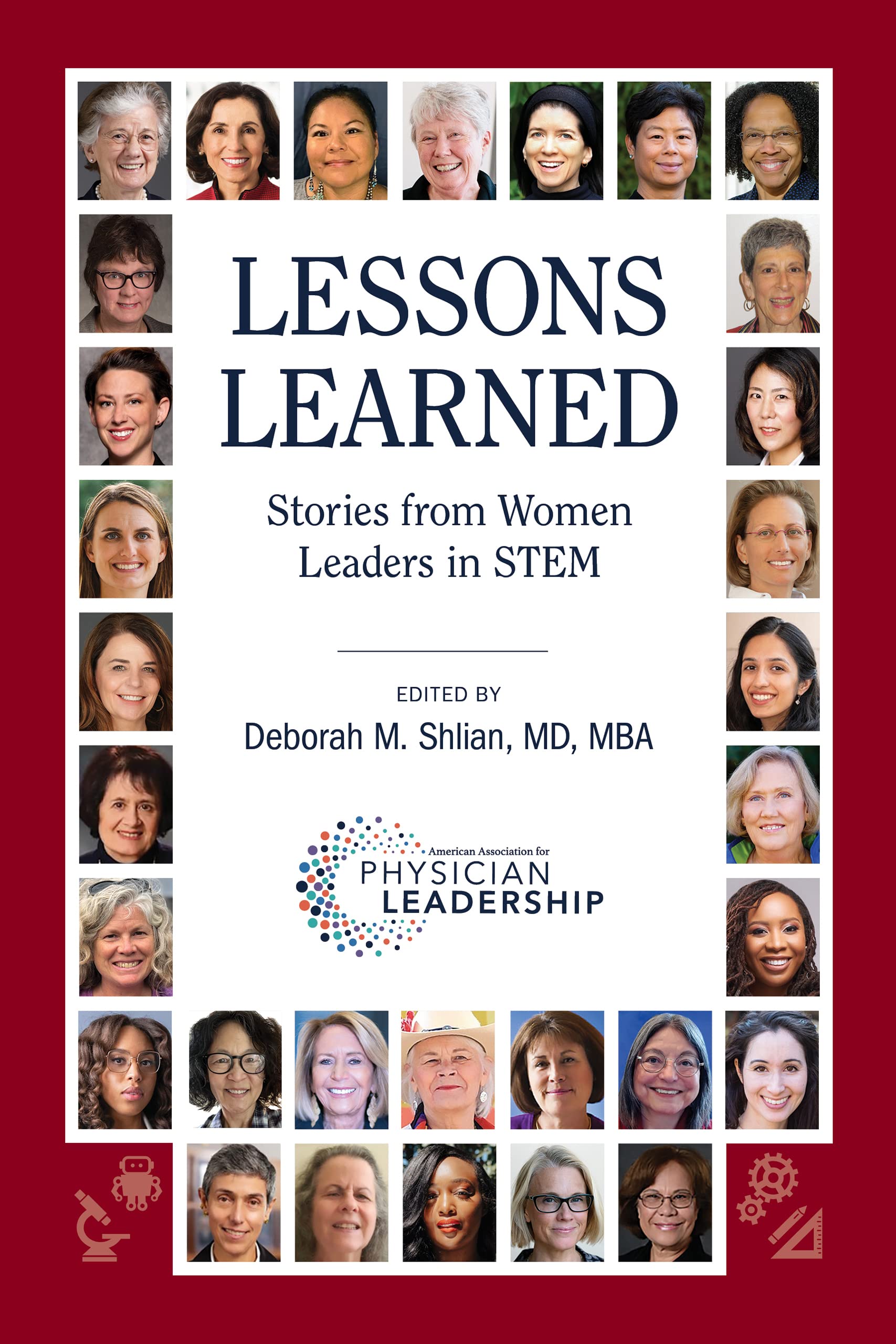
“You can’t be what you can’t see.” Marian Wright Edelman wrote that, and I have turned it over in my mind more times than I can count, especially during the stretches of my PhD where I found myself wondering whether I was cut out for this, whether I was doing enough, whether everyone else in the room had figured something out that I was still missing. This book found me at exactly the right moment. I didn’t know how much I needed it until I was already three chapters in and underlining things with an urgency that surprised me.
What This Book Is Actually About
Lessons Learned is a collection of first-person stories from women leaders across STEM fields, each chapter a different woman’s life, a different set of roadblocks, and a different hard-won lesson about what it actually takes to build a career in spaces that weren’t always built to include you.
The statistics that frame the book are worth sitting with before you even get to the stories: women make up 48% of the overall workforce, but hold only about 27% of positions in STEM, and even within that number, representation drops sharply outside the biological and life sciences. The book doesn’t dwell in those numbers for long. It moves quickly into the human stories behind them, which is exactly the right instinct. The barriers these women faced, gender bias, lack of mentors and role models, racial disparities, work-life balance pressures, the particular loneliness of being the only one in a room, are not abstract. They have names and faces and specific moments attached to them. That specificity is what makes this book land the way it does.
What Got Me Thinking
I want to share some of the lines that stopped me, because I don’t think I can do this book justice by paraphrasing them:
“I applied for 244 positions and had interviews at 3 companies. That’s 1.23%.“, Jiwon Yang
“I certainly wasn’t the best student and still don’t ever consider myself the most knowledgeable person in any room of scientists.“, Cathleen Lutz
“Losing my advisors forced me to reflect on the importance of having multiple mentors and sponsors. It was the first time I realized the significance of having a community of people around you.“, Malika Grayson
“Why are minority women not obtaining more STEM degrees or advancing in the field? One answer is that we do not see ourselves reflected or represented in the field or research.”, Korie Grayson
I could keep going. There are so many moments in this book that I couldn’t begin to cover them all here, which is itself a kind of tribute to how dense with honesty and hard-earned wisdom it is.
What hit me most personally was how universal the internal experience turned out to be. As women in STEM, we are handed a million conflicting ideals about what it means to be “the best”, to be ambitious but not aggressive, confident but not arrogant, focused but always available, driven but never at the expense of everything else. It’s easy, in the middle of a PhD, to spiral into overthinking every decision and feeling like you’re never doing quite enough. Reading these stories, from women who are further along the road, who felt exactly the same things and kept going anyway, made me exhale in a way I didn’t know I needed. We are all navigating the same terrain. That’s not a small thing to know.
The quote that has stayed with me longest is the simplest one: “The further you go in science, the more you realize just how much you don’t know.“, Cathleen Lutz. Not as a discouragement. As a liberation.
Why I Think You Should Read This
Five out of five, a must-read for anyone in STEM, considering a career in STEM, or supporting someone who is. The diversity of voices in this book is its greatest strength. These are not all the same story told by different people. They are genuinely different lives, different fields, different barriers, different lessons, and together they build something more powerful than any single narrative could. Rachel Willand-Charnley puts it best: “Diversity of minds is key to problem-solving, inclusivity, and equitability.” This book lives that argument from the inside out.
If you’ve ever sat in a lab or a classroom or a conference room and felt like you were the only one struggling, this book is for you. You are not alone. Not even close.
My Takeaway
The thread that runs through every single chapter of this book, underneath all the different stories and fields and obstacles, is community. Find it. Build it if you have to. “Find or create a community… advocate for yourself… prioritize your health.”, Korie Grayson. Three sentences. An entire philosophy. The women in this book didn’t succeed in spite of asking for help and building networks around themselves, they succeeded because of it. Science can feel like a solitary pursuit, especially in the hard stretches. But the evidence in these pages is overwhelming: no one does it alone, and no one should have to.
Come Read Along
Did this one resonate with you, or do you have a book that made you feel less alone in your STEM journey? I want to hear about it. Drop it in the comments or find me on Instagram, where this kind of conversation is always open and always welcome. You are not alone. 🩵
August’s Science Read is A Billion Dollar Molecule and The Antidote by Barry Werth, a two-for-one this month, and I have honest thoughts about both. See you there. 📚