
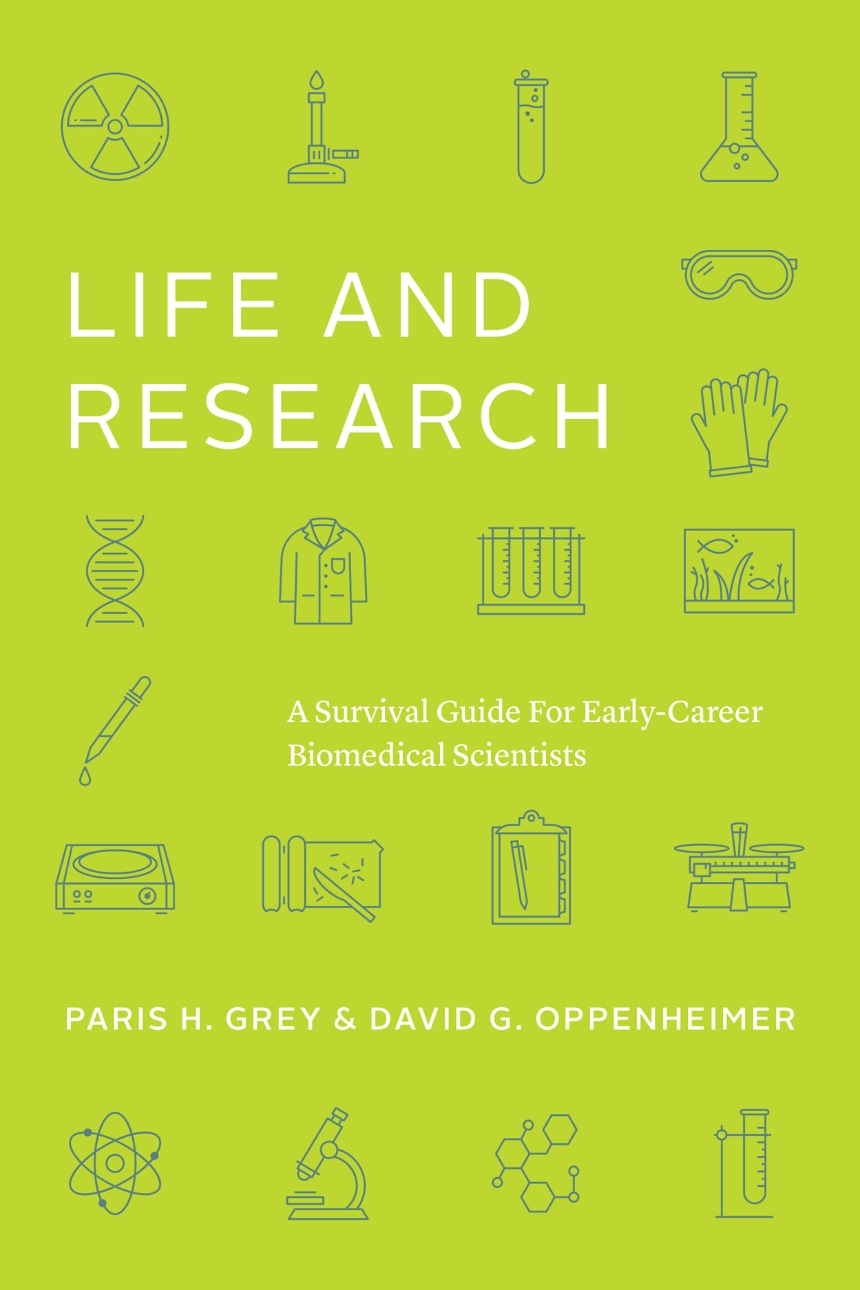
If you follow me because you’re trying to figure out how to survive graduate school, this is the post you’ve been waiting for. I’m not being dramatic. I genuinely wish someone had handed me this book on day one of my PhD, and I’m a little annoyed at myself for not finding it sooner. Consider this your official introduction to what might become your holy grail.
What This Book Is Actually About
Life and Research: A Survival Guide for Early-Career Biomedical Scientists is exactly what it sounds like, and that directness is part of what makes it so valuable. Written by two academic professors with years of experience mentoring early-career researchers, the book is a comprehensive, honest guide to navigating the specific and often bewildering terrain of a research-based graduate program.
Unlike law school, medical school, or business school, graduate school doesn’t come with a clear scorecard. There are no standardized exams that tell you whether you’re on track. The metrics are murky, the expectations vary wildly between advisors and labs, and a lot of the essential knowledge about how to actually survive and thrive tends to get passed down informally, one overwhelmed graduate student to the next, in hallways and coffee shops, with varying degrees of accuracy. This book takes all of that scattered, inconsistent advice and puts it in one place, organized around six core principles that hold up across fields, lab cultures, and career stages.
What Got Me Thinking
The six principles the book is built around are worth laying out, because each one is doing real work:
You’re not alone. You need to build and maintain a mentoring network. What works for a labmate might not work for you. Resilience matters more than brilliance. Maintaining your wellness and work-life balance isn’t always easy, but it shouldn’t be a constant struggle. And ultimately, you’re working for yourself.
That last one hits differently depending on where you are in your program. Early on it can feel like you’re working for your PI, for your committee, for the department, for the funding agency. The reminder that the degree at the end of this is yours, the skills you’re building are yours, the career you’re shaping is yours, that’s the kind of reframe that can genuinely change how you move through the hard stretches.
The sections I found most personally resonant were the ones on fine-tuning presentations, managing work-life balance without guilt, and, I have to mention this, an entire section on the importance of scientists doing science communication. That one hit close to home in the best possible way. A lot of what the book covers are things I’ve figured out over time through trial and error, how to manage a project, how to build a mentorship network that actually functions, how to navigate competing expectations from different people in your graduate life. Seeing it laid out clearly and practically made me realize how much energy I spent learning things I could have just been told.
The book also addresses something that doesn’t get said enough: graduate school often feels like stumbling in the dark. The gray area, how much you need to work, what you need to produce, what “enough” actually looks like, is enormous and largely unspoken. Having a resource that names that gray area and gives you tools to navigate it is not a small thing. It’s the difference between feeling lost and feeling like you have a map.
Why I Think You Should Read This
Five out of five, required reading, full stop. If you are entering a research lab, starting a PhD program, or even in the middle of one and feeling like you’ve been making it up as you go, this book belongs in your hands. The advice is practical, the tone is supportive without being patronizing, and the breadth of what it covers, from mentorship and project management to wellness and science communication, means it stays useful across the entire arc of early-career research.
And to my local friends: hit me up if you want to borrow my copy. I mean it.
My Takeaway
The principle I keep coming back to is the fourth one: resilience matters more than brilliance. Graduate school has a way of selecting for and rewarding a very particular kind of performance, grades, publications, presentations, while the thing that actually determines whether you make it through is something quieter and harder to measure. The ability to fail an experiment, sit with it, and come back the next day. The ability to receive criticism and use it. The ability to keep going when the timeline stretches and the results aren’t coming and the comparison spiral starts. Brilliance is useful. Resilience is what actually gets you to your defense. This book understands that distinction deeply, and it treats you like someone capable of building both.
Come Read Along
Are you in grad school, considering it, or on the other side of it looking back? I want to hear what you wish someone had told you earlier, drop it in the comments or find me on Instagram. This community has always been one of the best parts of Science Reads for me, and this is exactly the kind of conversation I love having there.
July’s Science Read is Lessons Learned: Stories from Women Leaders in STEM, and it found me at the exact right moment in my PhD. See you there. 📚