
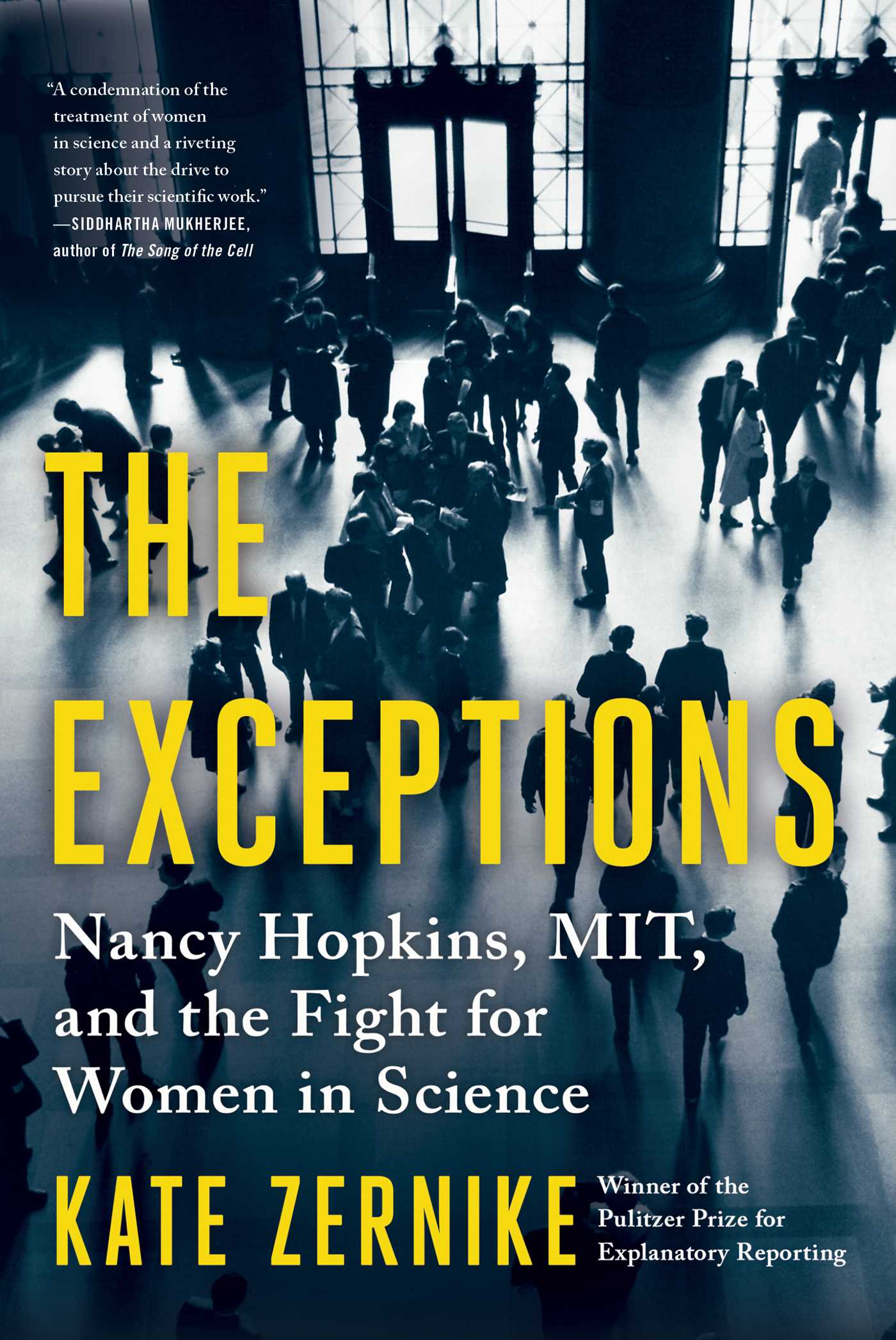
There are books you read and appreciate. And then there are books that feel like someone reached into an experience you’ve carried quietly for years and put it into words you didn’t know you needed. The Exceptions was the second kind for me. If you’ve ever been in an academic space and felt that low-grade, persistent hum of having to prove you belong there, this one will hit close to home.
What This Book Is Actually About
The Exceptions follows molecular biologist Nancy Hopkins and her years at MIT, tracing how Hopkins eventually led the effort to quantify gender discrimination on campus, and how that work resulted in a landmark report submitted to MIT that sent shockwaves through academia.
The author, Kate Zernike, is an investigative journalist who reconstructs Hopkins’ career with meticulous detail, from the early days of navigating a world that wasn’t built for her, to the slow, painful recognition that what she had been quietly absorbing as “just the way things are” was actually a systemic pattern shared by other women around her. Funding disparities. Stereotypes about women needing to settle down and have babies. The casual, unexamined assumption that women were less naturally suited for science. Hopkins thought it was just her, until a small but fiercely determined group of female faculty came together and found the same thread running through all of their stories.
What Got Me Thinking
What I loved most about this book is the courage it documents, the courage of women who were willing to stand against the status quo and ask for more, out loud, on the record, in an institution that had never been asked to account for itself in this way. That’s not easy anywhere. In academia, where tenured faculty operate with unprecedented freedom and the rules bend conveniently for those already at the top, it’s extraordinary.
There’s a moment the book captures that I keep returning to, the realization that the discrimination Hopkins experienced wasn’t personal bad luck. It was a pattern. And the only reason that pattern became visible was because a community of women trusted each other enough to share what they had each been privately dismissing as their own individual shortcomings. That shift, from isolation to collective recognition, is one of the most powerful things a community can do. It’s something I think about a lot in the context of science communication and advocacy. The stories we keep to ourselves can’t change anything. The ones we share out loud have a chance.
My one honest critique: I wish the book had followed up more substantively on the long-term impact of the report. Because the truth is, and I say this having seen and experienced versions of these dynamics in academia in the 2020s, the story isn’t over. Not even close. The starkness has softened in places, but the underlying message in many academic environments still carries that same eerie familiarity: you need to work twice as hard to prove you belong here. The attitudes the book documents, men having a “better aptitude for science,” the expectation that women will quietly absorb the domestic load while their partners work 80-hour weeks, haven’t disappeared. Some of the people who hold these views are still at the very top of the academic food chain. The book risks leaving the impression that academia is remarkably improved. The reality is more complicated than that.
Why I Think You Should Read This
This is a full 5/5 from me, a glimpse into the world of academia behind the glitz and glamour of Nobel Prizes and landmark discoveries. What Hopkins and her colleagues achieved by documenting and reporting their experiences was genuinely invaluable. They showed that there is another path beyond sweeping it under the rug, that the system can be challenged from within, by people who refuse to accept that the way things are is the way things have to be.
Read this one if you want to understand where we’ve been. And read it with clear eyes about how far there still is to go.
My Takeaway
The thing this book left me sitting with most is the weight of community, what becomes possible when you stop shouldering something alone and find the people who have been carrying the same thing quietly beside you. Hopkins didn’t change MIT by herself. She changed it because a group of women decided that their individual experiences, combined, were data worth taking seriously. That is science. That is advocacy. And in a moment when the conversation about equity in STEM can feel exhausting and circular, this book is a reminder that documented, collective truth has moved institutions before, and it can again.
Come Read Along
This one sparked a lot of thoughts for me, I’d love to know how it lands for you, especially if you’ve navigated academic spaces yourself. Share your thoughts in the comments or come find me on Instagram.
October’s Science Read is p53: The Gene that Cracked the Cancer Code by Sue Armstrong, a very different topic, but just as much to say about how science actually works. See you there. 📚